
The vermilion torii gate stands offshore like a promise, its lacquered pillars rooted in dark volcanic sand that crunches beneath your feet. You wade toward Bentenjima Shrine as wavelets tug at your ankles, the Sea of Japan stretching gray-green toward the horizon. This is Yura Beach, where the sacred and the everyday collide with each tide cycle—fishermen mending nets in the shadow of a shrine, pilgrims and photographers sharing the same strip of coast.
“Japan's most iconic offshore torii frames the Sea of Japan from volcanic black sand, accessible by foot at every tide.”
 Credit: Flickr
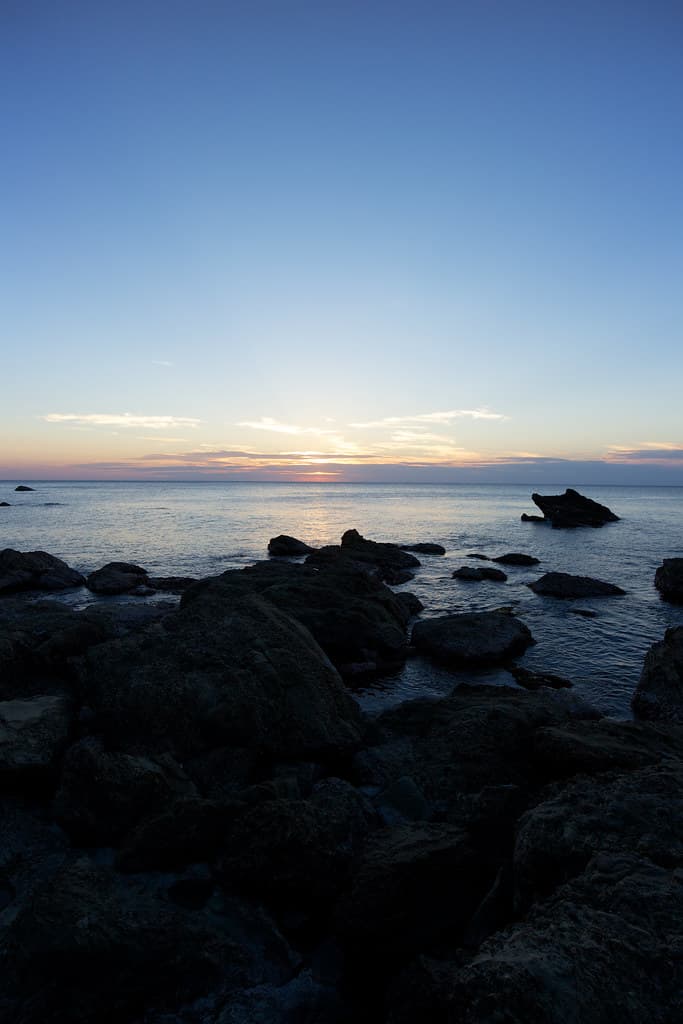
Yura Coast 20130928-2
The beach curves gently along Tsuruoka's southern shoreline, backed by weathered wooden houses and the occasional family-run minshuku. You'll hear the clang of shrine bells carried on offshore breezes, watch elderly women gathering seaweed at low tide, their bent figures silhouetted against the water. The sand here isn't white coral but volcanic black mixed with gray, warm underfoot in summer, and studded with smooth stones worn round by centuries of waves.
Sunset transforms the ordinary into theater. The torii frame glows burnt orange, then deepest red, while the sky behind it cycles through apricot, violet, and finally indigo. You stand ankle-deep or dry on shore—both vantage points work—as the light fades and the gate becomes a dark cutout against the last pale strip of horizon. By the time stars prick through, you understand why painters and poets have made this pilgrimage for generations.


