

The staircase cuts through layers of volcanic rock, each step worn smooth by decades of fishermen hauling nets and the occasional traveler curious enough to follow the unmarked trailhead. Halfway down, the scent of salt and wet stone intensifies, and you catch your first glimpse of the cove—a pocket of privacy hemmed in by black cliffs dripping with algae and crowned with twisted shore pines.
“This former fishermen's mooring remains invisible from the coastal road, accessible only to those willing to descend a steep, unmarked staircase.”
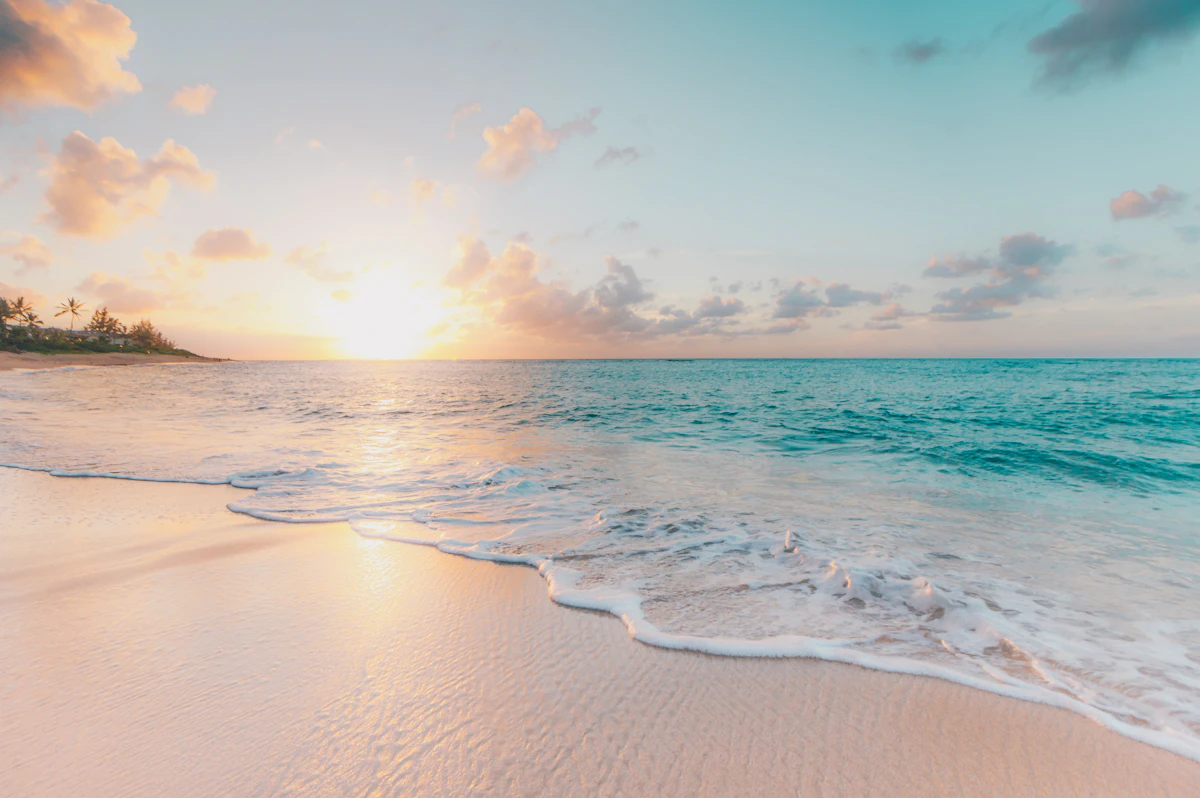 Credit: Unsplash
Aerial view of turquoise tropical bay
The sand here is coarse, flecked with obsidian fragments and broken shells that crunch underfoot. At high tide, waves slap the rocks with a percussive rhythm that echoes off the stone walls; at low tide, tidal pools reveal violet sea urchins and ochre starfish clinging to submerged ledges. The water shifts from slate to jade depending on the cloud cover, never quite committing to blue.
You'll likely have the place to yourself, save for the occasional cormorant drying its wings on a sea stack. There's no café, no umbrella rental, no lifeguard tower—just the raw architecture of coast and current. Bring what you need in a backpack: a bento from Tsuruoka's morning market, a towel that won't mind volcanic grit, and the understanding that some beaches reward effort with solitude rather than amenities.


