
The path down to Shizuki Cove winds through pine groves that smell of resin and salt. At the bottom, a pocket beach curves between two headlands of columnar basalt, their hexagonal pillars stacked like a giant's causeway. The water here shifts from jade green in the shallows to indigo where the seafloor drops away, and on windless mornings the surface becomes a mirror reflecting the castle ramparts above.
“The only cove in Japan where feudal castle walls descend directly to tide pools teeming with marine life.”
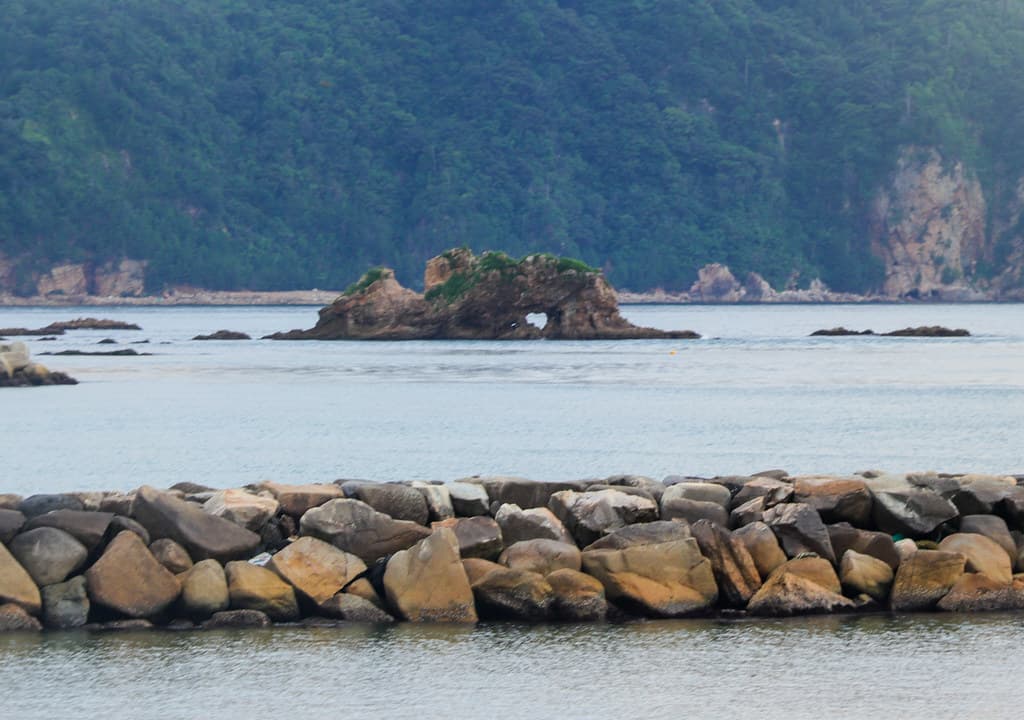 Credit: Flickr
Shizuki Cove — photo by hermitvoita
You can walk the entire beach in three minutes, but most visitors linger for an hour or more, crouched over tide pools or sitting on sun-warmed rocks. The pebbles are smooth obsidian, granite, and rust-colored volcanic stone, worn round by centuries of waves. Fishing boats occasionally motor past the cove's mouth, their engines a distant hum.
The castle ruins frame every view—crumbling walls webbed with ivy, stone foundations where samurai once stood watch. At high tide, waves surge nearly to the base of the fortifications. At low tide, barnacle-crusted rocks emerge, and you can walk fifty meters out to where sea anemones bloom in shallow pools. The locals who do come here arrive before eight in the morning or after four in the afternoon, when the light turns the basalt columns amber.


