
The name translates to "Rhythm Beach," and the cadence here is unmistakably domestic. Fathers wade knee-deep with fishing nets, mothers unwrap nasi dagang from banana leaves, and grandmothers nap in the shade of rented umbrellas while grandchildren bury their legs in warm sand. The shoreline stretches wide and forgiving, gentle enough for hesitant swimmers, punctuated by wooden fishing boats painted turquoise and ochre that rest between morning hauls.
“This is where Kelantan's families claim their weekly reset, a ritual beach rather than a destination one.”
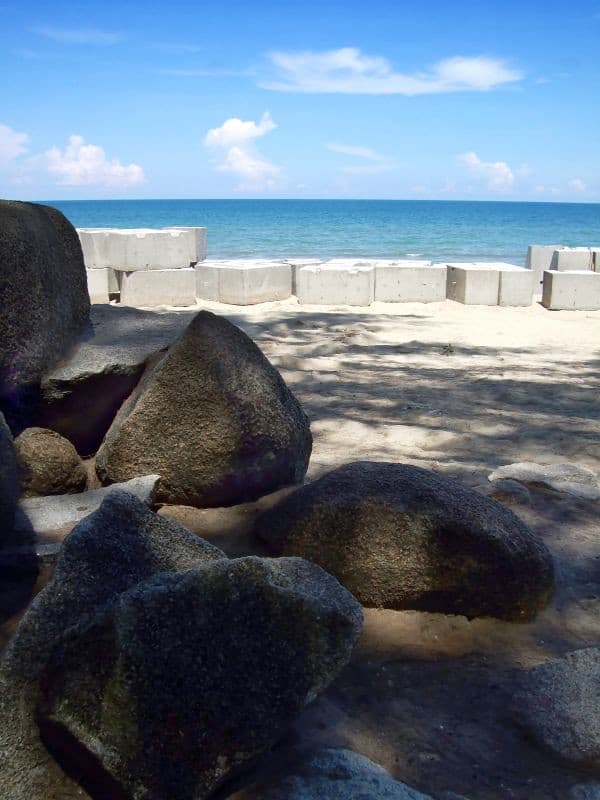 Credit: Flickr
Wave Barriers
By late afternoon, the light softens to honey. Volleyball nets spring up near the treeline, and vendors wheel carts loaded with grilled squid and coconut water toward clusters of picnickers. The casuarinas sway in the onshore breeze, their needle-drop susurrus a counterpoint to pop music drifting from Bluetooth speakers. You'll notice how the families linger, no one rushing, as if the evening ferry schedule applies to everyone but them.
When the sun finally drops, it does so without fanfare—a slow melt into the horizon that turns the wet sand into a mirror. Children chase the last light, their silhouettes small against the vastness. This is Bachok's living room, its weekend ritual, a beach that exists not for travelers passing through but for the people who return to it, week after week, because it holds their rhythms.


