
Pantai Geting unfurls along Tumpat's sleepy coastline like a ribbon the tourism industry forgot to tie. The sand runs tawny and fine, flecked with shell fragments and the occasional tangle of driftwood deposited by the monsoon months. Fishing boats painted turquoise and ochre bob just offshore, and you'll often see men in sarongs mending nets under makeshift shelters of corrugated tin and palm thatch. The water lacks drama—no coral heads, no roaring surf—but that restraint is precisely the point. Shallow for dozens of metres out, it welcomes toddlers and grandmothers alike.
“It offers an unfiltered view of coastal Kelantanese life, where the beach serves the village first and visitors incidentally.”
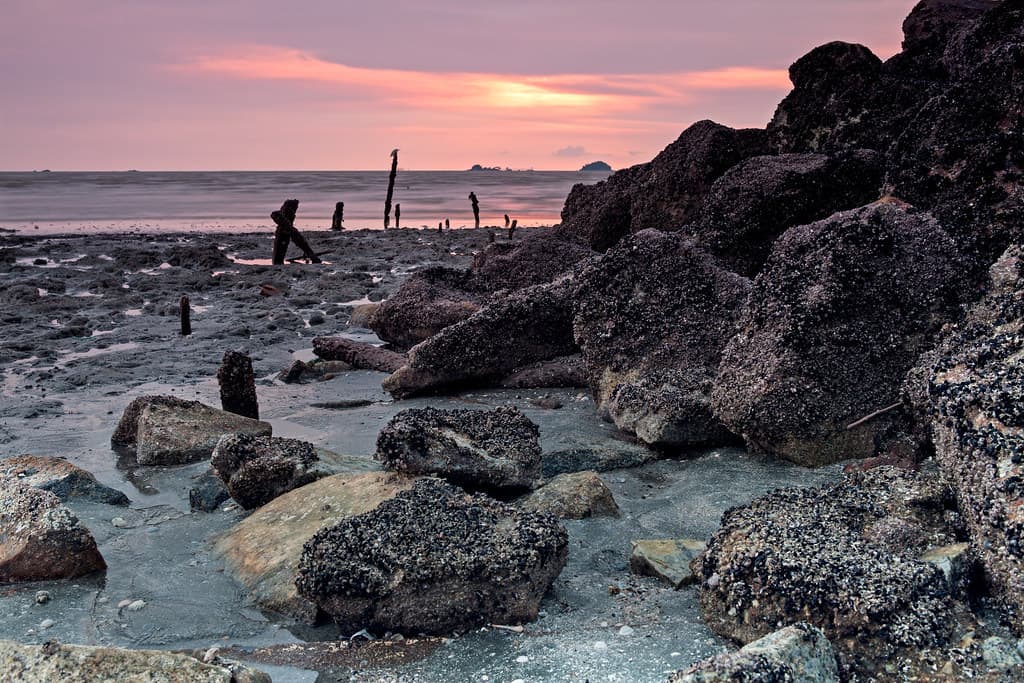 Credit: Flickr
Sunset at Low Tide
Come late afternoon and the light performs its daily spectacle. The casuarina grove behind the beach filters the sun into dappled golds, and the horizon softens from glare to rose. Local families arrive on motorbikes, laying out woven mats and plastic coolers stocked with rice and fried chicken. This is not a beach engineered for travellers; it simply exists for the people who live beside it, and you're welcome to sit quietly within that rhythm.
Tumpat itself remains anchored in tradition—wau bulan kites are still crafted by hand in nearby workshops, and the call to prayer from wooden mosques marks the hours. Pantai Geting asks nothing of you but presence: a barefoot walk, a swim as the tide recedes, a sunset watched from sand still warm beneath your feet.


