
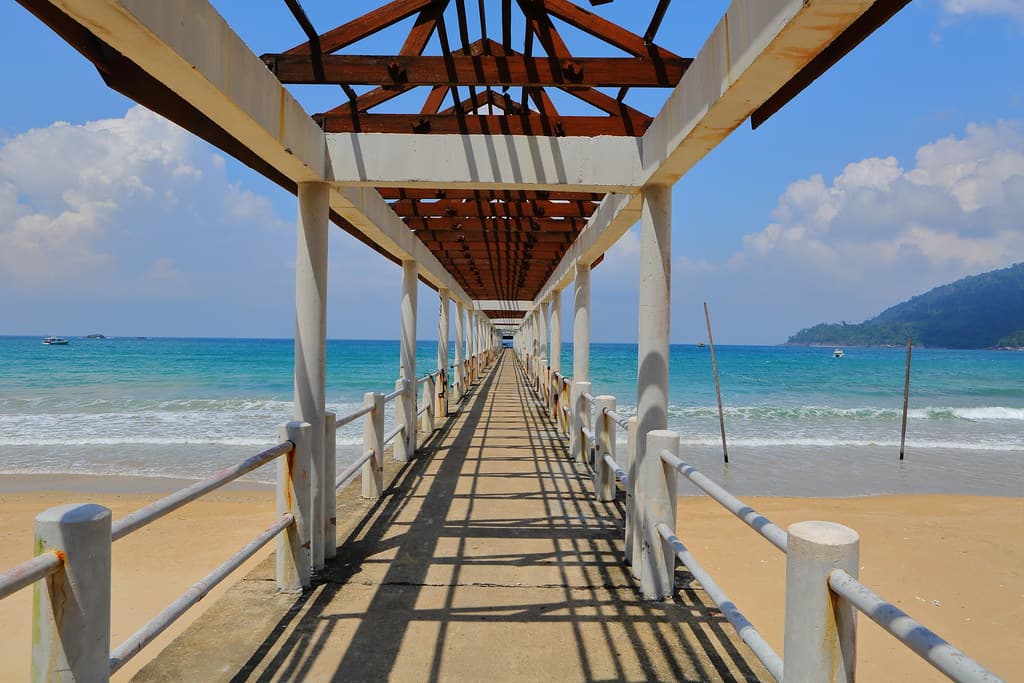
You'll know you've arrived when the dirt track spills out of the rainforest canopy and the beach spreads before you like a blank page. Juara sits on Tioman's less-trodden eastern flank, separated from the island's busier dive villages by a mountain ridge thick with hornbills and macaques. The sand here is finer than anything on the west coast—it squeaks beneath your flip-flops and clings to wet ankles in a way that feels more Maldivian than Malaysian.
“Juara is the only major beach on Tioman's eastern shore, offering true solitude where the island's jungle meets the open South China Sea.”
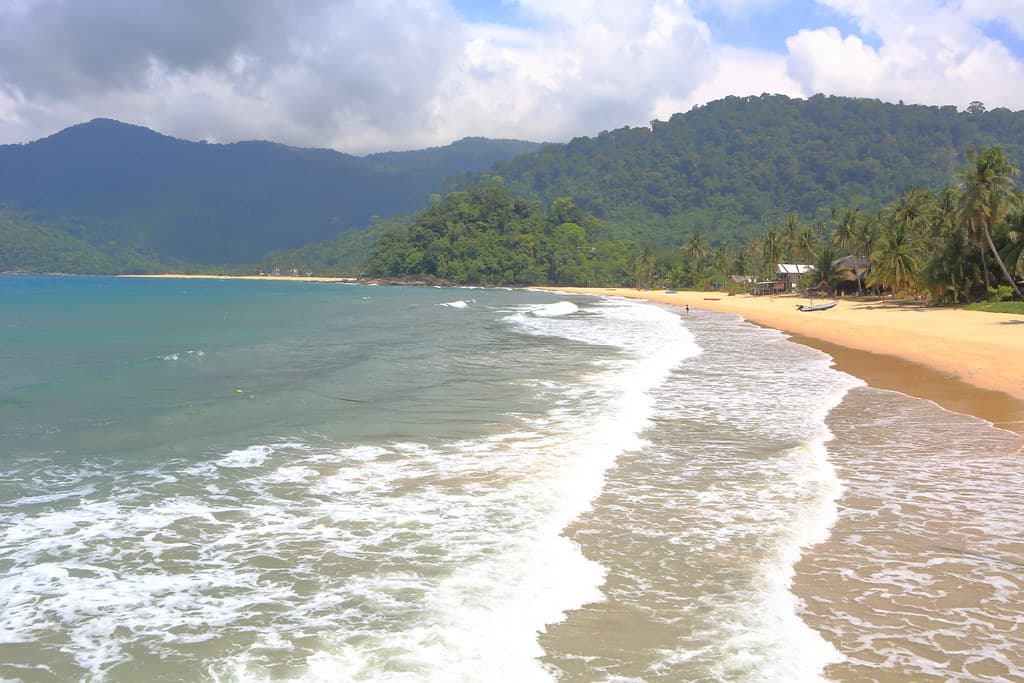 Credit: Flickr
Juara Beach, East Coast of Tioman Island, Malaysia
Mornings begin with the sun lifting straight out of the South China Sea, casting the offshore islands in silhouette while fishing boats motor past the break. The water shifts from jade to sapphire depending on cloud cover, and the beach shelves gently enough that you can wade out thirty meters before the waves reach your shoulders. A handful of modest guesthouses and a turtle conservation project anchor the southern end, but development stops there—no jet skis, no banana boats, just the occasional backpacker doing sun salutations on the sand.
By mid-afternoon, when the heat presses down and even the monitor lizards retreat to shade, the village's handful of warungs become the center of gravity. You'll eat nasi lemak at plastic tables under palms, feet still sandy, watching the tide pull back to reveal tide pools stippled with hermit crabs. This is Tioman as it was meant to be experienced: unhurried, unpolished, and utterly worth the drive over the hill.


