
Batu Ferringhi doesn't pretend to be untouched. This is Penang's flagship beach, a busy, accessible ribbon of sand that sprawls along the island's northern coast, hemmed in by mid-rise hotels on one side and the Strait of Malacca on the other. The sand here is coarse, honey-toned, sometimes littered with driftwood and the odd plastic bottle—honest in the way working beaches are. Mornings bring families wading into the calm shallows; afternoons see parasailers ascending on neon parachutes, their laughter audible even from the road. The water itself is murky green, stirred by boat traffic and tides, but it's swimmable, warm, forgiving.
“Penang's only true beachfront promenade, where urban resort life and local Malay kampung culture collide along a single three-kilometer stretch.”
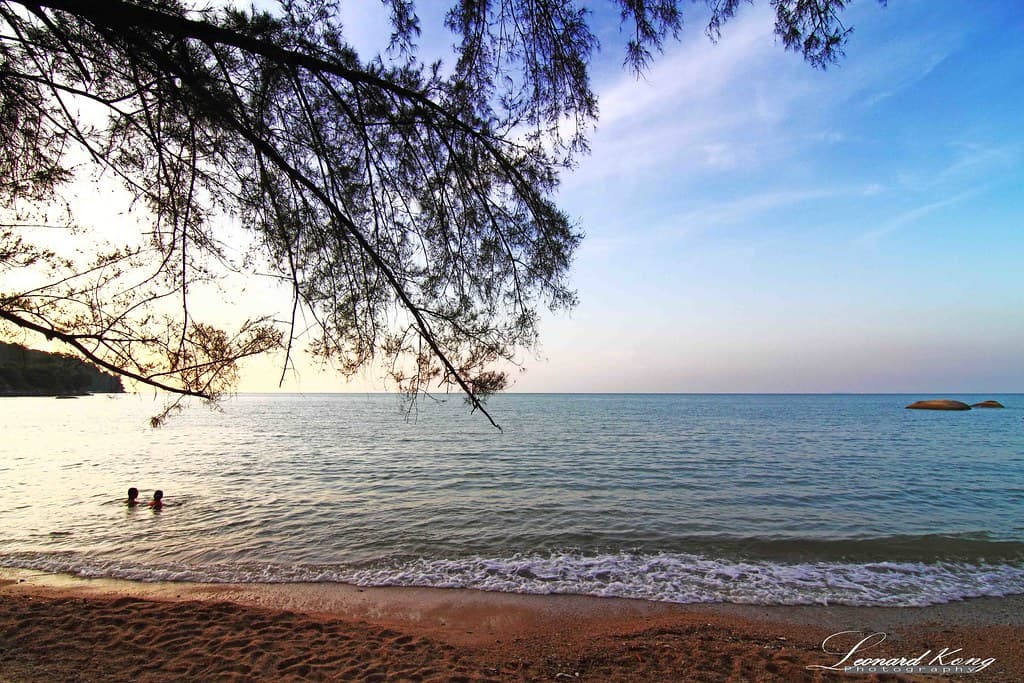 Credit: Flickr
日落黄昏 Sunset on the sea
What keeps you here isn't the postcard aesthetic—it's the rhythm. By late afternoon, the heat softens, vendors begin wheeling carts toward the night market strip just behind the sand, and the scent of satay and fried kuih drifts down to the waterline. You can walk the entire beachfront in forty minutes, passing sunburned holidaymakers, local teenagers tossing frisbees, Indonesian workers on their day off. Sunsets are reliably theatrical, the kind that turn every smartphone into a camera.
Batu Ferringhi works because it doesn't try to be remote. It's functional, social, unapologetically urban—a beach shaped by decades of Malaysian family weekends and package-tour itineraries. You come here not to escape civilization but to wade into a different, saltier slice of it.


