
The sand at Pasir Bogak clings to your ankles in fine, pale grains that squeak underfoot when dry. You'll share this coastline with local families picnicking beneath rented beach umbrellas and older couples wading knee-deep in the tepid Strait of Malacca, which laps the shore in gentle, foam-edged ripples. Wooden fishing boats painted cerulean and lime bob just offshore, their motorsputtering softly as fishermen check nets in the afternoon heat.
“Pangkor's main beach remains stubbornly unglamorous, a functional shoreline where actual island life unfolds between the sunbathers.”
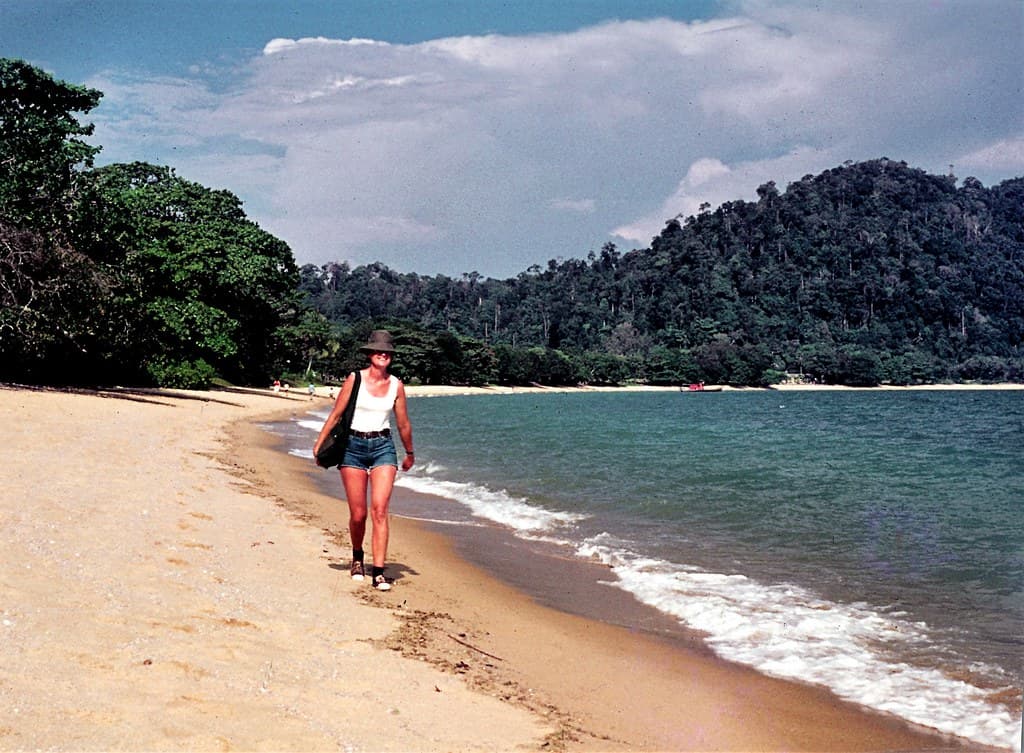 Credit: Flickr
027 Pasir Bogak, Pangkor Island, July 1976
Casuarina trees cast dappled shade along the northern end, where weathered benches face the water and the occasional monitor lizard rustles through dry leaves. The beach operates on island time—no jet skis, no thumping music, just the rhythmic slap of waves and the distant clatter of woks from open-air restaurants strung along the access road. Small resorts and guesthouses cluster behind the tree line, their faded signage promising air-conditioning and satellite television.
Come late afternoon, the sky ignites. Tangerine and magenta bleed across the horizon as fishing boats return, silhouetted against the molten sun. Locals gather with thermoses of teh tarik, settling into plastic chairs they've dragged from nearby warungs. You'll taste salt on your lips, feel the day's heat radiating from the sand beneath your feet, and understand why Pangkor islanders consider this their living room—a place for unhurried evenings, not bucket-list photos.


