
Your room floats on timber pilings above a seabed that barely reaches fifteen feet, yet holds more biodiversity per square meter than almost anywhere in the Coral Triangle. Beneath the wooden walkways connecting dive resorts and Bajau Laut homes, nudibranchs inch across discarded shells, flamboyant cuttlefish pulse neon warnings, and mimic octopuses shape-shift against patches of sand and rubble. This is muck diving's global headquarters—an ecosystem thriving on the detritus of human habitation, where critters usually hidden in deeper waters crowd into the shallows.
“A functioning Bajau sea nomad village shares the same shallow lagoon with world-class macro dive sites, creating rare intimacy between culture and underwater spectacle.”
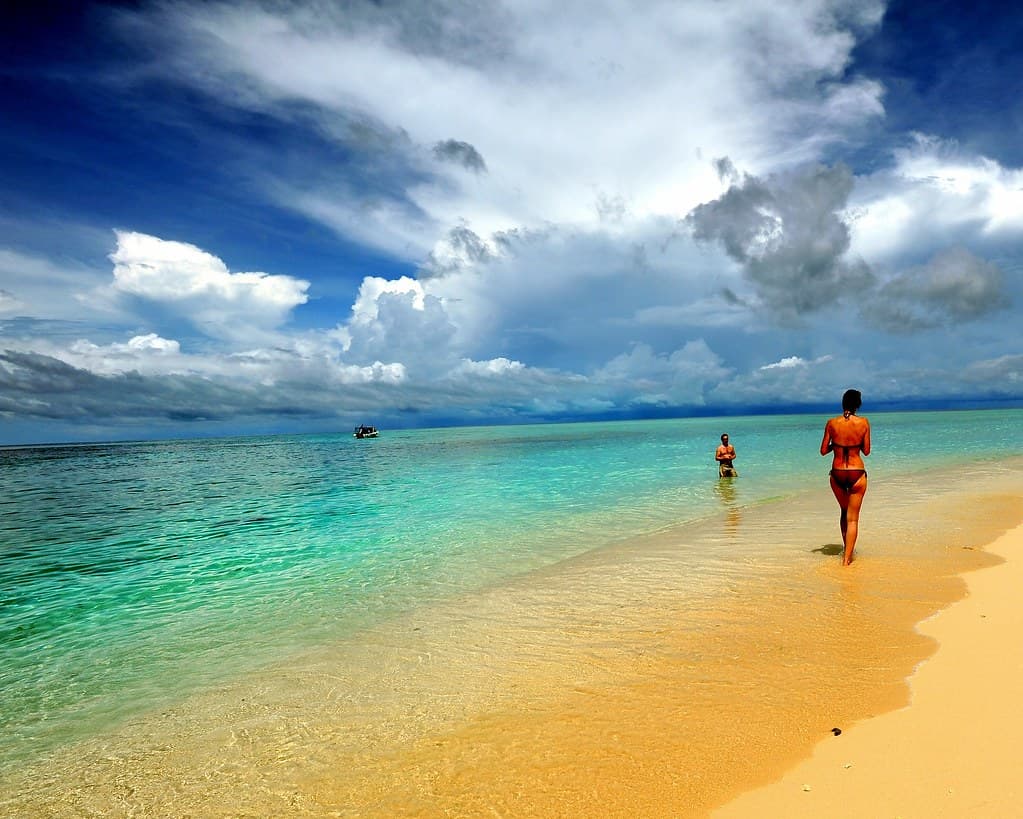 Credit: Flickr
Sipadan Island | Semporna | Sabah | Malaysian North Borneo
The Bajau sea nomads who've lived here for centuries built their houses on stilts long before dive tourism arrived. Their children still paddle dugout canoes between homes, and fishermen repair nets on sagging platforms as you fin past, snorkel mask fogging in the humid air. The cultural collision feels surprisingly organic—resort staff are often Bajau themselves, and the village sprawls alongside the diving infrastructure without clear borders.
You'll spend surface intervals watching kingfishers dive from the resort jetty, or photographing the weathered faces of boat builders working beneath coconut palms on the single sandy stretch. But Mabul pulls you back underwater repeatedly. Night dives reveal bobtail squids hovering like tiny spaceships, and dawn brings schools of barracuda circling the house reef. The bottom stays shallow enough that you'll log ninety-minute dives on a single tank, crawling across sand in search of the next impossible creature.


