
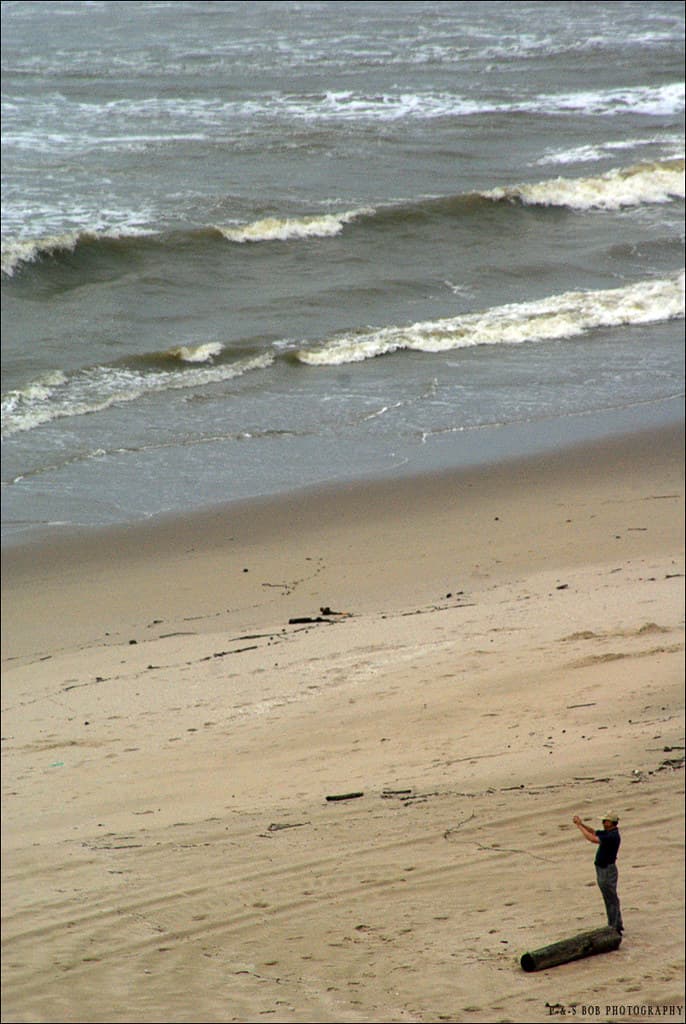
Batu Burok Beach stretches along Kuala Terengganu's eastern edge, a working shoreline where the rhythm of city life never quite drowns out the waves. You'll spot children chasing foam at the waterline while their parents sit beneath casuarina trees, and fishing boats bob just offshore, their painted hulls bright against the gray-blue of the South China Sea. The sand is coarse and golden-brown, littered with fragments of coral and shell, and the breeze carries salt mixed with the char of grilling squid from the food stalls lining the coastal road.
“It's the only beach where you can watch Kuala Terengganu's fishing fleet return while standing in the heart of the state capital.”
 Credit: Flickr
The depths of the sea can be plumbed, but who can tell the feelings of the human heart?
This is not a beach for postcard-perfect swims—the currents can be unpredictable, the water murky with sediment stirred from the seabed—but it is the city's gathering place. Families spread mats near the beach volleyball nets. Joggers follow the paved promenade at dawn. On weekends, the parking area fills with cars and motorcycles, everyone here for the same reason: to escape the shophouses and office blocks for a few hours of open sky.
Come late afternoon when the light turns amber and the fishing fleet returns. The fishermen tie up at the small jetty, and you can buy prawns straight from the ice-packed coolers. Vendors fire up portable grills, and the smell of sambal and lime drifts across the sand. The sunset is rarely spectacular—often obscured by haze—but the ritual of watching it here, shoulder to shoulder with Terengganu residents, matters more than the view.


