
Counting the waves…
Counting the waves…
A refined fusion of water purity, environmental stability, and communal vibrancy for Hukuwai Beach.
View MethodologyAnalyzed via live sensors and environmental data.
Wave height, wind, and atmospheric stability.
Live footfall and crowd balance metrics.
Community reviews and curated sentiment.
“Hukuwai sits in the gap between where most maps stop caring and where the locals start paying attention—a sweep of grey-brown sand backed by scrub and farmland, the kind of beach that doesn't advertise itself but…”
Limited recent visitor reports — live OBI telemetry is your best guide for current conditions.
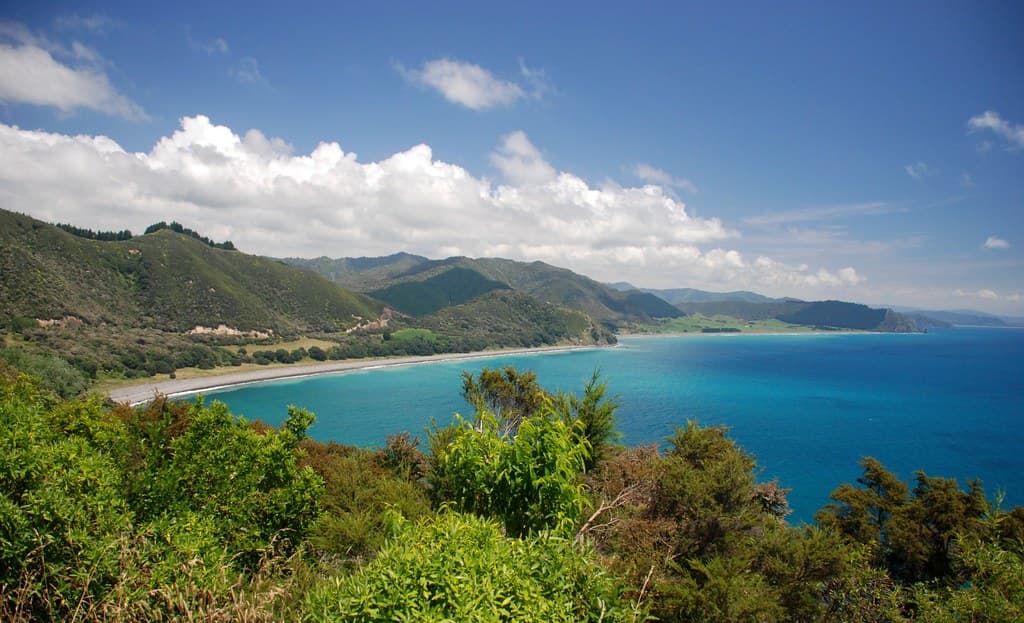
The drive east from Ōpōtiki traces the coast through paddocks and pohutukawa, the road narrowing as the houses thin out and the Pacific fills your windscreen. Hukuwai appears without fanfare—no signage, no carpark, just a gravel pull-off and a gap in the dunes. The sand here runs darker than the Bay of Plenty's western stretches, volcanic minerals mixed with river sediment, firm underfoot and wide enough to disappear into when the tide retreats.
The surf arrives unfiltered from the northeast, building over shallow sandbars that shift with each swell. You'll see consistent peaks on the right tide—hollow enough to challenge, forgiving enough that a wipeout won't ruin your day. The beach faces open ocean, so the wind matters: offshore mornings deliver glassy walls; onshore afternoons turn it to mush. There's no surf club, no patrol flags, no crowd to navigate—just you, the rhythm of the sets, and the occasional local who knows the banks by heart.
Crashing wave at sunset on the shoreline
Shifting peaks, best on offshore
Empty sand, mountain backdrop, silence
Tidal rock platforms and dunes
Prime Visitation
Best Weather|Less Crowds
Where it is
Hukuwai Beach
Ōpōtiki, Bay of Plenty, New Zealand
-38.015000°, 177.347000°
Weather
Loading…
Swell
—
Temp
Warm · Restorative
UV Index
Moderate
Wind
—
Tidal State
Last known
Max Sunlight
—
Ideal Shade
—
Jan - Dec (Peak)
Mar - Nov (Off-season)
Best Weather|Less Crowds
Select a category to load nearby places.
Unlock restaurants, luxury stays and curated maritime experiences within 2km
Hukuwai Beach is an unpatrolled, remote beach where swimming requires caution and ocean experience. Conditions vary depending on swell, wind, and tide. Rips and currents can develop, particularly during larger swells or incoming tides. There are no lifeguard services or immediate emergency assistance. Experienced ocean swimmers may find it suitable on calm days, but families with young children should supervise closely and stay in shallow water. The beach's isolation means fewer eyes watching out for trouble. Always assess conditions carefully before entering the water and never swim alone at remote beaches like this.
Summer months (December-February) provide the warmest temperatures and most stable weather, though the beach remains uncrowded year-round. Early morning offers the best conditions for sunbathing with calmer winds before afternoon sea breezes develop. Autumn (March-May) brings pleasant weather with minimal crowds. Surfers may find waves year-round depending on swell direction. Winter visits can be atmospheric but colder and windier. Because it's a hidden, low-profile beach, you're likely to enjoy solitude whenever you visit. Weekdays are quieter than weekends, though even weekends see relatively few visitors compared to mainstream beaches.
Hukuwai Beach is located east of Ōpōtiki along State Highway 35 (Pacific Coast Highway), roughly 10-15 minutes' drive from town. Look for beach access points along the highway; local knowledge helps as signage may be minimal. The beach isn't prominently marked on most tourist maps, contributing to its low-profile status. You'll need your own vehicle as there's no public transport. Roads are sealed but can be narrow and winding. Parking is informal, typically roadside near beach access tracks. Ask locals in Ōpōtiki for specific directions if needed, as this beach isn't heavily promoted in visitor information.
Ōpōtiki town, a short drive west, offers the nearest comprehensive services including cafés, restaurants, takeaways, supermarkets, and bakeries. Accommodation in Ōpōtiki ranges from motels and holiday parks to backpackers. Some farm stays and holiday homes exist in the rural areas between Ōpōtiki and the beach. The beach itself has no facilities, so bring food, water, and supplies with you. Ōpōtiki is the last significant service town before heading further east toward remote East Cape, so stock up there. Most visitors base themselves in Ōpōtiki and make day trips to nearby beaches including Hukuwai.
Hukuwai Beach doesn't feature prominently in mainstream tourism guides or beach lists, giving it a genuine off-the-beaten-path character. Its location east of Ōpōtiki means it's bypassed by most Bay of Plenty beach-goers who gravitate toward more accessible western beaches. The beach offers uncrowded sandy stretches, surf potential, and scenic coastal views without the development or visitor numbers of popular beaches. Minimal signage and facilities preserve its low-key atmosphere. It appeals to travellers exploring the remote Pacific Coast Highway who appreciate discovering lesser-known spots. The lack of commercial development maintains an authentic, natural beach experience increasingly rare in accessible coastal areas.
Photos