
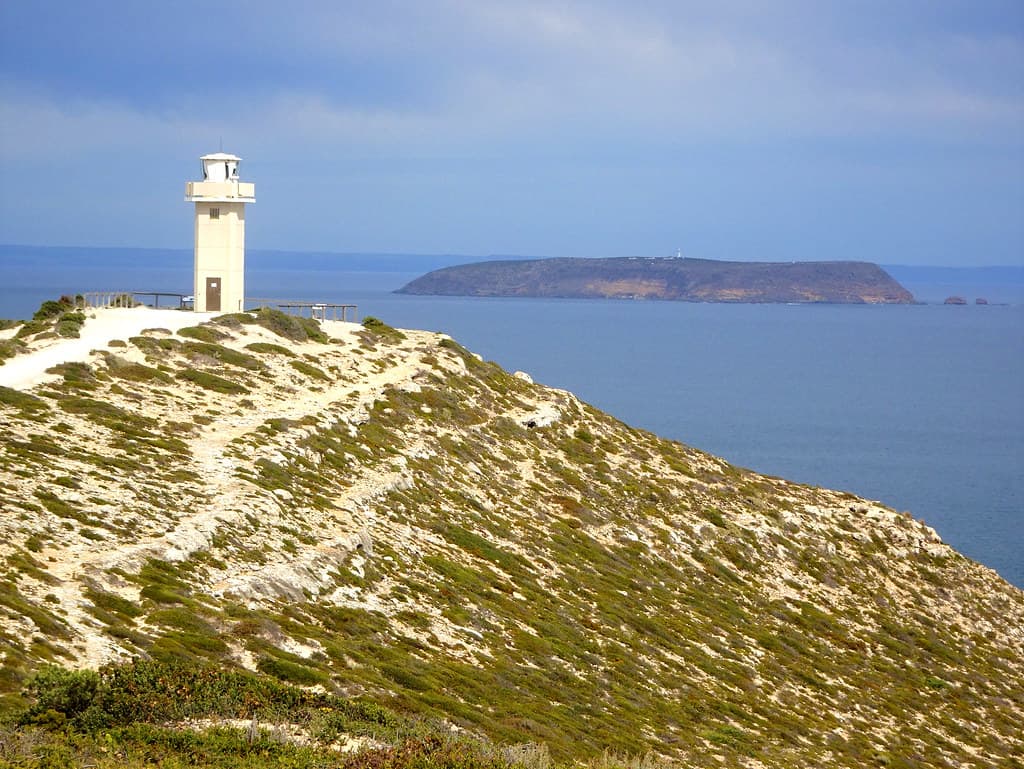
The beach shelves steeply here, stones graduating from fist-sized near the waterline to smaller, ankle-turning pebbles higher up. A concrete boat ramp splits the settlement, its surface stained with rust and green algae, tire tracks pressed into the softer ground behind it. Old craypots sit stacked beside sheds, their orange buoys faded to pale apricot by sun and salt.
“Pareora Beach is working coastline—baches, boats, and routines unchanged for decades, refreshingly indifferent to tourism.”
 Credit: Flickr
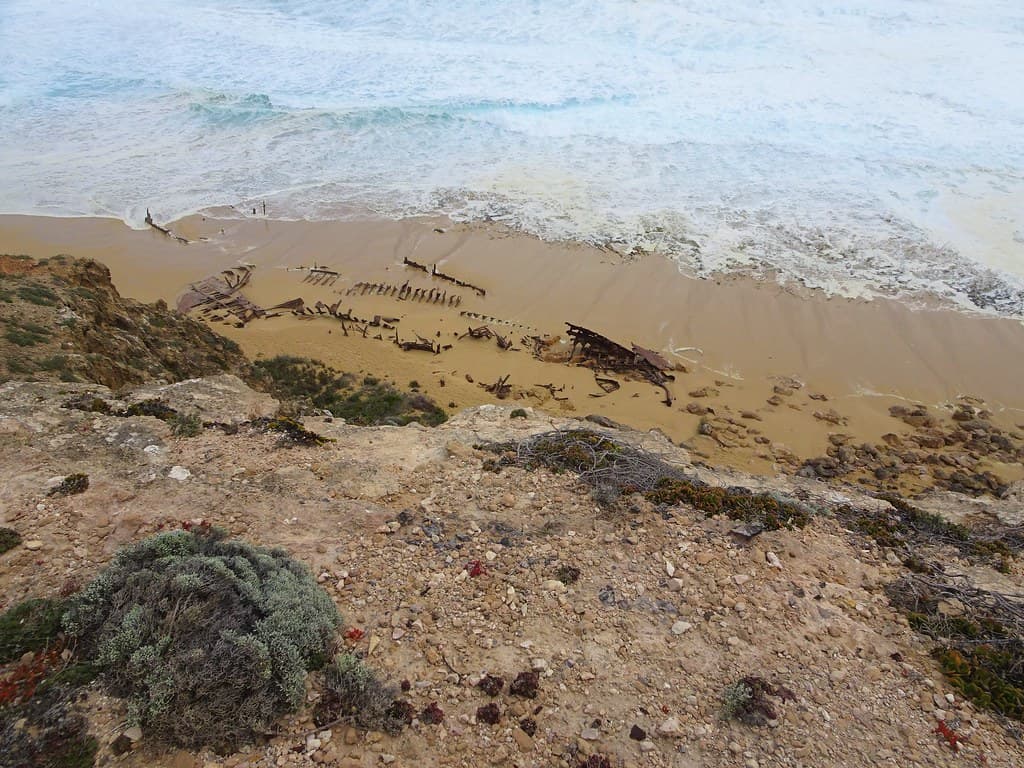
Innes National Park South Australia. An equinoxal gale and rough seas at the wreck of the Ethel beach. Some of the iron wreckage of the 1904 wreck is still on the sand.
You'll see perhaps two or three other people during an hour's walk—someone checking cray lines, a dog off-leash working the scent trails through dried seaweed. The baches here are modest, most dating to the seventies or earlier, their paint weathered to soft blues and greens that blend with sea and sky. Washing hangs on lines strung between posts, and dinghies rest upturned on the stones, their hulls patched and re-patched.
The horizon stretches unbroken to the east, nothing between you and the Chatham Islands except eight hundred kilometres of open water. Sunsets happen behind you, over farmland, but the afterglow—that brief period when the whole sky becomes a diffused lantern—turns the water pewter and rose. A few gulls work the tideline. The stones click and whisper as waves retreat. It's the kind of beach that asks nothing and offers exactly what it is.


