

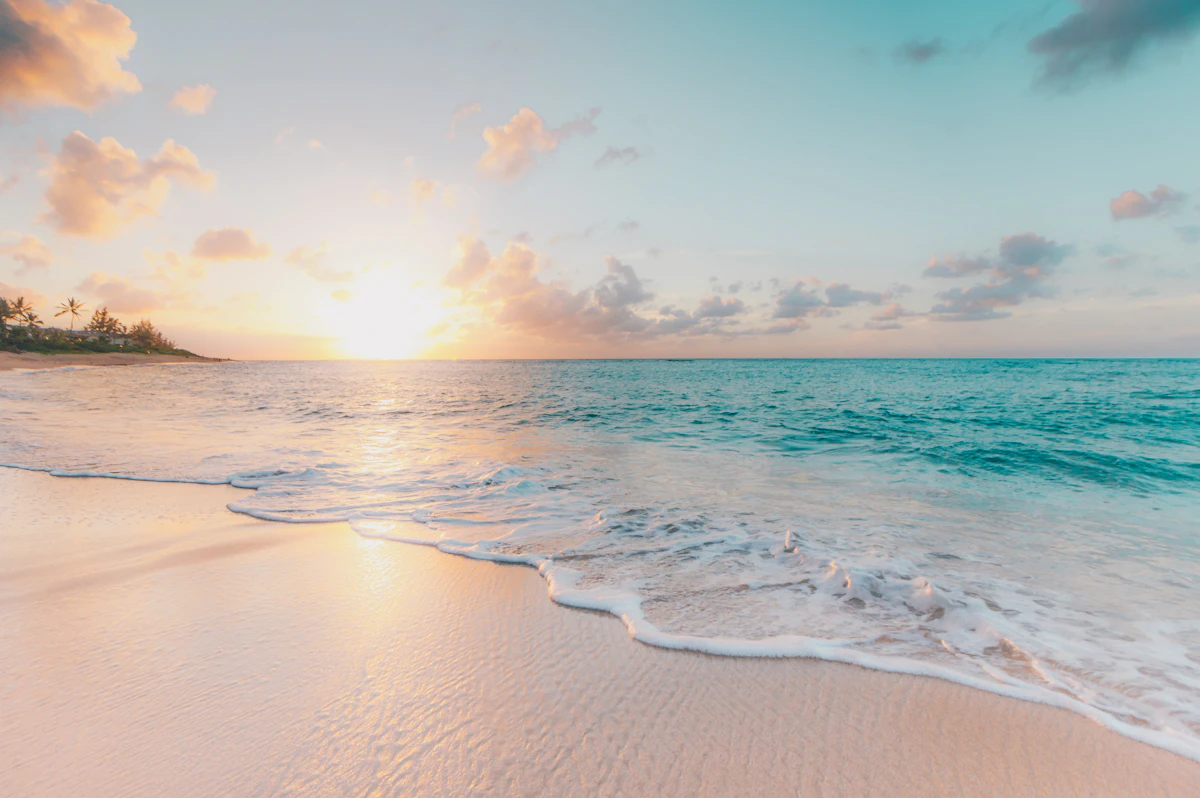
The beach unfolds before you without apparent end, a ribbon of tan sand where the western Chatham coast meets the Pacific's full force. This is where you feel the planet's curvature, the sense that if you could walk far enough you'd eventually reach Chile. Swells march in from the deep ocean, unobstructed by reef or island, and detonate on the beach with a bass-note thunder that you feel in your sternum.
“Few beaches in the Pacific offer this combination of absolute remoteness, epic length, and complete exposure to the Southern Ocean's unfiltered power.”
 Credit: Unsplash
Aerial view of turquoise tropical bay
Seabirds dominate the sensory landscape: mollymawks gliding on stiff wings, skuas patrolling the wrack line, dotterels running ahead of your footsteps like mechanical toys. During nesting season the dunes behind the beach become nurseries, and you must watch where you step. The wind is constant, sometimes a breeze, often a shove, occasionally a sustained roar that makes conversation impossible. It carries the smell of kelp and distance, of air that has touched nothing human for thousands of miles.
You walk until your legs ache and the starting point vanishes behind coastal haze. The beach looks the same in every direction—sand, surf, sky—and that monotony becomes hypnotic. This is walking as meditation, as endurance test, as an encounter with emptiness that isn't empty at all but filled with wind and birds and the patient erosion of water against land. You return windburned and exhilarated, understanding why islanders call this the edge of the world.


