

Blackhead unfolds at the southern extreme of Hawke's Bay, where the coastline straightens and the land flattens into agricultural plains. The settlement itself numbers fewer than a hundred dwellings, most of them modest baches set back from the beach among the dunes, their decks oriented toward the ocean and the prevailing nor'easter. Behind them, the dune system rises in dramatic swells, some crests reaching twelve metres, their faces embroidered with native grasses that whisper and hiss in the constant wind.
“Blackhead's dramatic dune system and resolutely uncommercial character create a beach experience that feels decades removed from modern tourism.”
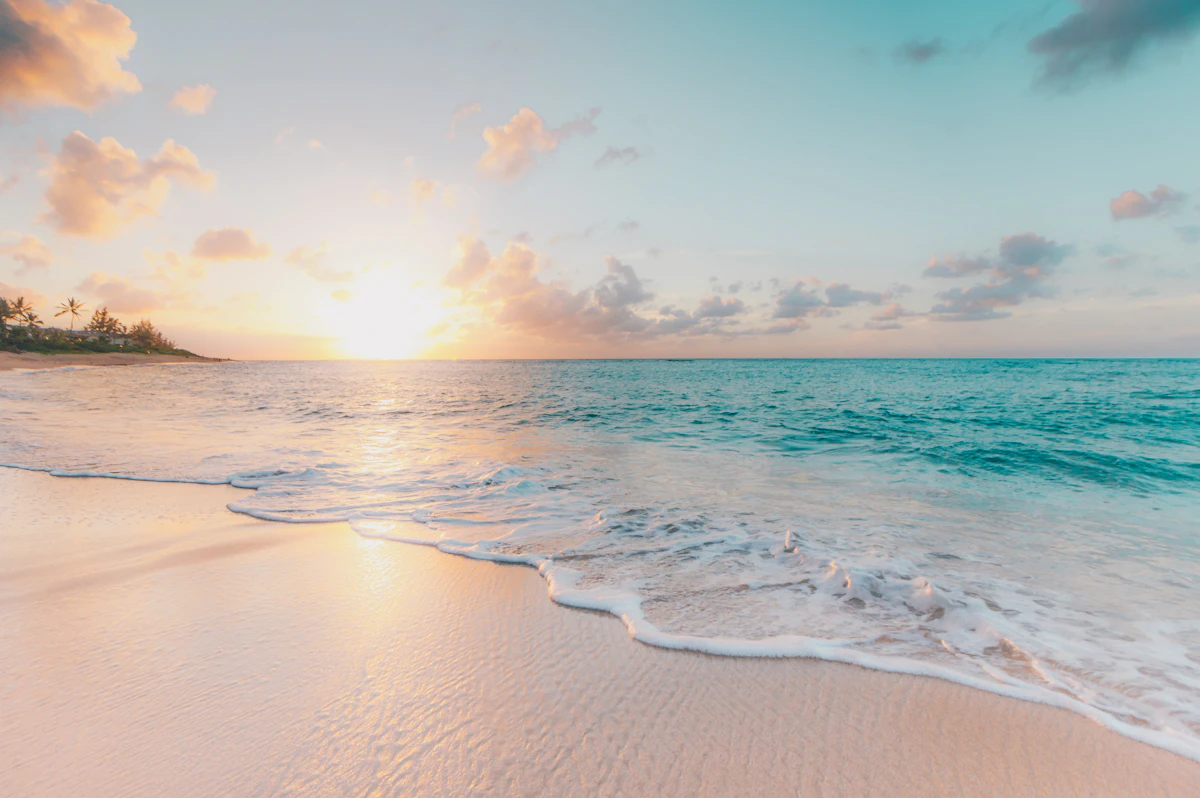 Credit: Unsplash
Aerial view of turquoise tropical bay
The beach runs wide and firm, the sand a fine grey-gold that squeaks underfoot when dry. At low tide, the shore extends far enough that the surf seems distant, its roar softened to a murmur, and the wet sand becomes a highway for walkers and the occasional horse. Driftwood collects in bleached tangles at the high-tide mark—massive logs stripped of bark, twisted branches, fishing floats that drifted here from who knows where. The water stays brisk year-round, the kind that wakes you up instantly, and the waves break with enough punch to keep swimmers honest.
What makes Blackhead singular isn't drama but restraint. There's no commercial district, no vacation rentals with spa pools and WiFi, no efforts to attract anyone who isn't already connected to the place. The community maintains a fire station, a boat club, a sense of shared responsibility for keeping things low-key. On summer evenings, smoke from barbecues drifts through the dunes, and kids on bikes navigate the sandy tracks between baches, their laughter carrying on the breeze.


