

The beach at Pūhakī announces itself modestly: a gravel pullout, a gap in the lupins, a footpath worn through the dunes. You step onto sand the color of wet slate, firm underfoot, scattered with driftwood and kelp from the previous tide. The coast here runs straight and featureless for kilometers, hemmed between farmland and the Pacific, a working stretch of shoreline that tourism brochures routinely overlook.
“Pūhakī offers the increasingly rare experience of a named beach that remains genuinely unvisited, tucked into rural coast between known destinations.”
 Credit: Unsplash
Aerial view of turquoise tropical bay
You'll spread your towel where the sand is dry and still cool from the night. The surf rolls in with mechanical regularity—thigh-high, waist-high, occasionally shoulder-high depending on the swell. There are no flags, no lifeguards, no facilities beyond the dirt track you drove in on. Behind the dunes, sheep graze paddocks that climb gently toward the inland ranges. The only movement is the wind combing the marram grass and the occasional ute rattling past on the coast road.
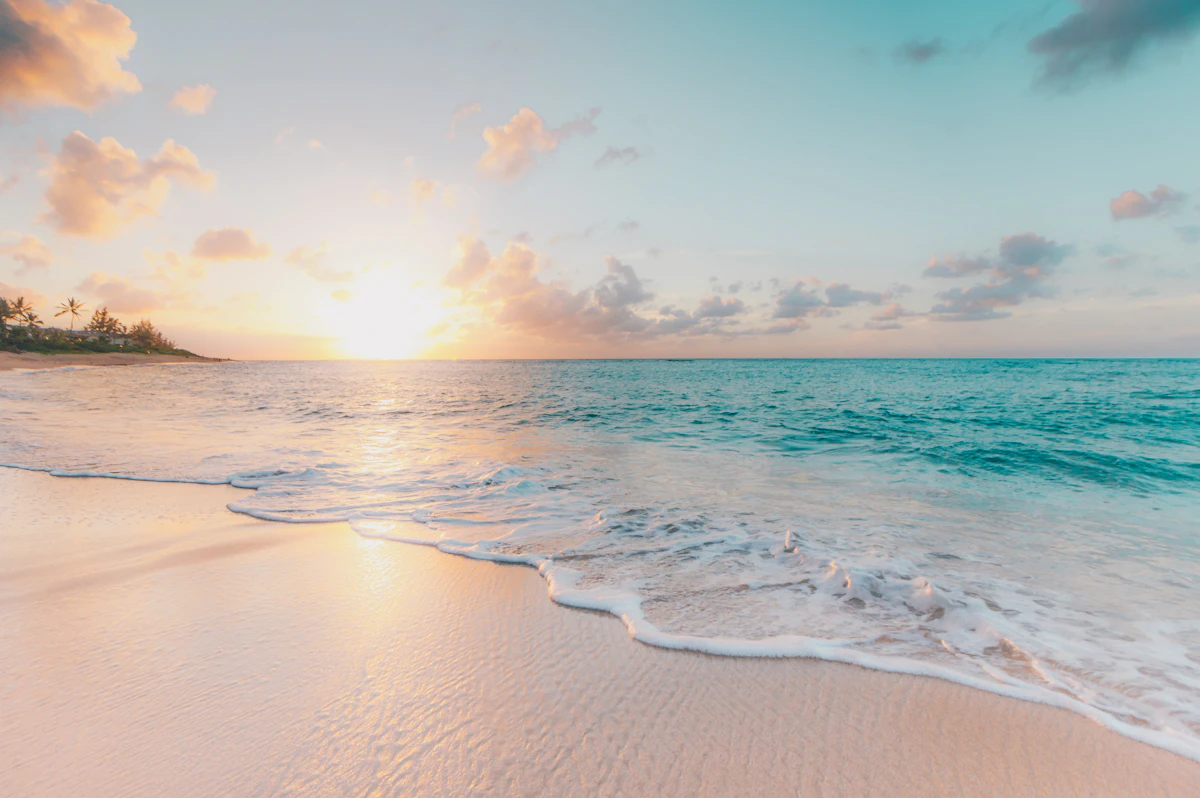
Sunset at Pūhakī is a study in horizontals: the beach, the breakers, the horizon, the long clouds stacked above it all. The light goes amber, then rose, catching the spray off the shore break and turning the wet sand into a mirror. You walk back to the car with salt drying on your shins and sand in your shoes, already half-forgetting the name of this beach, which is exactly how it's survived this long without crowds.


