

You step onto a beach that feels more sculpture garden than shoreline. The boulders—basalt, waterworn, massive—rest at odd angles across the intertidal zone. Some sit half-buried in sand, others perch on reef shelves, their surfaces polished to a dull sheen by millennia of Hokianga tides. Between them, pools mirror the sky, and tiny crabs flicker across weed-slick rock. This is Koutu, where volcanic history meets harbour estuary in a collision of form and colour.
“Nowhere else on the Hokianga does volcanic geology create such a striking, boulder-studded tidal landscape.”
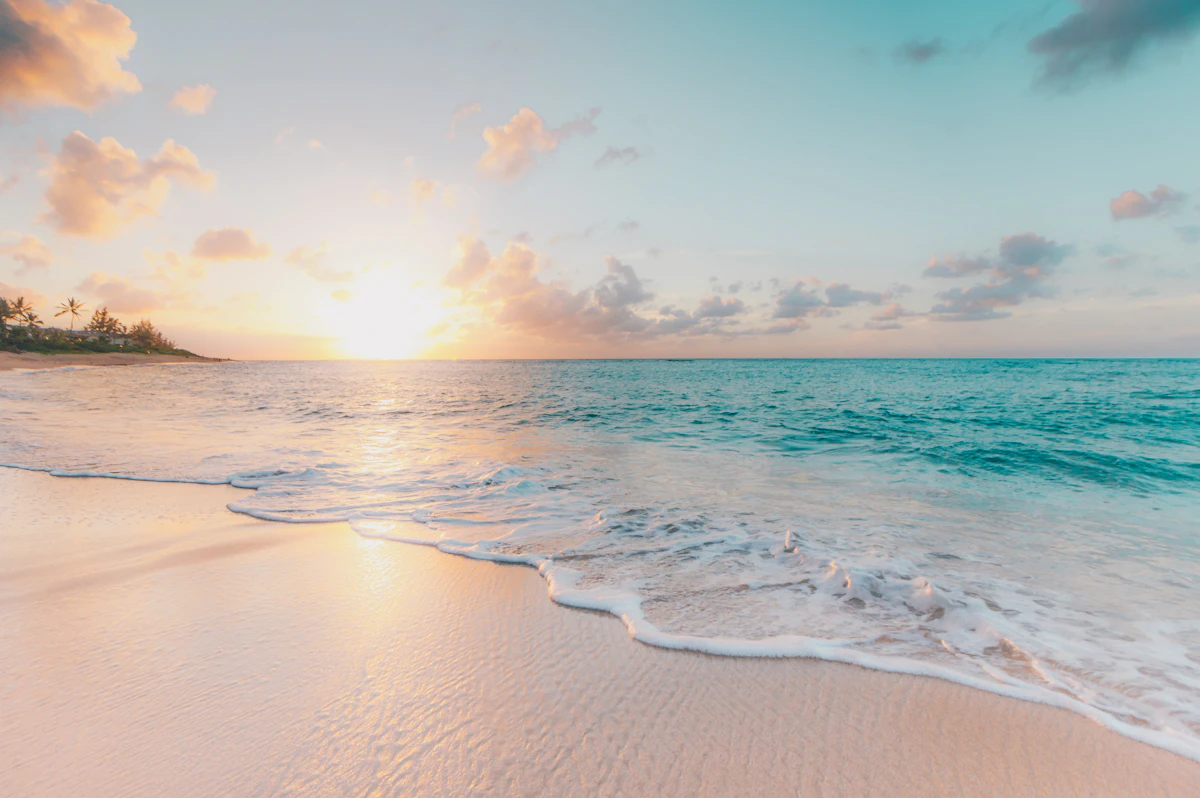 Credit: Unsplash
Aerial view of turquoise tropical bay
The beach curves in a tight crescent below Rawene, the historic timber town visible across the water. At low tide, you can thread between the boulders, each one a study in erosion—dimples, grooves, tide-worn hollows where the harbour has worked its patient magic. The sand here is grey-brown, flecked with shell fragments and iron-stained pebbles. Native scrub clings to the low cliffs behind, and the air carries the briny tang of exposed mudflats mixing with the sweetness of mangrove.
Light transforms the scene hourly. Morning sun casts long shadows from the boulders, each stone sharp-edged against the sand. By afternoon, the harbour reflects the sky in sheets of silver. At dusk, the rocks turn to silhouettes, and the water between them glows amber and rose. You'll crouch beside a tidal pool, watching whelks creep across submerged stone, and lose an hour to the small, hypnotic rhythms of this unfamiliar shore.


