
Blackhead Beach takes its name from the dark volcanic headland that anchors its southern end, where hexagonal basalt columns rise from the surf like architecture designed by slow-cooling magma. The beach itself is part sand, part rock platform, the kind of shore that changes character with each tide. At low water you can walk across exposed reefs where anemones pulse in tide pools and kelp lies in slick tangles. At high tide the ocean reclaims everything, waves detonating against the basalt in white explosions that send spray twenty meters up the cliff face.
“The exposed columnar basalt formations create one of Otago's most dramatic geological shorelines, where volcanic heritage meets constant Southern Ocean assault.”
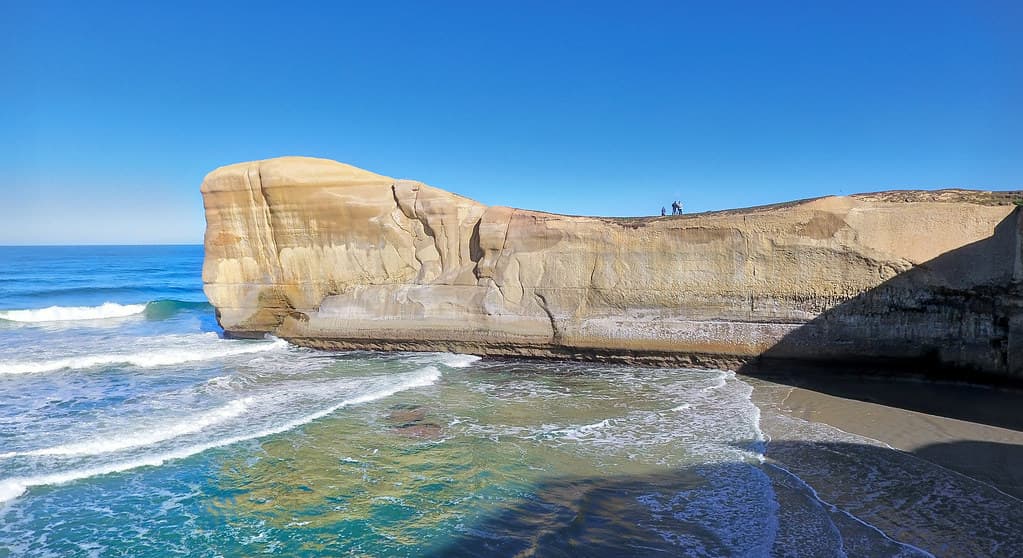 Credit: Flickr
Blackhead Beach — photo by Trey Ratcliff
The sand is iron-dark in places, heavy with volcanic minerals that give the beach a weight underfoot different from the pale quartz strands up the coast. Driftwood lies scattered above the high-tide line—massive logs stripped of bark and bleached grey by salt and sun, some large enough to shelter behind when the wind turns onshore. The coastal walking track runs along the clifftop above, offering views down to the beach and out across the South Pacific's restless surface.
Surfers dot the lineup on good days, shortboards slicing across faces that wall up against the offshore reefs. The beach break closer to shore offers less consistent shape but more forgiving consequences when you misjudge a wave. Sea lions occasionally haul out on the rocks at the north end, massive bulls that claim their territory with guttural bellows you can hear over the surf. The sunset light here turns the basalt gold-orange, briefly softening stone that has stood against the ocean for millions of years.


