Counting the waves…
Counting the waves…
A refined fusion of water purity, environmental stability, and communal vibrancy for West Ruggedy Beach.
View MethodologyAnalyzed via live sensors and environmental data.
Wave height, wind, and atmospheric stability.
Live footfall and crowd balance metrics.
Community reviews and curated sentiment.
“West Ruggedy earns its name honestly. This is where the island's forested spine gives way to exposed coast, and the beach takes every punch the Tasman throws. You'll arrive windblown and exhilarated, boots full of sand,…”
Limited recent visitor reports — live OBI telemetry is your best guide for current conditions.
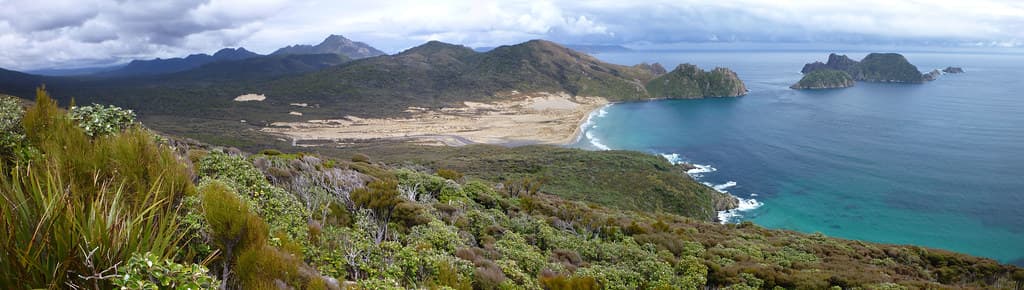
The Northwest Circuit delivers you onto West Ruggedy after a knee-jarring descent through scrub that claws at your pack. The beach unfurls below, a tawny ribbon pinned between headlands of dark schist. Driftwood lies in chaotic windrows—some logs thick as your torso, others snapped like kindling—testament to winter storms that reshape the strand every year.
The sand is coarse, salted with crushed shell and pumice pebbles that rattle underfoot. Surf arrives in disorganized sets, driven by swells that have traveled unobstructed from South America. On blustery days, spindrift peels off the crests and the air tastes of salt three meters above the tide line. When the wind swings southwest, the beach becomes a sandblaster; when it drops, the silence feels almost unnatural after hours of roaring gales.
Rugged Northwest Circuit route
Windrows and weathered logs
Unobstructed Southern Ocean waves
Prime Visitation
Best Weather|Less Crowds
Where it is
West Ruggedy Beach
Stewart Island / Rakiura, Southland, New Zealand
-46.773600°, 167.796400°
Weather
Loading…
Swell
—
Temp
Warm · Restorative
UV Index
Moderate
Wind
—
Tidal State
Last known
Max Sunlight
—
Ideal Shade
—
Jan - Dec (Peak)
Mar - Nov (Off-season)
Best Weather|Less Crowds
Select a category to load nearby places.
Unlock restaurants, luxury stays and curated maritime experiences within 2km
Swimming at West Ruggedy Beach is extremely dangerous and not recommended. The beach faces exposed Southern Ocean conditions with powerful surf, strong currents, and very cold water temperatures. The name 'Ruggedy' reflects the challenging nature of this coastline. There are no lifeguards, and emergency help is days away via tramping track. The remoteness and harsh conditions make any water entry risky even for strong swimmers. Enjoy this beach for its dramatic scenery and wilderness character instead.
Summer (December-February) provides the best weather window and longest daylight hours for the multi-day Northwest Circuit tramp needed to reach West Ruggedy Beach. Even in summer, expect rapid weather changes and challenging conditions. These months offer relatively milder temperatures and better track conditions, though snow and severe weather remain possible year-round on Stewart Island. Crowds are never an issue due to extreme remoteness. Only experienced trampers should attempt visiting outside summer months.
West Ruggedy Beach is accessed via the Northwest Circuit, a demanding 9-11 day tramping track starting from Oban on Stewart Island. Reach Oban by ferry from Bluff or flight from Invercargill on the South Island. The circuit requires advanced tramping skills, excellent fitness, and complete self-sufficiency with food, camping gear, and navigation equipment. Book DOC huts well in advance. This track is considered one of New Zealand's most challenging wilderness experiences.
West Ruggedy Beach has absolutely no facilities. Trampers must be entirely self-sufficient, carrying all food and equipment from Oban, where all of Stewart Island's shops and accommodation are located. The nearest DOC hut depends on your route direction and may be hours away. There's no fresh water, shelter, or emergency services. You must pack everything in and out, including all rubbish. This is true wilderness tramping requiring meticulous preparation and backcountry experience.
West Ruggedy Beach represents backcountry New Zealand at its most extreme and untouched. The beach rewards hardcore trampers with spectacular isolation, dramatic coastal scenery, and genuine off-grid wilderness. Located on Stewart Island's exposed northwest coast, it faces the full force of the Southern Ocean with wild surf and rugged rock formations. The achievement of reaching this remote shore, combined with abundant native birdlife and pristine natural conditions, creates an unforgettable wilderness experience few travelers ever witness.