
You step from the kayak onto sand the color of wet cardboard, fine-grained and cool under your toes. The cove curves tight—maybe fifty meters wide—hemmed by granite boulders webbed in lichen and beech trees that lean out over the tide line. The water here shifts between jade and turquoise depending on the angle of the sun, shallow enough that you can count the ribs of sand on the bottom ten meters out.
“One of the few Abel Tasman coves where wilderness still feels unmanaged and the only company comes from seabirds.”
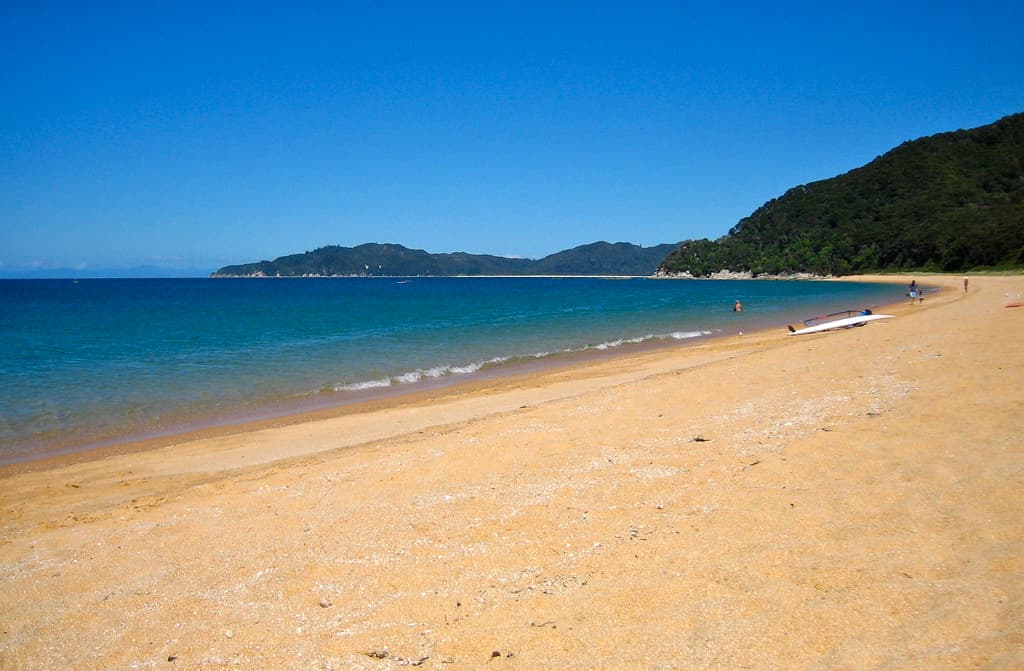 Credit: Flickr
Mutton Cove — photo by Daniel Pietzsch
No cafe. No jetty. No mobile signal. Just the tick of cooling stones as the afternoon heat ebbs, and the occasional splash of a kingfisher diving for baitfish. A track winds up from the back of the beach into dense coastal forest, the kind of climb that rewards you with sweat and solitude rather than Instagram overlooks.
You spread your towel on driftwood smoothed to silver and eat lunch with your feet in the shallows. A blue penguin burrow gapes under a flax root. The tide creeps higher, erasing your footprints, and you realize you haven't seen another person in three hours. That's the currency here—time unspooled, the rare luxury of a beach that asks nothing but attention.


