
Counting the waves…
Counting the waves…
A refined fusion of water purity, environmental stability, and communal vibrancy for Whiritoa Beach.
View MethodologyAnalyzed via live sensors and environmental data.
Wave height, wind, and atmospheric stability.
Live footfall and crowd balance metrics.
Community reviews and curated sentiment.
“Whiritoa exists for the waves and makes no apology—the village is three streets deep, the beach dominates all views, and summer evenings revolve around dissecting the day's sets over barbecues within earshot of the…”
Limited recent visitor reports — live OBI telemetry is your best guide for current conditions.
The beach stretches for nearly two kilometers of dark sand that absorbs heat quickly under summer sun, making the dash across it to the water a test of foot toughness. Surf breaks along the entire length, with the most consistent peaks forming near the central patrol area where a subtle sandbar focuses incoming swell. The shore break can be punishing—heavy, hollow, and unforgiving of mistimed exits—but beyond the impact zone, the waves organize into workable walls that appeal to intermediate surfers willing to handle the paddle-out.
Water here tends murky, stirred by constant wave action and the fine sediment composition of the seabed. Don't expect tropical visibility; instead, you'll navigate by feel and timing, reading the water's surface texture to predict what's building behind you. The beach faces northwest into the Hauraki Gulf, catching swells that wrap around the Coromandel's bulk and refract through the channel between the mainland and offshore islands.
Aerial view of turquoise tropical bay
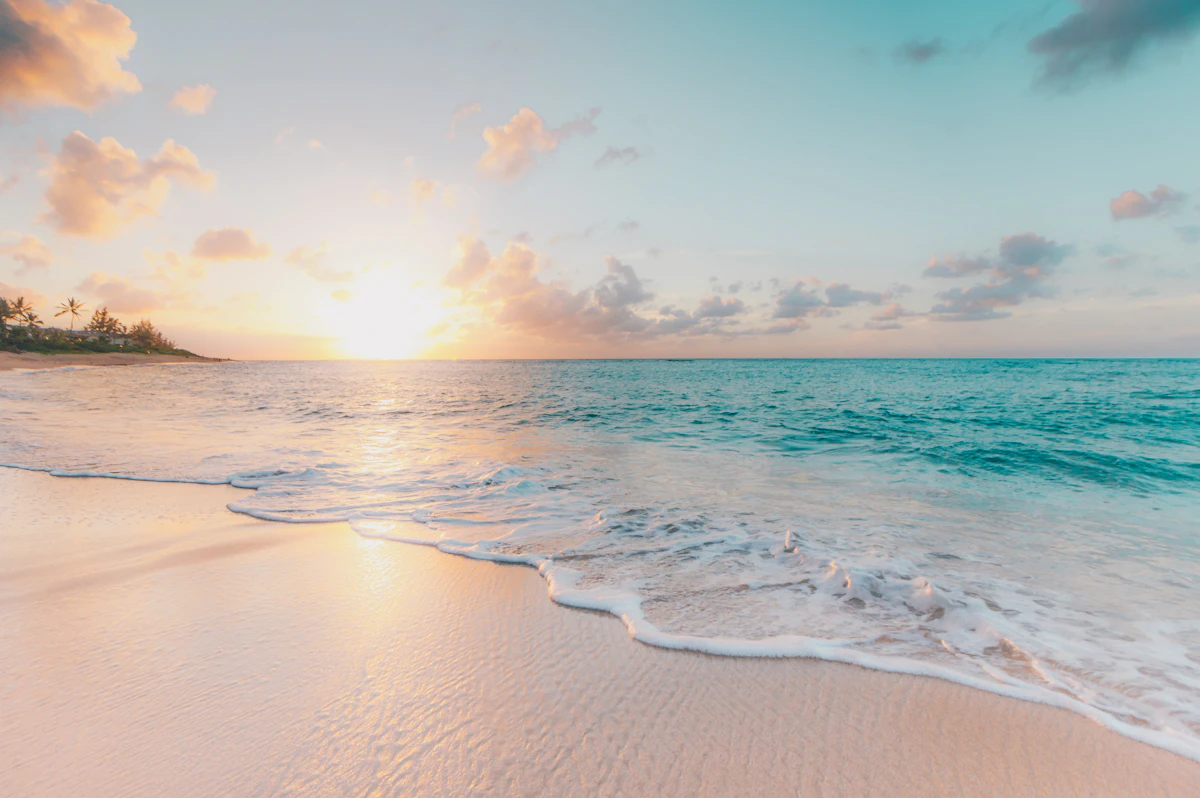
Wide white-sand beach with footprints
Year-round swell, heavy shore break
Flagged areas, strong currents
Heat-absorbing beach surface
Prime Visitation
Best Weather|Less Crowds
Where it is
Whiritoa Beach
Whiritoa, Waikato Region, New Zealand
-37.280400°, 175.898600°
Weather
Loading…
Swell
—
Temp
Warm · Restorative
UV Index
Moderate
Wind
—
Tidal State
Last known
Max Sunlight
—
Ideal Shade
—
Jan - Dec (Peak)
Mar - Nov (Off-season)
Best Weather|Less Crowds
Select a category to load nearby places.
Unlock restaurants, luxury stays and curated maritime experiences within 2km
Whiritoa Beach is a surf beach with ocean swells and should be approached with caution, especially by inexperienced swimmers. While popular with surfers, the beach can have strong rips, currents, and dumping waves that pose risks. The beach is not patrolled by lifeguards year-round, so swimmers must assess their own ability and conditions carefully. Families with young children should stay in shallow areas and maintain constant supervision. When surf conditions are calmer, swimming becomes more manageable, but always check local conditions and be aware that this is an open-ocean beach requiring respect and caution.
The best time to visit Whiritoa Beach depends on your interests. For surfing, winter and spring (June-November) often bring bigger swells, while summer (December-February) offers warmer weather with variable surf conditions. For general beach activities and swimming, summer provides the best weather but also the most crowds. Shoulder seasons (March-April and November) balance pleasant weather with fewer visitors. Early mornings throughout the year offer peaceful beach walks and better surf conditions before afternoon onshore winds develop. Check surf forecasts if wave conditions matter for your visit, as they vary significantly throughout the year.
Whiritoa Beach is located on the western Coromandel Peninsula, accessible by car from State Highway 25. From Waihi, drive approximately 15 minutes east via Waihi Beach Road and then Whiritoa Road. From Thames, it's about 45 minutes south. Auckland is roughly 2 hours away via State Highway 2 and 25. The beach has a car park near the main access point in the compact village center. Roads are sealed and well-maintained. Public transport options are extremely limited, making private vehicle access essential for most visitors. The village is small and easy to navigate once you arrive.
Whiritoa is a compact beach village with limited facilities. Accommodation consists primarily of holiday homes and baches available for rent, with some bach-style motor camps during summer. There's a small store for basic supplies, but dining options are very limited—visitors should not expect restaurants or cafes on-site. For full-service dining, shopping, and more accommodation variety, the nearby towns of Waihi Beach (15 minutes) and Whangamatā (20 minutes) offer more options. Most visitors self-cater and appreciate the quiet, uncommercialised village atmosphere. Bring supplies or plan to travel for meals.
Whiritoa Beach is known as a strong regional surf spot with consistent beach breaks that attract surfers from across the Coromandel and Waikato regions. The beach offers a more authentic, less crowded alternative to busier surf beaches, maintaining a genuine village atmosphere with a tight-knit local community. The compact settlement creates an intimate beach-village feel where everything is within walking distance. The beach's scenic qualities, including views and the natural coastal environment, appeal beyond just surfers. Its relative quietness compared to neighboring Whangamatā makes it attractive for visitors seeking a more low-key coastal experience.
Photos