

You navigate the final stretch of gravel road past farmland where Romneys graze on slopes so steep they seem to defy geometry. The settlement appears suddenly: a few houses, a boat ramp, and the beach itself—a broad crescent of stones ranging from golfball-sized to your fist. The sound is constant, a percussive chorus as waves drag millions of pebbles seaward, then tumble them back up the slope.
“A working rural coastline where surf culture and farming life intersect, far from any boardwalk or beachfront development.”
 Credit: Unsplash
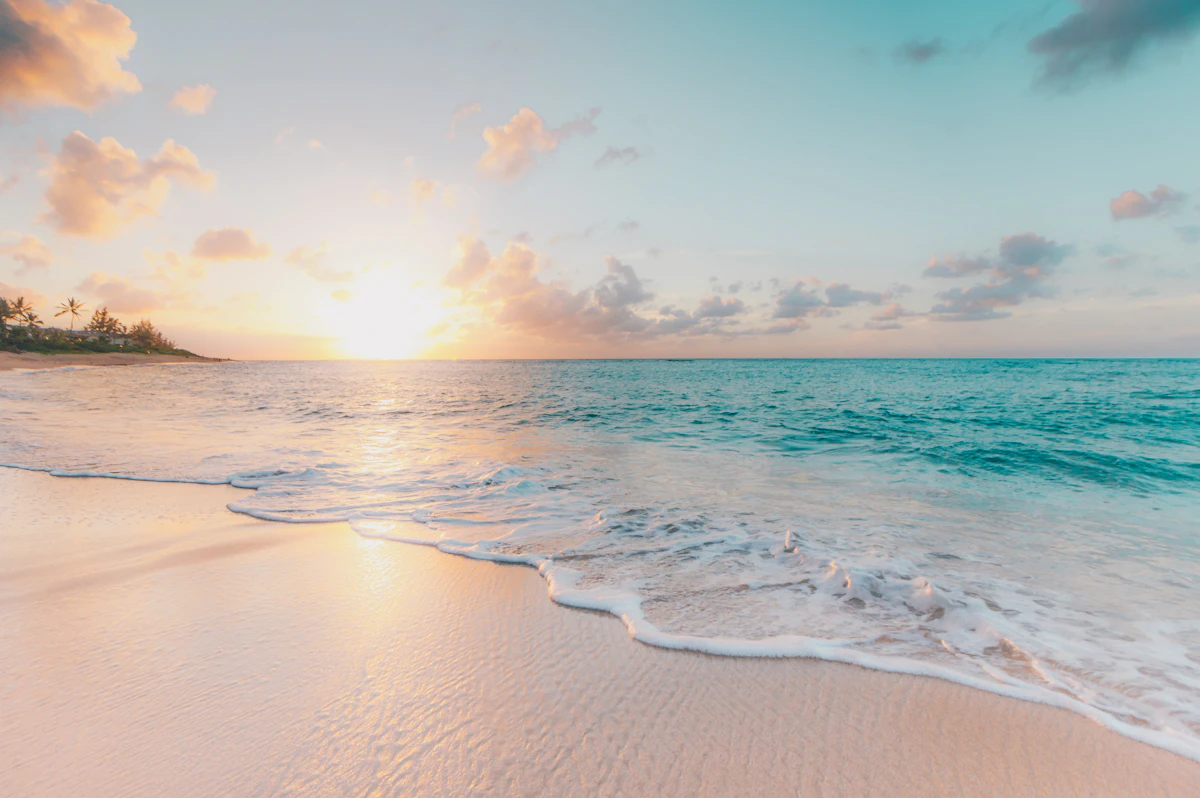
Aerial view of turquoise tropical bay
Surfers paddle out in thick wetsuits, reading the swell lines that march toward shore. The waves break heavy and fast over a shallow reef, generating barrels that draw local chargers from Martinborough and beyond. Even from the beach you can see the power in each set, the way the lip throws forward and the white water boils around the rocks at either end of the bay. Between sets, the surfers sit still as seals, waiting.
You walk to where the stones give way to tide pools, each one a miniature aquarium of anemones and crabs. A farming ute rattles past on the road above, its dog watching you from the bed. Toward evening, the sun breaks through the coastal haze and ignites the western sky in copper and violet. The wind never fully stops, but it eases enough that you can hear the oystercatchers calling from the rocks, their voices sharp and insistent above the rumble of stone and sea.


