
The banca cuts its engine a hundred meters from shore, and you slip into water that moves with purpose. Verde Island sits at the throat of a passage that marine biologists call the center of the center—the bullseye of the Coral Triangle. Below you, the reef drops in terraced walls where barrel sponges grow tall as oil drums and schools of jacks swirl in formations that shift like murmuration.
“You're diving the exact center of the world's marine biodiversity hotspot, where more reef species congregate than anywhere else on the planet.”
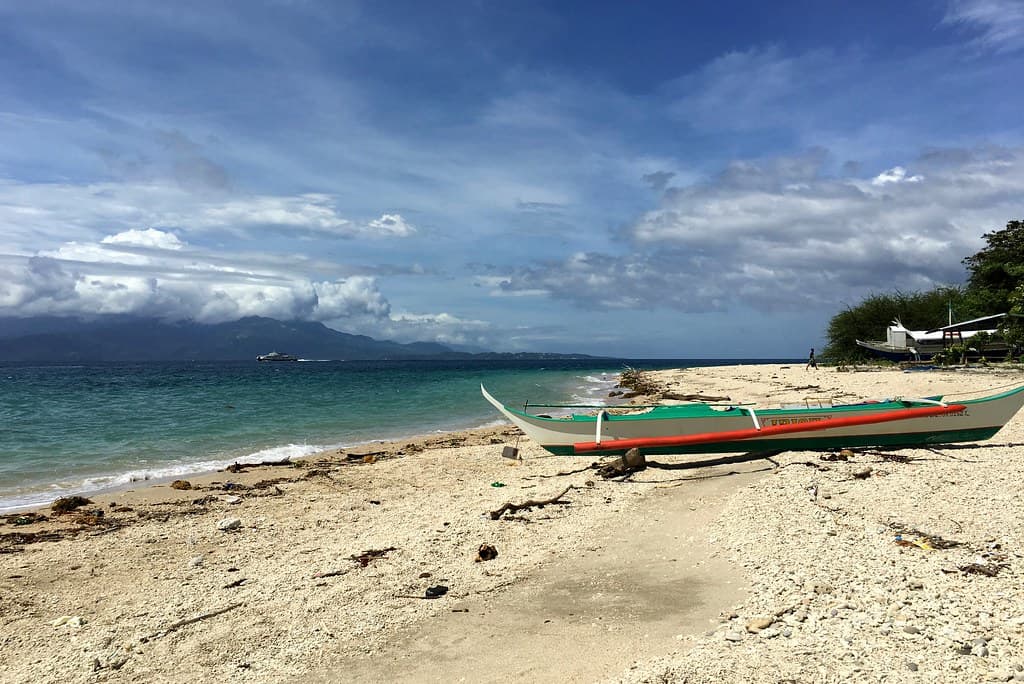 Credit: Flickr
Verde Island Beach — photo by joshkrancer
The island itself is a green cone of volcanic rock, uninhabited except for a lighthouse keeper and the occasional research team. Ashore, the beach is a narrow crescent of tan sand and water-smoothed stones, backed by dense scrub that climbs toward the summit. You won't find loungers or vendors here—just the rhythmic slap of waves against the hull of your boat and the hiss of your regulator as you prep for another dive.
Timing matters. The channel's currents grow fierce during tidal shifts, so most boats arrive mid-morning when the water settles into a gentle drift. Between dives, you'll eat packed lunches on deck, watching frigatebirds ride thermals above the ridgeline. The reef gives up something new each time you descend: a pygmy seahorse clinging to gorgonian coral, a turtle navigating the blue, a reminder that some places still belong primarily to what lives beneath the surface.


