
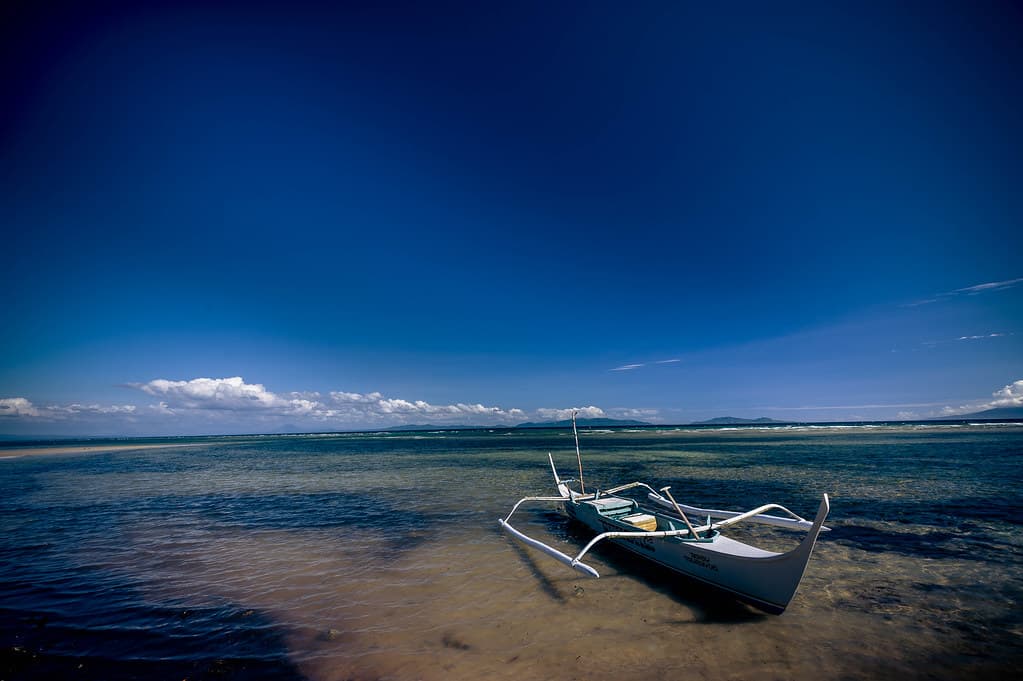
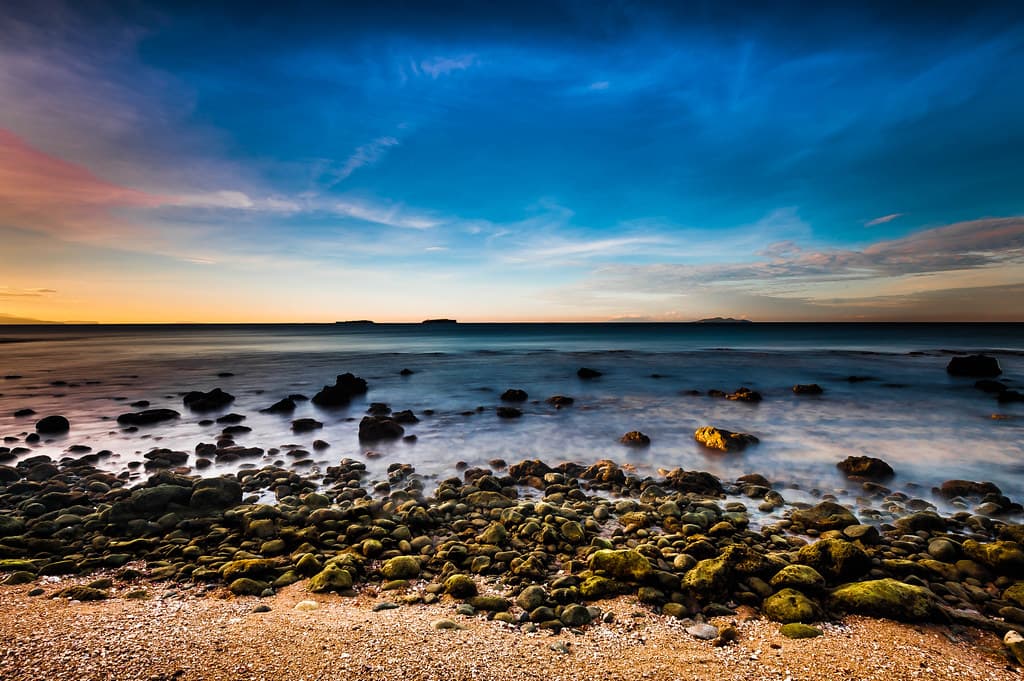
The locals call it Bituin—star—for reasons that become clear only from above or from the water at low tide, when the cove's full geometry reveals itself. Five narrow channels radiate from a central pool, each one carved by millennia of wave action into the volcanic coastline. You'll navigate between dark rock walls draped with air plants and ferns that thrive on salt spray, stepping carefully on rocks made slippery by algae and the constant wet.
“You're entering a cove whose accessibility depends entirely on tidal cycles, making every visit a negotiation between your schedule and the moon's.”
 Credit: Flickr
Bituin Cove — photo by Jose Nicdao
The central pool is the destination: a natural basin twenty meters across where water wells up from submarine connections to the open sea. Even at low tide it's deep enough to swim, the water moving in slow circular currents as waves push and pull through the connecting channels. The rock walls rise three to four meters, creating a protected amphitheater where sound behaves strangely—your voice bounces back slightly delayed, waves echo and overlap. Small fish dart in the shallows where sunlight penetrates, and crabs work the walls at the waterline.
You'll have perhaps two hours before the tide turns and begins reclaiming the walking routes. Watch the water levels carefully; the channels fill faster than you'd expect, and what was ankle-deep becomes chest-deep in twenty minutes. The exit requires retracing your steps through increasingly submerged passages, and locals can tell stories about visitors who waited too long and had to swim out through surge. The drama is part of the appeal, but it's drama that demands respect and attention to the ocean's schedule, not your own.


