
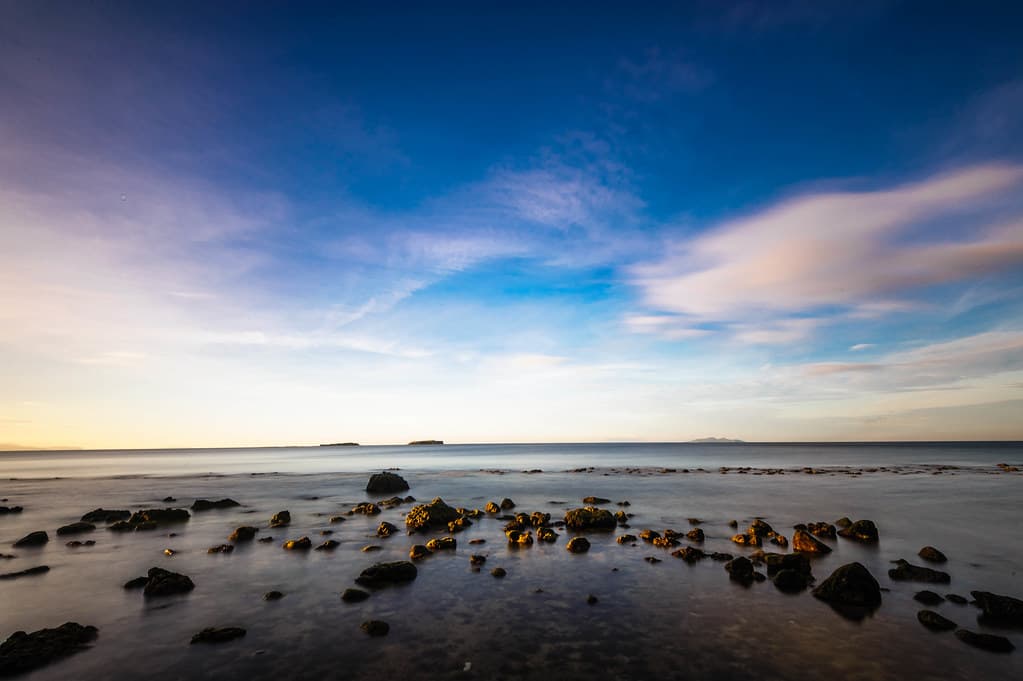
The approach demands attention—loose rock, angled descents, tree roots for handholds. Santelmo Cove isn't designed for easy access, and the trail makes that clear. But when you reach the narrow strip of dark sand at the bottom, wedged between towering rock faces, the effort resolves into understanding: this is a place that reveals itself only to those willing to work for it. The water inside the cove surges and retreats with tidal breathing, filling rock pools, draining them, filling them again.
“You're entering a coastal fracture that functions more as a natural amphitheater than a conventional beach, where geology orchestrates every wave.”
 Credit: Flickr
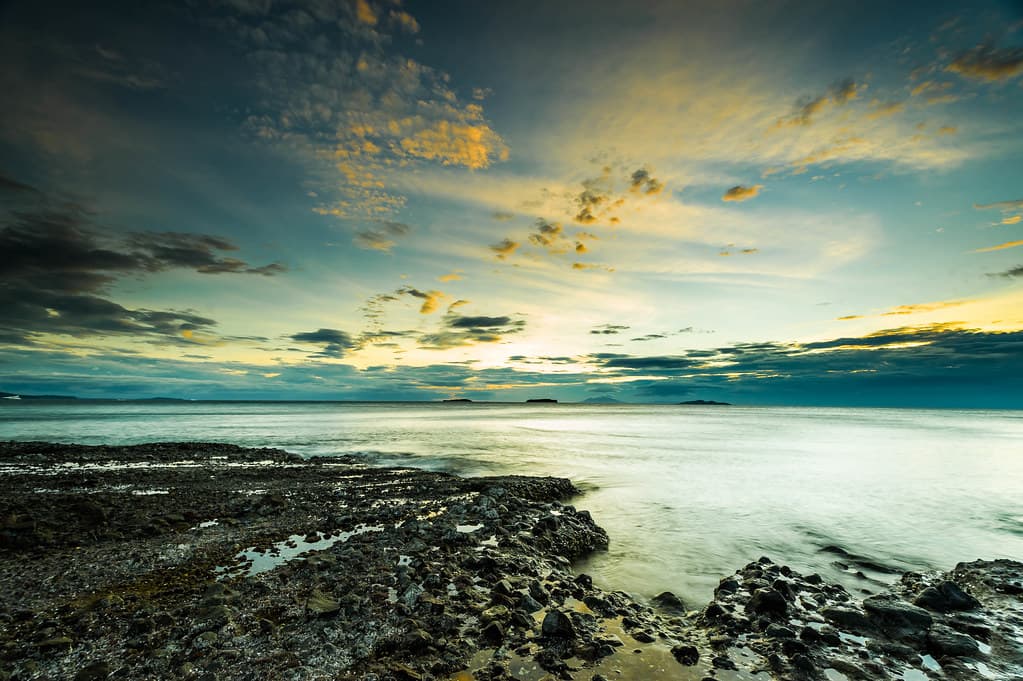
Santelmo Cove — photo by Jose Nicdao
Swimming here feels more like inhabiting a geological feature than visiting a beach. The walls channel waves into focused pulses, and you'll feel the power even on calm days—the water compressed and redirected, lifting you and setting you down with insistent rhythm. The rock is volcanic, dark and porous, eroded into shelves and overhangs where swiftlets nest and sea spray keeps everything perpetually damp. At high tide, the beach nearly disappears, leaving only boulders and surge.
The light changes constantly as the sun arcs overhead, illuminating different sections of wall, creating deep shadows in the overhangs, turning the water from navy to turquoise to something almost black in the deeper pockets. You won't stay all day—the space is too intense, too demanding of attention. But you'll remember the specific quality of sound here: waves amplified by stone, the drip and echo of water finding its way through cracks, the unexpected silence when a swell pauses between sets.


