
You'll enter through a gap between cliffs barely wide enough for a single banca, the walls close enough to touch on both sides. Then the cove opens suddenly into a protected bowl where the water goes still except for the gentlest surface movement. The rock faces show layers of geological time—ash deposits, coral limestone, volcanic intrusions all stacked and tilted at odd angles.
“The amphitheater geology creates acoustic effects and water color unlike any open beach in Caramoan.”
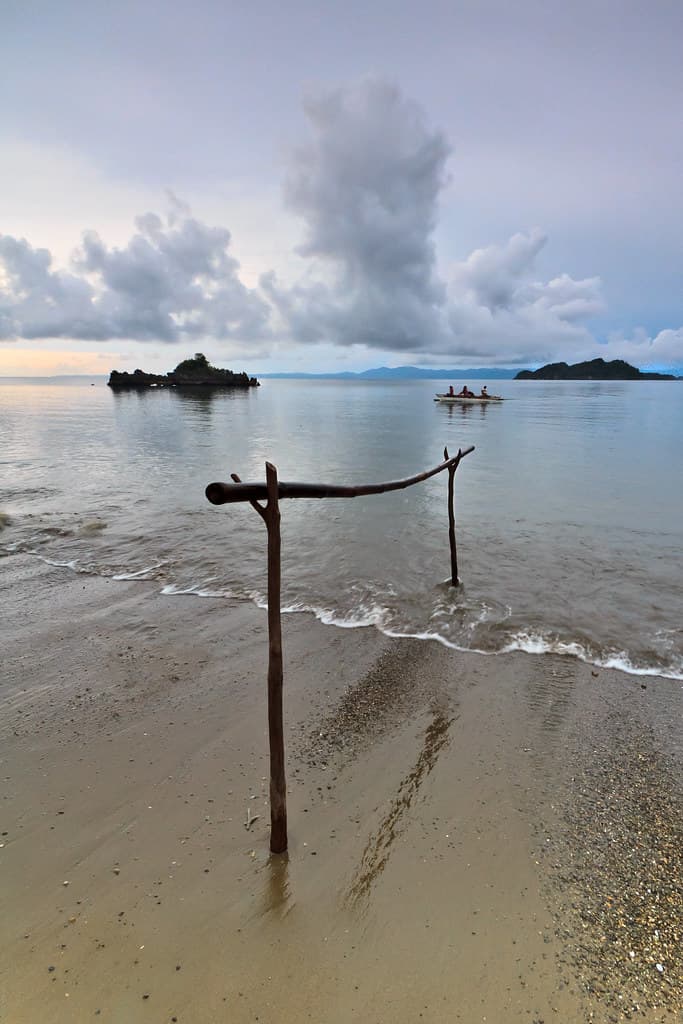 Credit: Flickr
Hunongan Cove — photo by Eisen Jiao
The beach itself is a narrow strip, more pebble than sand, where the limestone has broken down into smooth white fragments the size of your thumbnail. It crunches underfoot and radiates heat by midday, sending you into the water for relief. Snorkeling here means following the walls down where they continue underwater, riddled with small caves and overhangs that shelter schools of juvenile fish.
Above, the cliff tops bristle with pandanus and coastal scrub that's somehow found purchase in the cracks. Swiftlets nest in the higher caves, and you'll hear their clicking calls echoing off the stone all afternoon. The cove traps sound the way it traps water—voices carry strangely, and the slap of wavelets against rock seems amplified. When bancas leave, their motor noise bounces around the walls for minutes after they've disappeared through the entrance.


