

The approach to Pasuquin Beach takes you past the town's famed salt flats—geometric pools of seawater evaporating under the relentless sun, creating the crystals that have sustained this community for generations. The beach itself emerges beyond the salt works, a wide strand where the sand is mixed with fine salt residue that crunches beneath your feet. You'll taste it on your lips within minutes of arrival, carried on the breeze that sweeps constantly across this exposed stretch of coast.
“The salt industry defines this beach, creating a working coastline where traditional harvesting methods shape the landscape and daily rhythm.”
 Credit: Unsplash
Aerial view of turquoise tropical bay
The water here is shallow for dozens of meters out, the seafloor flat and sandy, requiring a long wade before you're deep enough to swim. Local children exploit this geography, playing in ankle-deep water that stretches like a lake at low tide. Bamboo structures dot the nearshore—fishing platforms and salt collection points—while ashore, nipa huts provide shade for farmers taking breaks from their labor in the evaporation beds. The smell of salt hangs heavy, mixed with dried seaweed and the diesel of fishing boats.
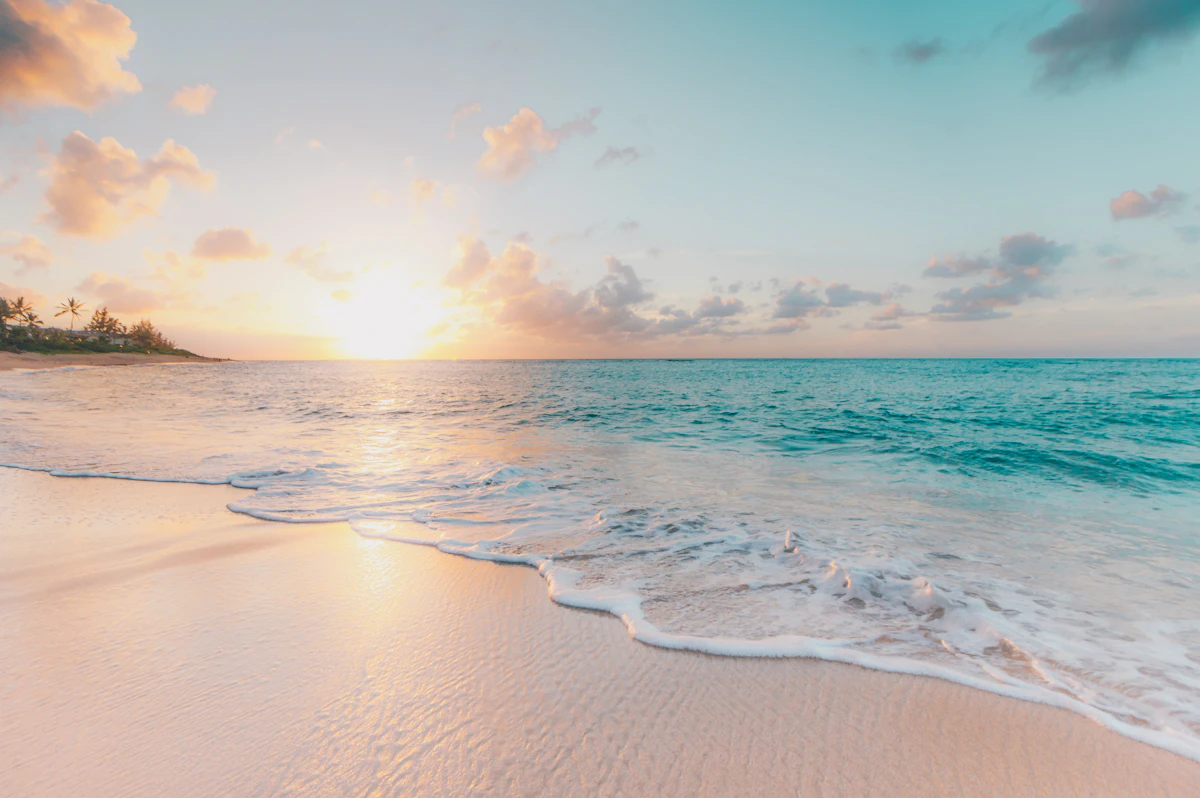
Few travelers make it to Pasuquin, and the beach remains refreshingly indifferent to visitors. You'll encounter salt farmers more often than fellow tourists, men and women who've worked these waters for decades and will cheerfully explain the ancient process of solar salt production if you show interest. The sunsets are unobstructed spectacles, the flat landscape offering nothing to block the view as the sun melts into the horizon, turning the salt pools and sea alike into mirrors of copper and flame.


