
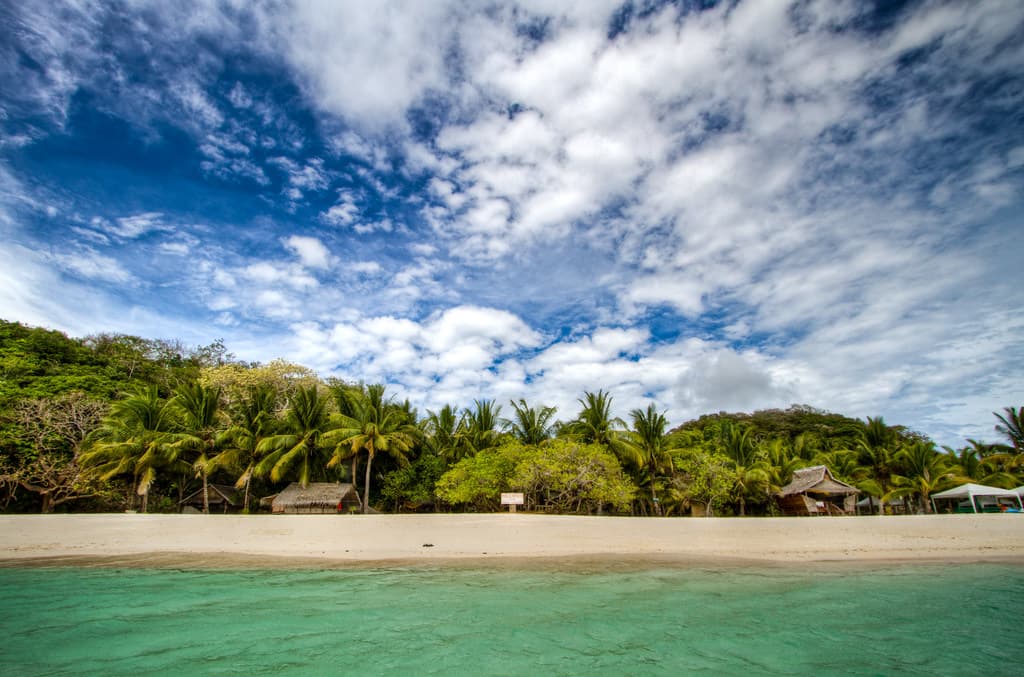
Banana Island stretches in a gentle crescent, its sand a brilliant white that reflects the midday sun like a floodlight. The beach slopes gradually into water that glows turquoise in the shallows and shifts to cobalt where the reef shelf drops. By ten a.m., outriggers form a floating perimeter offshore, their painted hulls rocking in unison while passengers slip into the water with rental fins and masks.
“The reef sits close enough to the beach that even hesitant swimmers can reach thriving coral gardens without venturing into deep water.”
![Banana Island Beach — photo by arcreyes [-ratamahatta-]](/_next/image?url=https%3A%2F%2Flive.staticflickr.com%2F5058%2F5472166933_1d14b4629a_b.jpg&w=3840&q=75) Credit: Flickr
Credit: FlickrBanana Island Beach — photo by arcreyes [-ratamahatta-]
The reef here is healthy and close—fifteen meters from the beach, the sand gives way to hard coral formations where sergeant majors, wrasses, and butterflyfish weave through staghorn branches. Clownfish defend their anemone territories with aggressive darts at passing snorkelers, and you'll spot parrotfish munching coral with audible crunching. The visibility is excellent when the current isn't stirred up, which is most mornings before the afternoon trades arrive and churn sediment from the bottom.
Onshore, vendors have staked out the shade beneath palm clusters, offering cold drinks and coconuts at markup prices. The crowd dynamic is cheerful but dense—families spread towels in every available patch of shade, couples pose for drone shots at the waterline, and guides trade cigarettes while monitoring their groups. It's unabashedly touristed, part of the triumvirate route that includes Malcapuya and Bulog Dos, but the snorkeling quality justifies the popularity.


