Counting the waves…
Counting the waves…
A refined fusion of water purity, environmental stability, and communal vibrancy for Duli Beach.
View MethodologyAnalyzed via live sensors and environmental data.
Wave height, wind, and atmospheric stability.
Live footfall and crowd balance metrics.
Community reviews and curated sentiment.
“The road in cuts through coconut groves and rice paddies, the beach revealing itself only at the last turn. Waves break in sets across a shallow sandbar, consistent enough for long rides, while fishermen mend nets on…”
Limited recent visitor reports — live OBI telemetry is your best guide for current conditions.
Duli faces the open ocean, unprotected by reefs or offshore islands, so the waves arrive honest and often. On good days—December through March, when the amihan blows—you'll find waist- to shoulder-high peelers rolling across a 200-meter stretch of sand bottom, rights slightly favored. The water's murkier here than the lagoons, stained tea-brown by river runoff after rain, but the wave quality compensates. Locals surf logs and softboards; visiting longboarders claim the northern end, where a rock outcrop creates a cleaner takeoff zone.
The beach itself sprawls wide and unmanicured, backed by coconut palms and the occasional nipa hut. Fishermen beach their bancas above the high-tide line, their nets spread to dry beside styrofoam coolers of the morning's catch—slender fusiliers and parrotfish destined for the El Nido town market. Behind the palms, carabaos wallow in muddy paddies, egrets stalking their hoofprints. There's no resort development here, just a couple of guesthouses strung along the dirt access road, their restaurants serving adobo and Red Horse to sunburned surfers.
 Credit: Unsplash
people on beach during daytime
 Credit: Unsplash
a group of people on a beach
Consistent sandbar breaks
Stronger currents present
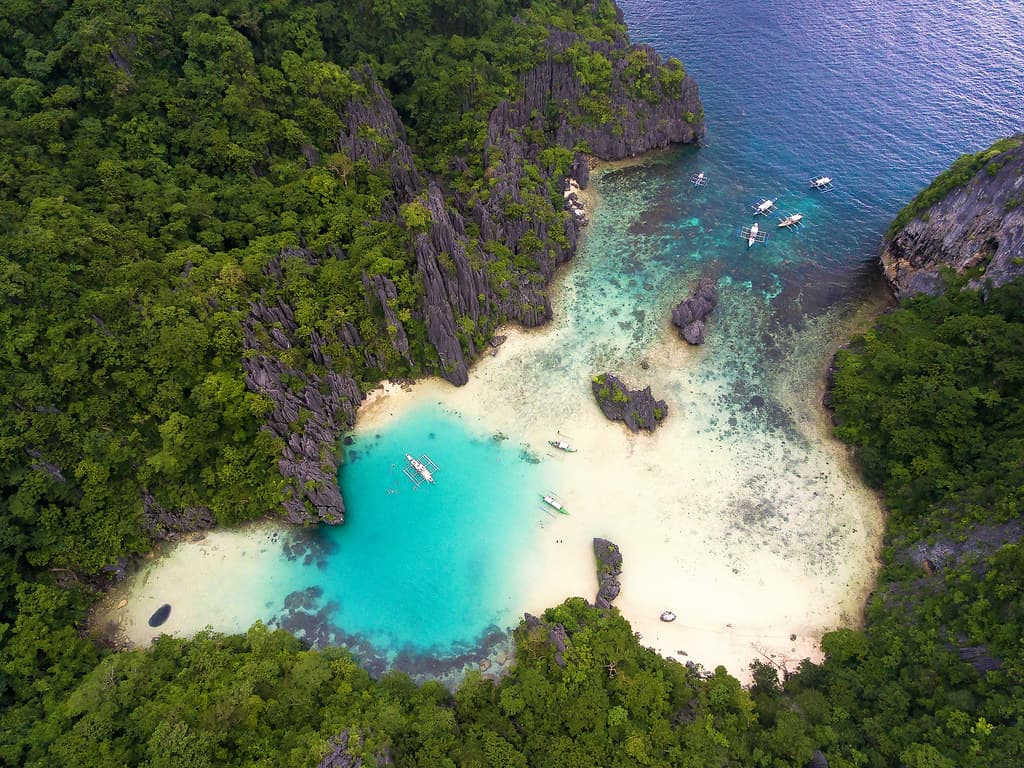
Karst mountain backdrop
Prime Visitation
Best Weather
Where it is
Duli Beach
El Nido, Palawan, Philippines
11.414000°, 119.464000°
Weather
Loading…
Swell
—
Temp
Warm · Restorative
UV Index
Moderate
Wind
—
Tidal State
Last known
Max Sunlight
—
Ideal Shade
—
Jan - Dec (Peak)
May - Nov (Off-season)
Historical data suggests peak visibility and stable sea temperatures occur during the prime visitation window.
Select a category to load nearby places.
Unlock restaurants, luxury stays and curated maritime experiences within 2km
Duli Beach faces the open ocean and typically has stronger waves and currents compared to El Nido's sheltered lagoons, making it better suited for surfing than casual swimming. The beach is generally safe for experienced swimmers and surfers, but beginners should exercise caution, especially during southwest monsoon season (June-October) when waves are largest. There are no lifeguards on duty, so swim at your own risk. The northern end of the beach tends to be calmer for swimming. Always check current conditions before entering the water and avoid swimming alone.
The best surfing conditions at Duli Beach occur during the southwest monsoon season from June to October, when swells from the South China Sea create consistent waves. Wave height typically ranges from 2-5 feet, suitable for beginners to intermediate surfers. The dry season (November-May) brings calmer conditions with smaller, less consistent waves but clearer weather. Early morning sessions usually offer the cleanest waves with offshore winds. Surfboard rentals are available from nearby accommodations. Check with local surf operators for daily conditions and lessons if needed.
Duli Beach is located about 25 kilometers north of El Nido town, roughly a 45-minute to 1-hour drive. The most common transportation options include renting a motorcycle (250-400 pesos per day), hiring a tricycle (800-1,200 pesos roundtrip with waiting time), or joining a van tour. The road is paved but includes some hilly sections and curves. Motorcycle riders should be experienced and wear helmets. You can also arrange transportation through your accommodation. Some visitors combine Duli with nearby Nacpan Beach in a single day trip.
Duli Beach has limited but growing facilities compared to more developed El Nido beaches. Several small beachfront resorts and guesthouses offer basic to mid-range accommodation, often with restaurant service. A few beach shacks and small eateries serve simple Filipino meals, fresh seafood, snacks, and drinks, though options are limited compared to El Nido town. Prices are generally reasonable. It's wise to bring water and snacks, especially if visiting for just the day. The laid-back atmosphere attracts visitors seeking a quieter alternative to busier beaches.
Duli Beach is one of the few surf-friendly beaches in the El Nido area, as most other beaches are sheltered lagoons with minimal wave action. Its exposure to open ocean swells creates more consistent surfing conditions, particularly during monsoon season. The beach remains relatively uncrowded compared to El Nido's main attractions, offering a more relaxed surfing experience without competing for waves. The long stretch of sand and multiple peaks provide space for various skill levels. Its off-the-beaten-path location appeals to surfers seeking authentic local atmosphere and fewer tourists.
Photos