
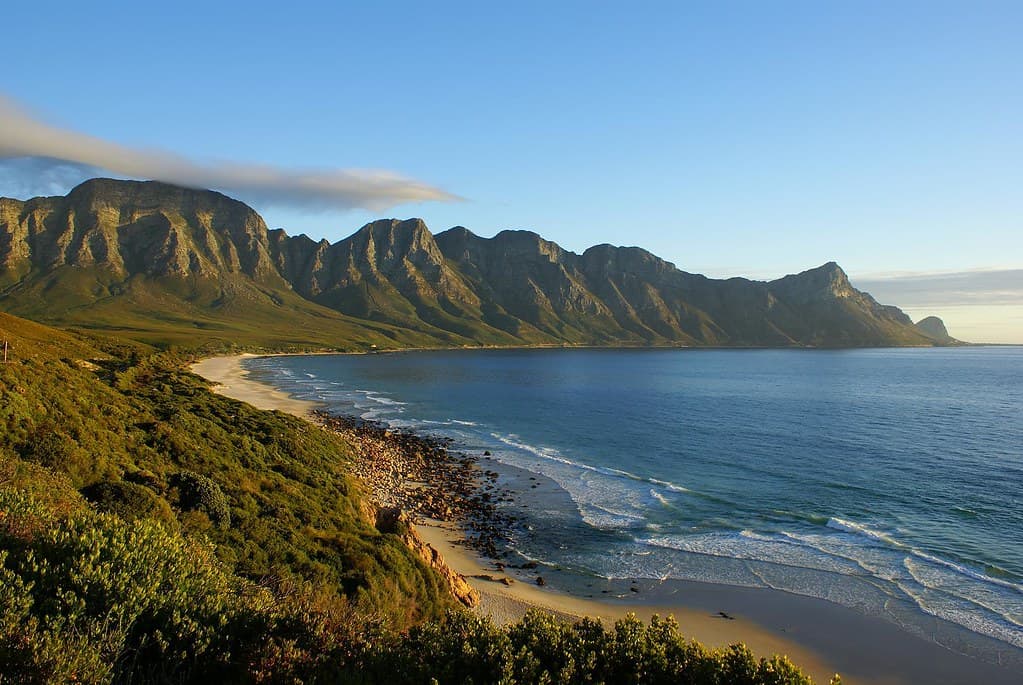
The beach stretches wide and flat, its beige sand stippled with footprints that vanish by noon when the wind picks up. Kitesurfers launch from the northern end, their boards skipping over chop while beginners practice body-dragging in the shallows. The water runs cold year-round—twelve degrees Celsius in winter, sixteen in summer—and the current sweeps south with enough pull that you'll exit the surf fifty meters down from where you entered.
“Nowhere else frames Table Mountain across open water with such unobstructed foreground for the continent's most photographed sunset.”
 Credit: Pixabay
capetown, beach, sunset, aerial view, south africa, nature, ocean, africa, landscape, sky, clouds, horizon
By late afternoon the wind often eases, and the real show begins. Table Mountain, framed between Robben Island and the Blaauwberg shoreline, turns burnt orange, then violet. Photographers line the high-tide mark with tripods; couples spread blankets near the dunes. The light lasts twenty minutes at most, but it's the kind of twenty minutes that sells property and fills camera rolls.
On weekends the gravel car park fills with vans bearing board racks and Gauteng license plates. A braai stand near the ablution block sizzles with boerewors, and wetsuits hang drying from wing mirrors. The beach feels utilitarian rather than luxurious—a place built for wind and wide-angle lenses, not for lounging. You'll leave with sand in your shoes and salt in your hair, already planning your return.


