

You drop into water that's several degrees cooler than the shallows outside—upwelling from the bay's fifty-meter depths bringing nutrients and visibility that stretches twenty meters horizontally. Below your fins, the bottom drops away in terraces: a sandy shelf at three meters giving way to coral bommies at ten, then a vertical wall that plunges into darkness. Sergeant majors and damselfish swirl around the bommies, their colors saturated in the filtered light.
“The narrow entrance creates a natural gate to a bay where cold upwelling and coral terraces support fish populations more diverse than neighboring Maya Bay.”
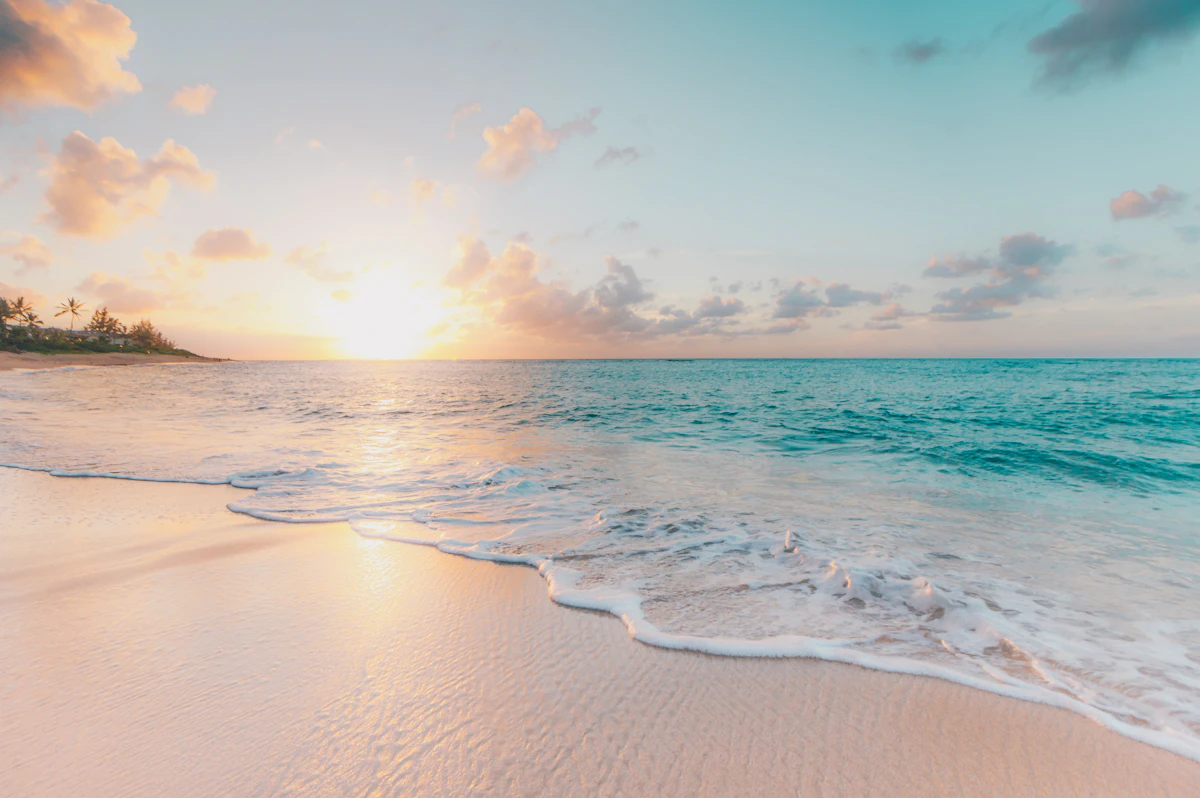 Credit: Unsplash
Aerial view of turquoise tropical bay
The bay's walls lean inward, creating a sense of enclosure that's amplified by the narrow entrance behind you. Overhead, vegetation clings to impossible angles—sea hibiscus and pandanus whose roots find purchase in limestone cracks. At the inlet's far end, a small beach of coarse sand wedges between cliff faces, accessible only at low tide when the water retreats enough to expose the walking margin. Most visitors never reach it, preferring to snorkel the coral terraces where hawksbill turtles occasionally glide past, oblivious to the humans hanging at the surface.
Midmorning brings the tour boats—six or eight rafted together in the bay's center, their anchors carefully set in sand patches between coral heads. The guides know which bommies hold the best fish action, directing snorkelers toward a particular formation where a resident Napoleon wrasse, fat as a pig and just as indifferent, patrols for scraps. You'll taste salt when you surface, feel it tighten your skin as you dry in the sun, your hair stiff with minerals by the time you climb back aboard.


