

The cove announces itself only from the water—a gap between forested headlands where a narrow beach curves beneath casuarina and pandanus trees. If you're arriving by boat from Khanom, the captain will nose onto the sand and let you wade ashore. By land, you'll navigate a rutted track that tests your motorbike's suspension and your commitment to finding empty beaches.
“Khanom's only boat-access cove where mangrove headlands and coastal forest create total seclusion from the developed coast.”
 Credit: Pexels
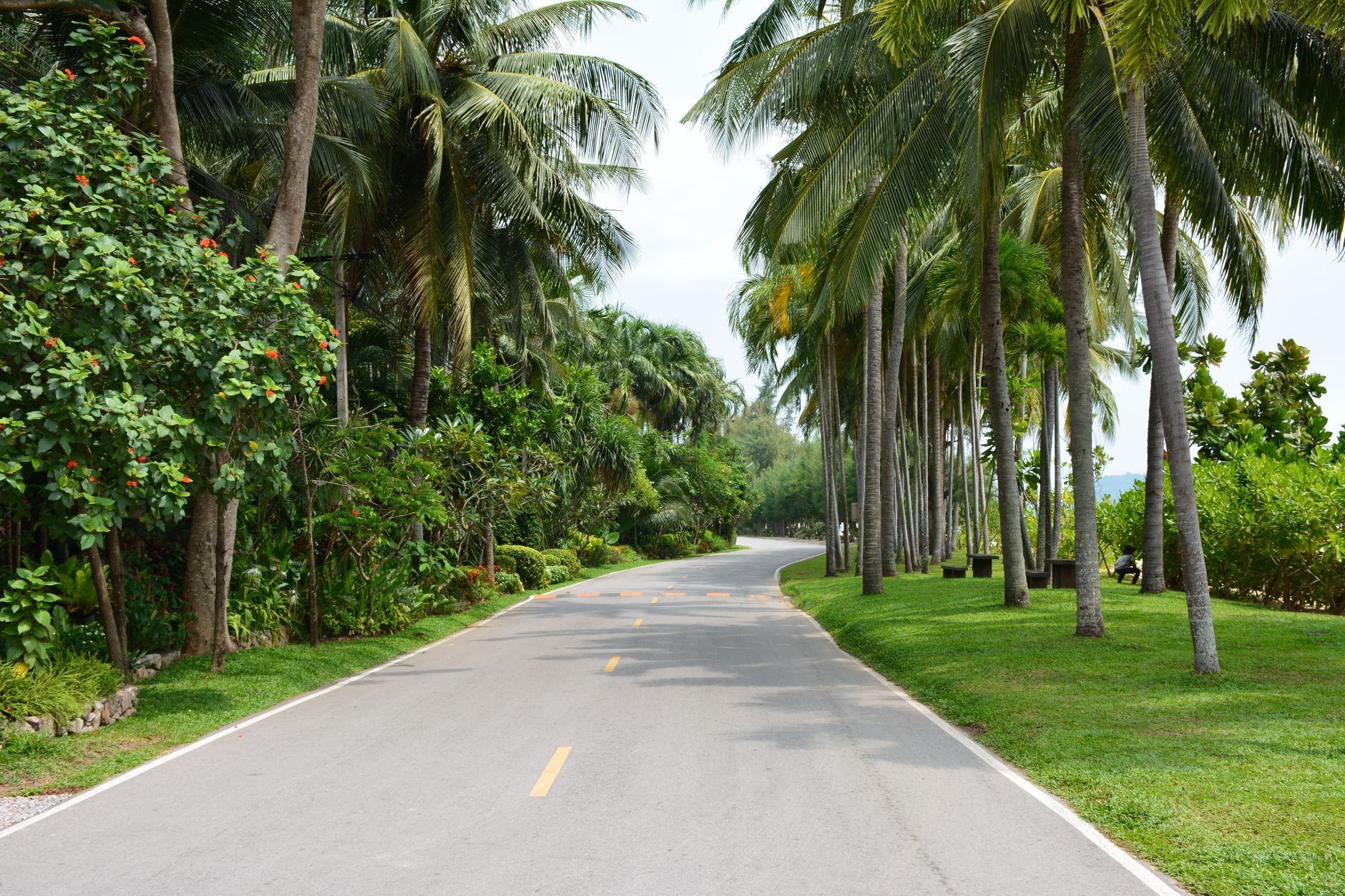
A tranquil road lined with palm trees and lush greenery in Thong Chai, Thailand.
The sand here runs pale tan, fine-grained, scattered with driftwood that the Gulf deposits and retrieves according to tidal mood. The cove measures perhaps two hundred meters wide, its edges defined by volcanic rock outcrops colonized by mangroves. At high tide, the water reaches the tree line; at low tide, it reveals a sandy shelf that extends into deeper water. The usual Gulf murkiness lightens somewhat here—still green, but clearer than the mainland beaches to the south.
No facilities exist beyond nature's provisions. The forest behind the beach holds birdsong and the rustle of monitor lizards moving through leaf litter. A wooden fishing boat sometimes rests pulled up on the sand, its owner living somewhere in the hills behind the cove. By mid-afternoon, the western headland casts shadow across half the beach. The isolation feels complete—no engine noise, no music from beach bars, no vendors walking the sand. Just waves, wind, and the occasional kingfisher diving offshore.


