

Pak Phun Beach sprawls along the city's eastern edge where concrete seawalls give way to tawny sand and the Gulf exhales its brackish warmth across picnic areas crowded with plastic chairs. You'll find families colonizing the shade beneath beach almond trees, their coolers leaking ice melt while children chase each other through the shallows and music drifts from smartphone speakers propped on towels. The air tastes of grilled satay and motor oil, salt spray mixing with exhaust from the coast road just meters behind the tree line.
“The city's living room spills directly onto sand, blending urban rhythms with Gulf frontage in unpolished dailiness.”
 Credit: Pexels
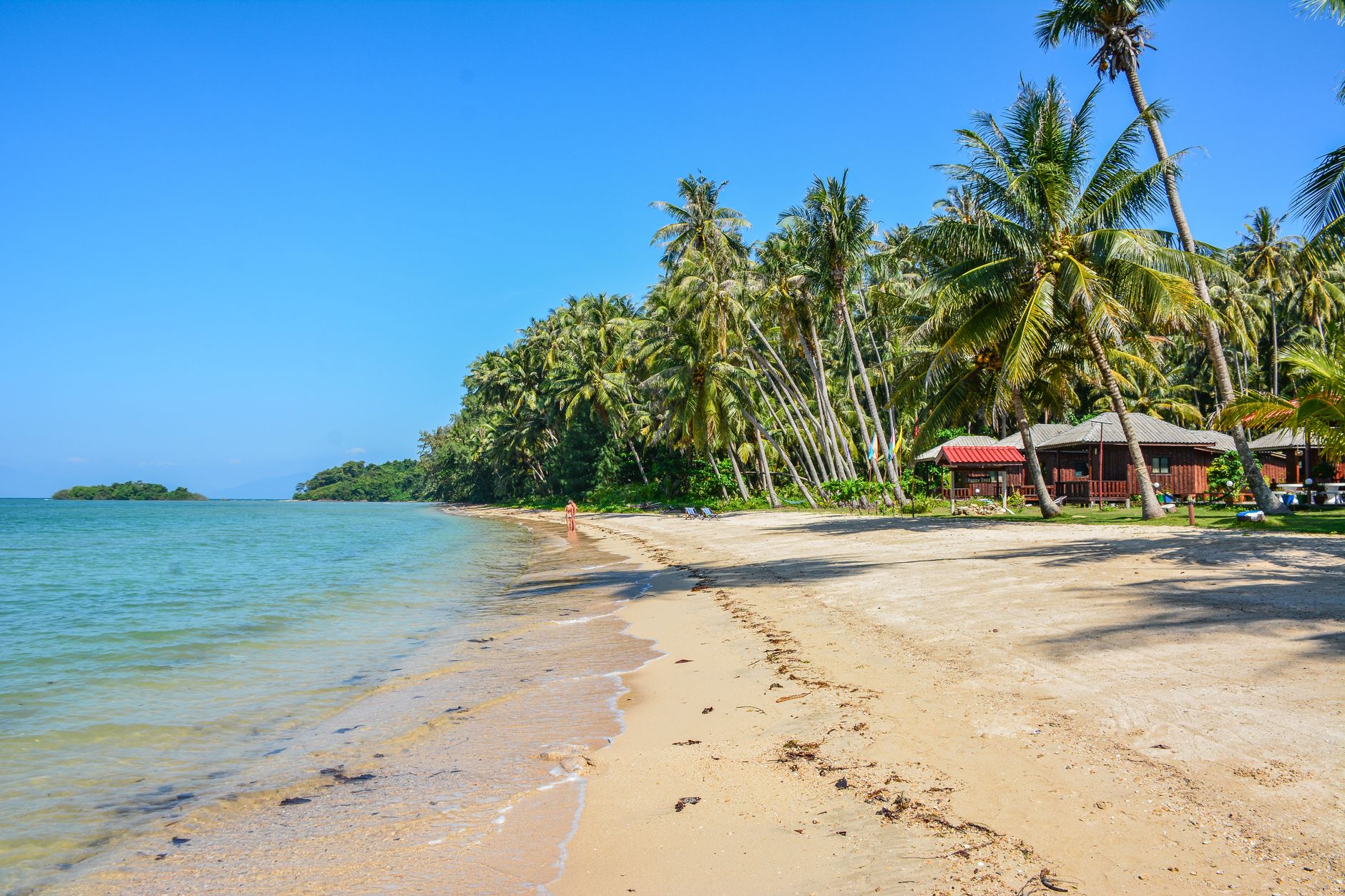
Serene tropical beach on Ko Mak, Thailand with palm trees and huts under a clear blue sky.
The beach operates as municipal commons rather than destination—morning vendors spread tarps loaded with mantis shrimp and squid still glistening from overnight boats, while retirees complete their speed-walking circuits along the paved walkway. By afternoon the scene shifts to teenagers occupying the pavilions, sharing fried chicken from foam boxes and taking selfies against longtail backdrops. The sand holds cigarette butts and bottle caps alongside shells, evidence of heavy weekend use without the grooming budgets of resort zones.
You wade into water that stays knee-deep for twenty meters, its murky green surface occasionally broken by jumping fish. Behind you, the skyline of Nakhon Si Thammarat rises in a jumble of shophouse roofs and temple spires, the city pressing close enough that you hear the afternoon call to prayer mixing with the Gulf breeze and the persistent whine of passing motorbikes.


