
Counting the waves…
Counting the waves…
A refined fusion of water purity, environmental stability, and communal vibrancy for Long Beach.
View MethodologyAnalyzed via live sensors and environmental data.
Wave height, wind, and atmospheric stability.
Live footfall and crowd balance metrics.
Community reviews and curated sentiment.
“You hike twenty minutes over the island's spine or negotiate boat fare from Tonsai's chaos. The beach unfolds gradually—a kilometer of pale sand facing east, backed by budget bungalows and palms, the water so shallow…”
Limited recent visitor reports — live OBI telemetry is your best guide for current conditions.
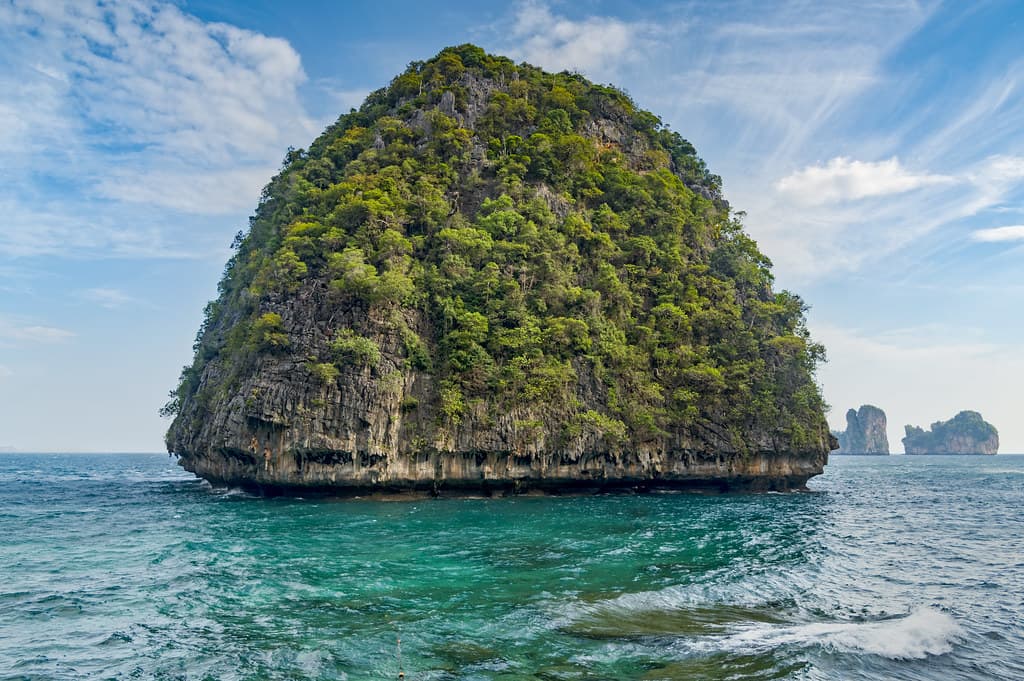
Long Beach earns its name through simple geography—a gentle arc stretching northeast from the rocky headland that separates it from Phi Phi's developed twin bays. The sand runs coarse compared to Railay's powder, mixed with crushed coral that crunches underfoot and catches afternoon sun in a thousand tiny mirrors. Longtails anchor far offshore where the water deepens, their captains wading passengers through shin-deep wavelets to reach dry sand. During low tide, the bay becomes an immense wading pool, its turquoise shallows exposing starfish and transparent shrimp.
The beach's isolation is relative—you'll find bungalow operations, beachfront restaurants strung with hammocks, and enough infrastructure to support multi-night stays. Yet Long Beach remains blessedly removed from Tonsai Village's speaker-blown beach parties and alley bars. Mornings bring near-solitude: local women rake seaweed, fishermen check nets strung between boats, and the only other footprints belong to sunrise joggers from the southern resorts. The jungle-covered hills behind the beach muffle sound from the island's opposite side, creating an acoustic separation that makes Tonsai's crowds feel more distant than a thirty-minute walk.
Crashing wave at sunset on the shoreline
Long-tail boats moored in clear water
Turquoise water extending fifty meters
Jungle path to isthmus overlook
Southern coral gardens
Prime Visitation
Budget Travel
Where it is
Long Beach
Koh Phi Phi, Phuket, Thailand
7.670000°, 98.778000°
Weather
Loading…
Swell
—
Temp
Warm · Restorative
UV Index
Moderate
Wind
—
Tidal State
Last known
Max Sunlight
—
Ideal Shade
—
Jan - Dec (Peak)
May - Nov (Off-season)
Historical data suggests peak visibility and stable sea temperatures occur during the prime visitation window.
Select a category to load nearby places.
Unlock restaurants, luxury stays and curated maritime experiences within 2km
Long Beach generally offers safe swimming conditions, especially during the high season (November to April) when the sea is calmer. The beach has a gentle slope making it suitable for swimmers of various abilities. However, there are no lifeguards stationed here, so swim at your own caution. During the monsoon season, currents can be stronger and the sea rougher. Always check current conditions before swimming and avoid going too far from shore. The relative isolation means help isn't immediately available if problems arise.
The best time to visit Long Beach is during the dry season from November to April when seas are calm and weather is sunny. This period offers the best swimming conditions and access to the beach. December to February provides the most pleasant temperatures. During the monsoon season (May to October), rough seas can make boat access difficult or impossible, and some accommodations may close. For budget travelers, the shoulder months of November and April offer good weather with fewer crowds and better rates than peak season.
Long Beach is accessible only by boat or by foot via a challenging jungle trail from Tonsai Village. Most visitors take a longtail boat from Tonsai Pier, which takes about 10-15 minutes and costs around 100-150 baht per person. Boats run regularly during daylight hours, with fewer services in low season. The hiking trail takes 30-45 minutes over steep terrain and is quite strenuous, especially in heat. Many resorts on Long Beach offer boat transfers for guests. There are no roads or vehicles on this beach.
Long Beach has limited but sufficient accommodation options, ranging from basic beach bungalows to mid-range resorts. Properties are generally smaller and more intimate than those on Tonsai Bay. Most resorts have their own restaurants serving Thai and international cuisine, as there are few independent dining options. Prices tend to be slightly higher than Tonsai due to the remote location. Some accommodations close during low season. There are no convenience stores, so bring essentials or expect to pay premium prices. The dining atmosphere is relaxed and casual.
Long Beach offers a quieter, more secluded experience compared to the busy Tonsai Bay area. It's ideal for travelers seeking relaxation away from the party scene and crowds. The beach features soft white sand, clear turquoise water, and beautiful sunset views. Its relative isolation creates a peaceful atmosphere perfect for swimming, sunbathing, and unwinding. The limited development means a more natural setting. It's particularly appealing to couples and those wanting to disconnect, though you sacrifice the convenience and nightlife of the main village area.
Photos