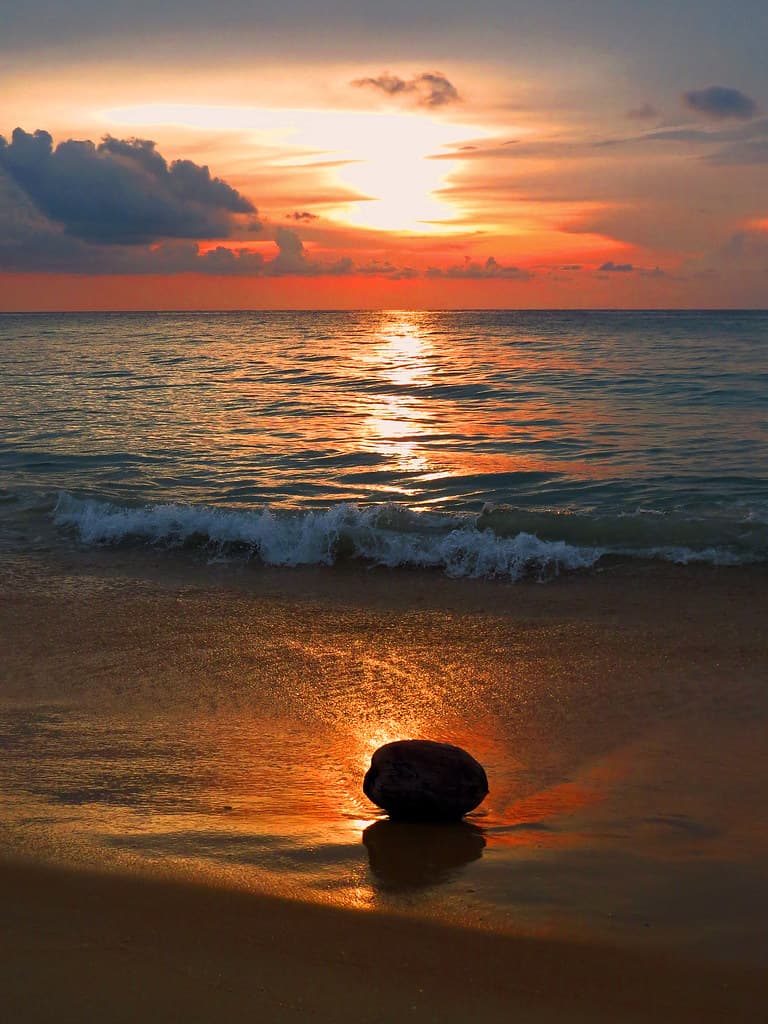
Counting the waves…
Counting the waves…
A refined fusion of water purity, environmental stability, and communal vibrancy for Yai Beach.
View MethodologyAnalyzed via live sensors and environmental data.
Wave height, wind, and atmospheric stability.
Live footfall and crowd balance metrics.
Community reviews and curated sentiment.
“Your children wade out thirty meters and the water still barely reaches their waists. Below the surface, sergeant majors and angelfish patrol coral heads while parents watch from shore, close enough to hear laughter…”
Limited recent visitor reports — live OBI telemetry is your best guide for current conditions.
The longtail rounds the headland and Yai Beach unfolds like a tourism brochure come to life—white sand, leaning palms, water graduating from pale jade to deep turquoise as the seafloor drops gradually offshore. But unlike the heavily trafficked beaches to the north, only a scattering of families and couples occupy this stretch, spreading sarongs beneath the shade or wading into water so clear and calm it functions as a natural infinity pool. The shallow gradient means toddlers splash confidently while parents relax, and that combination of beauty and safety has made Yai a quiet favorite among those who know.
Snorkeling here requires no boat trip or advanced skills. You walk into waist-deep water, dip your mask, and immediately encounter a miniature reef ecosystem—table corals branching like antlers, Christmas tree worms retracting into limestone, damselfish defending their territories with aggressive rushes that never quite connect. Schools of fusiliers stream past in coordinated silver waves, and the occasional hawksbill turtle cruises through on its patrol route, unbothered by your presence. The reef sits close enough to shore that you surface every few minutes to check on your family, waving to confirm all is well before returning your attention to the underwater show.
 Credit: Unsplash
a beach with palm trees and people on it
 Credit: Unsplash
A group of people sitting on top of a sandy beach
Coral heads in waist-deep water
Safe water for young children
Damselfish and hawksbill turtle patrols
Prime Visitation
Best Weather|Budget Travel
Where it is
Yai Beach
Phuket, Phuket, Thailand
7.789200°, 98.302900°
Weather
Loading…
Swell
—
Temp
Warm · Restorative
UV Index
Moderate
Wind
—
Tidal State
Last known
Max Sunlight
—
Ideal Shade
—
Jan - Dec (Peak)
May - Nov (Off-season)
Best Weather|Budget Travel
Select a category to load nearby places.
Unlock restaurants, luxury stays and curated maritime experiences within 2km
Yai Beach is generally considered family-friendly, particularly during the dry season (November-April) when waters are calm and clear. The beach offers shallow areas suitable for children to wade and play, though supervision is always necessary as there are no lifeguards on duty. The relatively sheltered location provides some protection from strong waves. Snorkeling in the clear waters is suitable for older children and adults. During monsoon season, conditions can be rougher and less suitable for young children. The peaceful atmosphere and smaller crowds make it easier for families to relax and keep track of children.
The best time to visit Yai Beach is during Phuket's dry season from November to April, offering optimal weather, calm seas, and excellent snorkeling visibility. Budget travelers will find the best value during November and April when accommodation rates are lower but conditions remain favorable. Weekdays are quieter than weekends when local families may visit. Early morning visits provide the most peaceful atmosphere and best light for photography. The monsoon season (May-October) brings rain and rougher seas, limiting beach activities, though prices drop significantly and the beach is virtually deserted during this period.
Yai Beach is located on Phuket's west coast and can be accessed by road. The specific route depends on where you're staying in Phuket. Most visitors rent a scooter, car, or hire a taxi/tuk-tuk to reach the beach. As a smaller, more hidden beach, it may not be as well-signposted as major beaches, so using GPS navigation is recommended. Some tour operators include Yai Beach in their itineraries. Parking is typically available near the beach entrance. The beach may require a short walk from the parking area through natural surroundings.
Yai Beach is a relatively undeveloped beach with limited on-site facilities. There may be small local vendors or simple beach restaurants offering basic Thai food, drinks, and snacks, though options are minimal compared to larger Phuket beaches. It's advisable to bring your own food, water, and supplies for a day visit. Accommodation is not available directly on Yai Beach itself. Visitors typically stay at nearby beach areas such as Kamala, Surin, or Patong, which offer extensive hotel, resort, and guesthouse options across all budgets, all within a reasonable driving distance from Yai Beach.
Yai Beach stands out for its peaceful, uncommercialized character and family-friendly atmosphere. Unlike Phuket's busy tourist beaches, it maintains a local, laid-back vibe with minimal development and fewer crowds. The clear waters provide excellent visibility for snorkeling, allowing visitors to observe marine life in a more intimate setting. The beach's hidden nature means it's often overlooked by mass tourism, offering a more authentic and tranquil Thai beach experience. Its combination of natural beauty, calm conditions, and suitability for families with children makes it a refreshing alternative to Phuket's more famous and crowded beaches.
Photos