Counting the waves…
Counting the waves…
A refined fusion of water purity, environmental stability, and communal vibrancy for Koh Libong.
View MethodologyAnalyzed via live sensors and environmental data.
Wave height, wind, and atmospheric stability.
Live footfall and crowd balance metrics.
Community reviews and curated sentiment.
“You'll motorbike past rubber plantations and rice paddies to reach Hat Lang Khao's eastern shore, where the beach runs for kilometers without a single resort. The water holds a greenish cast from seagrass beds that feed…”
Limited recent visitor reports — live OBI telemetry is your best guide for current conditions.
Koh Libong stretches across the Andaman in an oblong mass of forest, plantation, and mangrove, connected to modern Thailand by ferry but operating on older rhythms. The island's eastern shore faces the mainland across a channel striped with currents, the beach here a study in umber sand backed by casuarina forest where monitor lizards hunt and hornbills call from the canopy. You'll reach Hat Lang Khao via the island's single paved road, winding through rubber plantations where workers still tap trees at dawn, collecting latex in coconut shells.
The seagrass meadows begin thirty meters offshore, visible at low tide when their tips break the surface like submerged lawns. This is where dugongs feed, most reliably at dawn and dusk when the water stills. You'll see their snouts first, churning sediment as they graze, then the rounded backs breaking the surface as they breathe. The meadows extend for kilometers, supporting not just dugongs but green turtles, rays, and countless juvenile fish species. Snorkeling here means accepting limited visibility—three to five meters on good days—but the density of life compensates: pipefish hiding in the grass, seahorses gripping blades, mantis shrimp in burrows.
 Credit: Unsplash
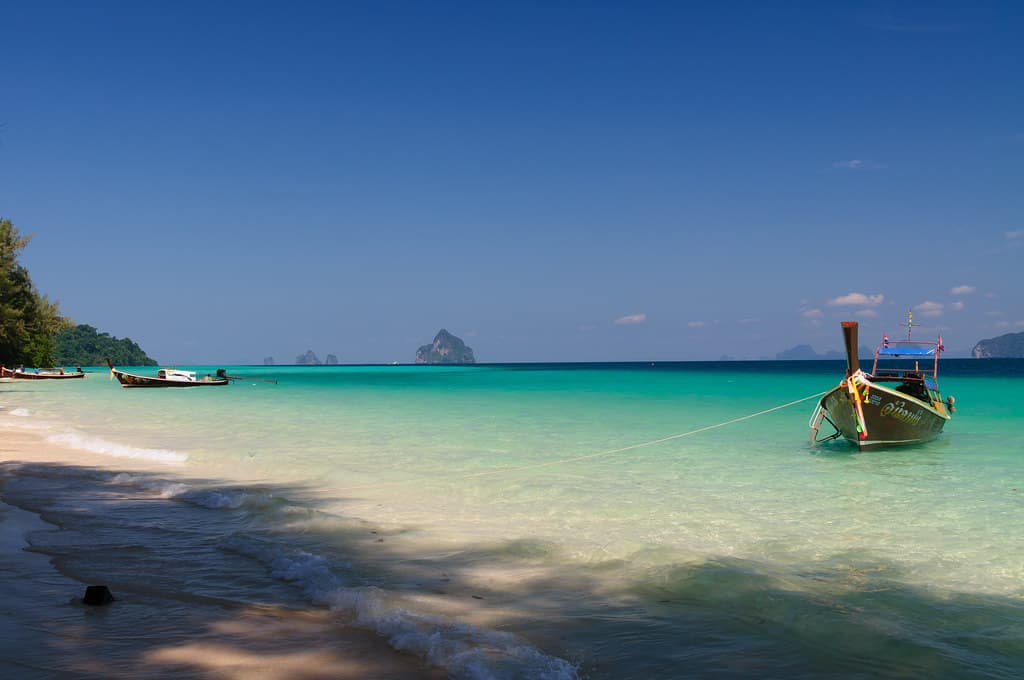
blue sky and white clouds over the sea
 Credit: Unsplash
boats in islet
Dawn watch over seagrass meadows
Nesting pairs in mangrove channels
Kilometers without a single resort
Prime Visitation
Best Weather|Less Crowds
Where it is
Koh Libong
Trang, Trang, Thailand
7.327800°, 99.225600°
Weather
Loading…
Swell
—
Temp
Warm · Restorative
UV Index
Moderate
Wind
—
Tidal State
Last known
Max Sunlight
—
Ideal Shade
—
Jan - Dec (Peak)
May - Nov (Off-season)
Best Weather|Less Crowds
Select a category to load nearby places.
Unlock restaurants, luxury stays and curated maritime experiences within 2km
Swimming at Koh Libong is generally safe during the dry season (November-April) when seas are calm. The island's beaches have gentle slopes suitable for swimming, though conditions vary around the coastline. Be aware that Koh Libong's waters are home to dugongs (sea cows), and the area is part of a protected marine zone where these gentle creatures feed on seagrass beds. Always respect marine life and maintain distance if you encounter dugongs. During monsoon season, currents can be strong. There are no lifeguard services, so swim cautiously and check local conditions.
The best time to visit Koh Libong is between November and April, during the dry season when you'll experience pleasant weather, calm seas, and optimal conditions for beach activities and wildlife watching. This period offers the best chances to spot dugongs from boats. December through February brings cooler temperatures and is particularly comfortable. March and April can be hot but still enjoyable. The monsoon season from May to October brings heavy rains and rough seas, with many tourist services operating at reduced capacity or closed. Visit during less crowded periods for a more tranquil, authentic island experience.
Koh Libong is reached by boat from the mainland Trang coast. The main departure point is Baan Chao Mai Pier, with regular longtail boat services taking approximately 20-30 minutes. Boats run more frequently during high season and less often during monsoon months. You can also arrange private boat charters if scheduled services don't suit your timing. Some visitors arrive via boats from nearby islands as part of island-hopping tours. Once on the island, motorcycle taxis and rental bikes are available for getting around, as the island is quite large and beaches are spread out.
Koh Libong offers limited but adequate accommodation, primarily consisting of small beach resorts, bungalows, and guesthouses concentrated on the western coast. Options range from basic fan-cooled rooms to simple air-conditioned bungalows. The island has a laid-back atmosphere with fewer facilities than mainstream destinations. Several resorts have restaurants serving Thai food and fresh seafood, while small local restaurants in the main village offer authentic southern Thai cuisine. The island has a significant Muslim population, reflected in local food offerings. Facilities are basic, so bring essentials and cash as ATMs are limited.
Koh Libong is one of Thailand's best locations for spotting endangered dugongs in their natural habitat, with surrounding seagrass beds supporting a significant population. The island remains authentically Thai with a large local fishing community and traditional Muslim culture, offering genuine cultural experiences. Unlike developed resort islands, Koh Libong maintains a peaceful, untouched character with minimal tourist infrastructure. The island is quite large and home to diverse ecosystems including mangroves, beaches, and forests. It's perfect for nature enthusiasts and travelers seeking authentic experiences away from mass tourism, though this means fewer modern amenities.
Photos