

You step off the boat onto a narrow strip of sand that feels almost incidental, a margin between jungle and sea. Koh Rang's beach is functional rather than luxurious—coarse sand scattered with coral rubble, a few weathered signs reminding visitors this is a protected zone, and a simple ranger station set back in the trees. But no one comes here to sunbathe. Within minutes of arrival, you're pulling on fins and a mask, wading into water that shifts from milky turquoise near shore to a deeper, richer blue just beyond the drop-off.
“The Gulf's most accessible reef-rich island, where the underwater world is the main attraction and the sand is just where you catch your breath.”
 Credit: Unsplash
Palm trees framing a sunset shore
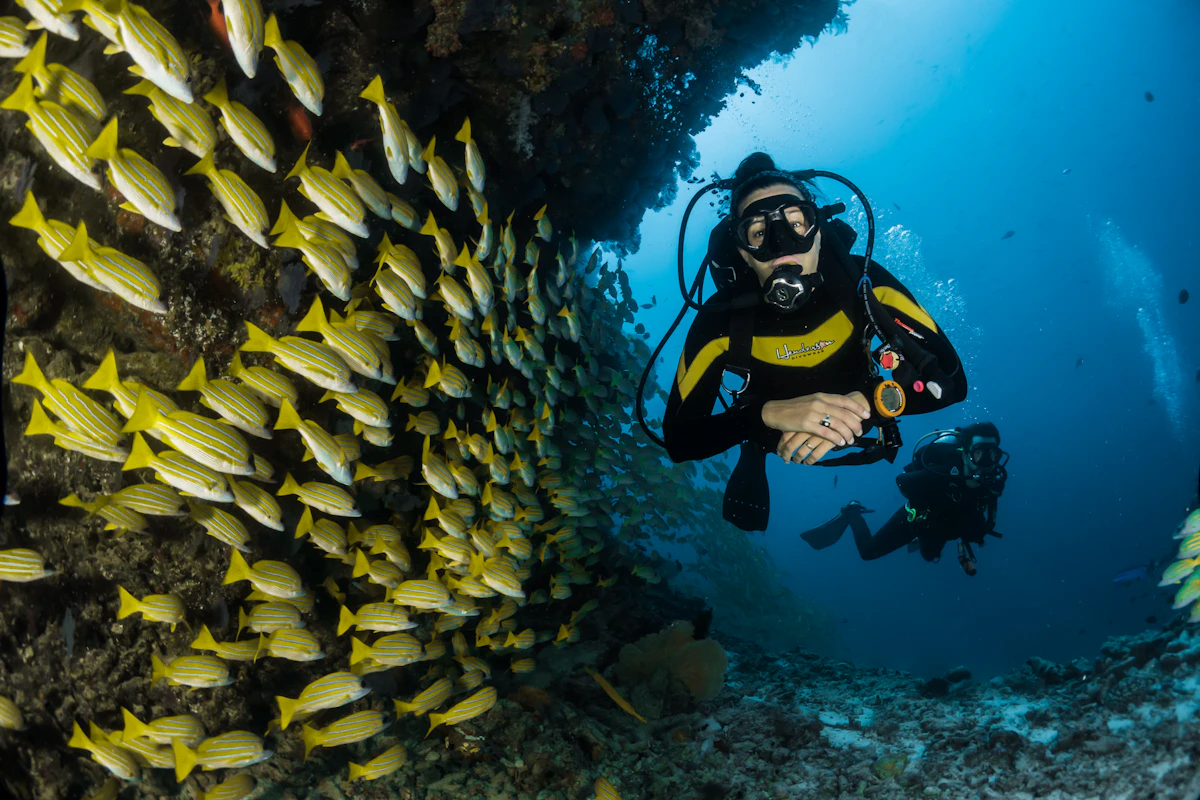
The reef begins almost immediately. Hard corals cluster in mounds and tables, their surfaces alive with Christmas-tree worms and grazing tangs. Parrotfish crunch audibly; a blacktip reef shark glides past, indifferent. Visibility hovers around ten meters on good days, the water warm and calm, the current gentle enough for beginners. You drift over staghorn thickets and fields of brain coral, following schools of fusiliers that turn in unison, flashing silver. Between snorkel sessions, you return to the beach, rinse your mask, gulp water from a bottle warming in the sun, and wade back in.
By midday, the anchorage is crowded with tour boats, their engines idling, dive groups bubbling up in clusters. The beach itself remains quiet—most visitors spend their time in the water. A monitor lizard patrols the treeline; a hornbill calls from deep in the canopy. Koh Rang is proof that sometimes the beach is just the backstage, and the real performance happens beneath the surface.


