
Clovelly doesn't pretend to be a traditional beach. Instead of sand stretching toward breakers, you'll find a narrow concrete promenade hugging a channel that funnels ocean water into a sheltered basin. Locals call it "the gutter," and they've been swimming laps here since the 1920s, when the seawall was built to protect swimmers from the open Tasman Sea. The water stays remarkably still even when swells batter the headlands at Gordons Bay to the north.
“The concrete channel concentrates marine life in shallow, wave-free water that makes snorkeling effortless for beginners and children.”
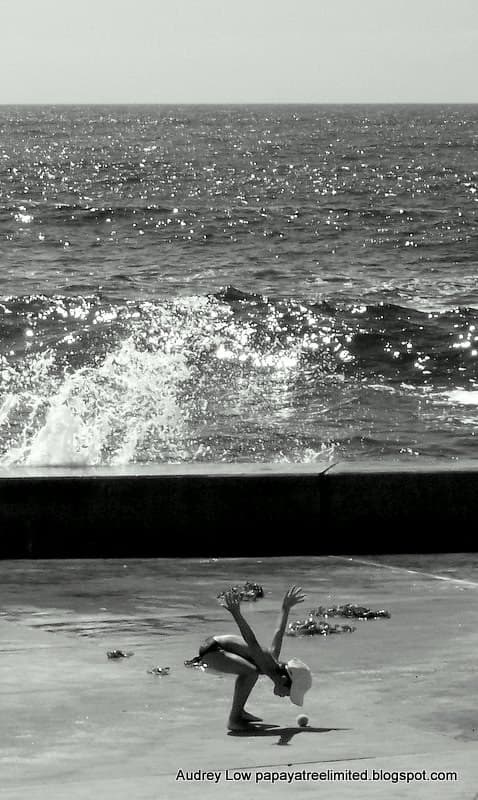 Credit: Flickr
king tide, clovelly, 9.55 am, January 12, 2009
You'll descend a gentle slope past the ocean pool, where lap swimmers churn through chlorinated seawater, then reach the snorkeling zone. Here the rocky bottom drops to four meters, creating ledges where eastern blue gropers glide and Port Jackson sharks rest in winter months. The channel's protection means you can float face-down with minimal effort, scanning crevices for octopus while wobbleboards and children's laughter punctuate the surface around you.
The beach works year-round because geography does the heavy lifting—those sandstone arms catch northeasterly swells and southerly blows alike. Arrive before nine to claim a concrete step for your towel, or come at dusk when the water glows amber and families pack up their eskies. Either way, you're swimming in Sydney's most democratic marine sanctuary, where toddlers and freedivers share the same protected watershed.


