

Counting the waves…
Counting the waves…
A refined fusion of water purity, environmental stability, and communal vibrancy for Orcombe Point Beach.
View MethodologyAnalyzed via live sensors and environmental data.
Wave height, wind, and atmospheric stability.
Live footfall and crowd balance metrics.
Community reviews and curated sentiment.
“Step onto Orcombe Point Beach and feel the ancient history of the Jurassic Coast beneath your feet. This isn't just a beach; it's the official western gateway to a UNESCO World Heritage Site, marked by the striking…”
Limited recent visitor reports — live OBI telemetry is your best guide for current conditions.
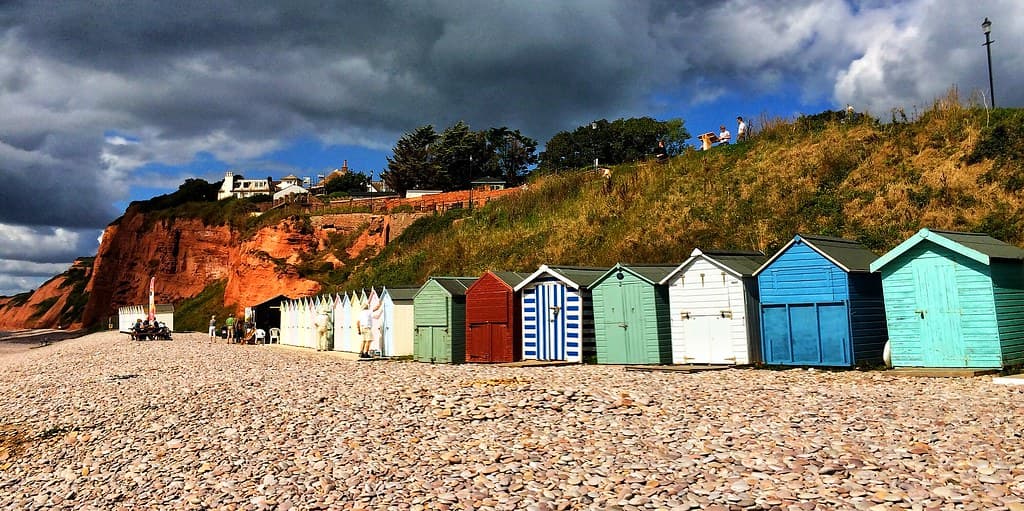
Orcombe Point Beach is a place of grand scale and geological wonder, serving as the official start of the UNESCO World Heritage Jurassic Coast. The beach is dominated by the dramatic red sandstone cliffs, which glow with an intense ochre hue under the Devon sun, revealing millions of years of Earth's history in their strata. At their base, the iconic Geoneedle stands as a monument to this ancient past, its segments representing the various rock types found along the 95-mile stretch of coastline.
At low tide, the beach transforms, revealing a vast, flat expanse of golden sand that stretches far out into the Exe Estuary. This expansive canvas is perfect for long, uninterrupted walks, offering ample space for families to play, fly kites, or simply enjoy the feeling of soft sand between their toes. The views across the estuary to Dawlish Warren are spectacular, especially as the sun begins its descent.
Aerial view of turquoise tropical bay
Wide white-sand beach with footprints
Iconic landmark
Explore ancient cliffs
Vast low-tide sands
Prime Visitation
Best Weather|Less Crowds
Where it is
Orcombe Point Beach
Exmouth, Devon, United Kingdom
50.610300°, -3.393400°
Weather
Loading…
Swell
—
Temp
Warm · Restorative
UV Index
Moderate
Wind
—
Tidal State
Last known
Max Sunlight
—
Ideal Shade
—
May - Sep (Peak)
Jan - Dec (Off-season)
Best Weather|Less Crowds
Select a category to load nearby places.
Unlock restaurants, luxury stays and curated maritime experiences within 2km
Orcombe Point Beach is generally safe for swimming, especially at low tide when more sand is exposed. The water quality is typically good, and the beach is part of the wider Exmouth coastline, which is popular for water activities. However, there are no lifeguards directly at Orcombe Point, so swimmers should be mindful of tides and currents. The presence of sand at low tide makes for easier water entry.
The best time to visit Orcombe Point Beach is during periods of good weather, typically from late spring through early autumn. To fully appreciate the sandy expanse and explore the rock pools, visit at low tide. For fewer crowds, consider visiting outside of peak school holidays or during weekdays. Early mornings or late afternoons can also offer a more tranquil and picturesque experience.
Orcombe Point Beach is located at the eastern end of Exmouth beach. It is easily accessible by walking along the promenade from Exmouth town centre. There are car parks available in Exmouth, including those closer to the eastern end of the beach, from which it's a relatively short walk to Orcombe Point. The path is generally flat and accessible.
While there are no direct food or lodging facilities right on Orcombe Point Beach itself, its proximity to Exmouth town means that a wide array of options are within easy walking distance. Along the Exmouth promenade and in the town centre, you'll find numerous cafes, restaurants, pubs, and various accommodation choices, making it convenient for refreshments and stays after visiting the beach.
Orcombe Point Beach is highly significant as the official western gateway to the UNESCO World Heritage Jurassic Coast. It features the iconic Geoneedle, a striking sculpture that marks the start of this ancient coastline and provides panoramic views. The beach itself offers a fantastic opportunity to explore geological formations, especially at low tide, making it a must-visit for those interested in the natural history and dramatic landscapes of the Jurassic Coast.
Photos