Counting the waves…
Counting the waves…
A refined fusion of water purity, environmental stability, and communal vibrancy for Chefornak Beach.
View MethodologyAnalyzed via live sensors and environmental data.
Wave height, wind, and atmospheric stability.
Live footfall and crowd balance metrics.
Community reviews and curated sentiment.
“You'll find no boardwalks at Chefornak Beach—just miles of gray sand ribboning between ice-carved bluffs and the churning Bering Sea. Driftwood logs, bleached white by salt and time, scatter across the tideline like…”
Limited recent visitor reports — live OBI telemetry is your best guide for current conditions.
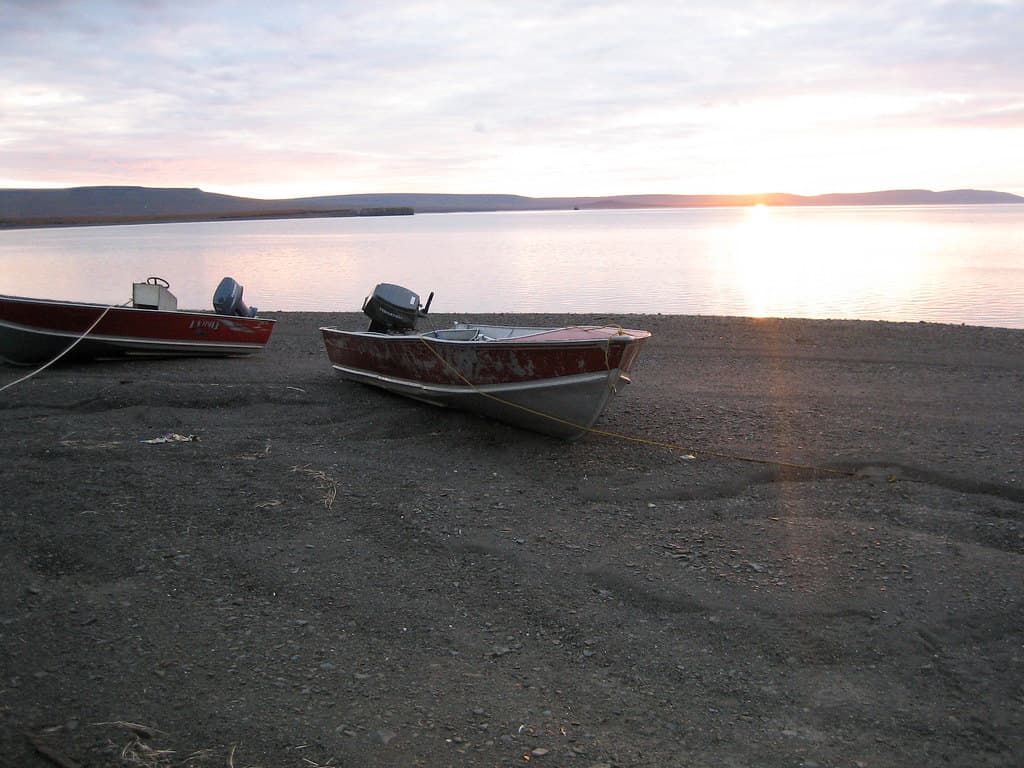
Reaching Chefornak Beach means committing to remoteness. This Yup'ik village on the Yukon-Kuskokwim Delta has no road connections to the outside world, only small aircraft that bounce across the tundra before landing on a gravel strip. Once you arrive, the beach unfolds in muted tones—charcoal sand, platinum driftwood, steel-gray water that stretches toward Siberia. The Bering Sea doesn't invite casual swimmers; it commands respect with frigid temperatures and currents that have shaped this coastline for millennia.
The emptiness becomes the attraction. You might walk for an hour without seeing another soul, tracing the edge where tundra grasses give way to beach. Shorebirds wheel overhead during migration seasons, and the skeletal remains of massive driftwood trees—carried hundreds of miles downriver—create natural sculptures against the sky. In winter, ice formations build architectural wonders along the shoreline; in summer, the midnight sun turns the water molten.
Person walking on a sand spit
Aerial view of turquoise tropical bay
Photograph bleached timber monuments
Trace coastline for miles
Spring and fall flyway spectacle
Where it is
Chefornak Beach
Chefornak, Alaska, USA
60.151500°, -164.285800°
Weather
Loading…
Swell
—
Temp
Warm · Restorative
UV Index
Moderate
Wind
—
Tidal State
Last known
Max Sunlight
—
Ideal Shade
—
May - Sep (Peak)
Jan - Dec (Off-season)
Historical data suggests peak visibility and stable sea temperatures occur during the prime visitation window.
Select a category to load nearby places.
Unlock restaurants, luxury stays and curated maritime experiences within 2km
Swimming at Chefornak Beach is generally not recommended for most visitors. The Bering Sea waters here are extremely cold year-round, typically below 50°F even in summer, posing serious hypothermia risks. Strong currents and unpredictable weather conditions add to the hazards. The beach is better suited for beachcombing, wildlife observation, and scenic walks rather than water activities. If you do enter the water, wear appropriate cold-water gear and never go alone. Always check local conditions and consult village residents about current safety concerns.
Summer months from June through August offer the most accessible conditions for visiting Chefornak Beach, with temperatures ranging from 45-60°F and nearly 20 hours of daylight. However, weather in this remote Alaskan location remains unpredictable year-round, with frequent fog, wind, and rain even in summer. Winter brings extreme cold, limited daylight, and challenging travel conditions. Spring and fall can be particularly stormy. Regardless of season, pack layers, waterproof gear, and prepare for rapidly changing weather. The midnight sun period provides extended viewing opportunities for the scenic landscape.
Chefornak is accessible only by air, with flights from Bethel on small aircraft operated by regional carriers like Hageland Aviation or Yute Air. There are no roads connecting to other communities. The village itself is small and walkable, so reaching the beach from the airstrip requires only a short walk—no vehicle necessary. There are no designated parking areas since most transportation within the village is by foot or ATV. Visitors should arrange all travel logistics in advance and understand that flights are weather-dependent and may experience delays or cancellations.
Chefornak is a small Yup'ik village with very limited visitor facilities. There are no hotels, restaurants, or tourist amenities. Accommodations may be arranged through the village corporation or by private home stays with advance notice, though options are extremely limited. The village has a general store with basic supplies, but visitors should bring most necessities from Bethel or Anchorage. There are no public restrooms at the beach itself. This is a remote, subsistence-based community where tourism infrastructure doesn't exist, so careful advance planning and self-sufficiency are essential.
Chefornak Beach offers excellent opportunities for observing Arctic and sub-Arctic wildlife in their natural habitat. Seabirds are abundant, including various gull species, terns, and shorebirds during migration seasons. Seals occasionally haul out on ice or rocks near shore. Beachcombers may find interesting driftwood and marine debris. The surrounding tundra supports birds like ptarmigan and waterfowl. While this isn't a primary wildlife tourism destination, patient observers can experience authentic Bering Sea coastal ecology. Bring binoculars and respect wildlife by maintaining safe distances and following local guidance.
Photos