
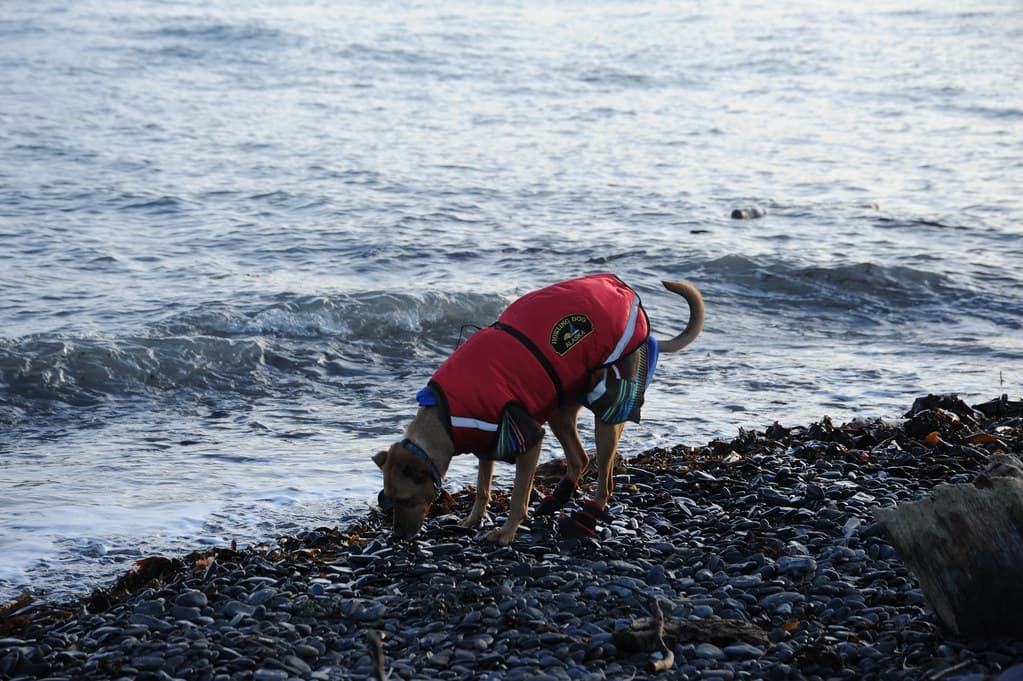
The Homer Spit unfurls into Kachemak Bay like a natural pier built from glacial sediment over millennia. You'll navigate four-and-a-half miles of two-lane road flanked by boardwalks, tackle shops, and canneries where fishermen hose down their day's catch. The wind carries the scent of seaweed and diesel, punctuated by the cries of gulls wheeling overhead. On clear days, the volcanic cone of Mount Augustine rises from Cook Inlet to the west.
“It's the longest road-accessible spit in the world, extending nearly five miles into waters rich enough to draw both commercial fishing fleets and migrating whales.”
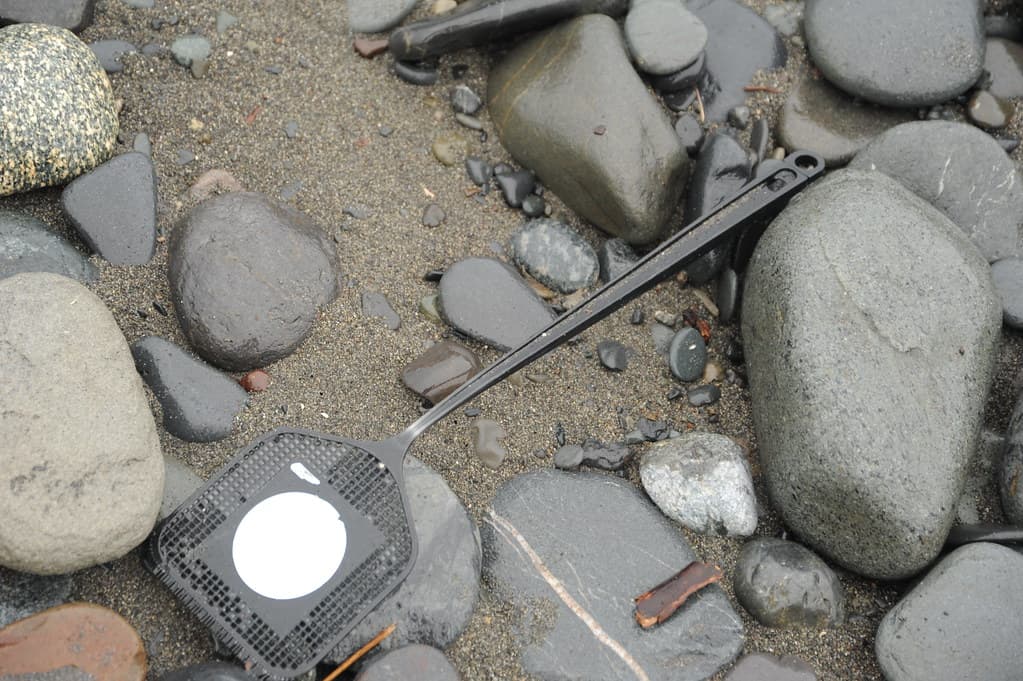 Credit: Flickr
Plastic fly swatter found washed up on a beach, rocks, sand, Homer Spit, Homer, Alaska, USA
This isn't a place for sunbathing. The beach itself is a narrow strip of coarse sand and round stones, frigid even in July, where you're more likely to spot sea lions than swimmers. Instead, you'll find yourself among charter captains prepping halibut rigs, kayakers launching into protected waters, and RV campers who've claimed spots with million-dollar views. The Spit Road culminates at the small boat harbor, where commercial fishing vessels bob alongside pleasure craft.
Come during salmon runs and you'll witness combat fishing—anglers standing elbow-to-elbow in hip waders, lines tangling in the competition. Winter transforms the landscape entirely: the Spit becomes a staging ground for ice fishermen, and if you're lucky, you'll catch orcas hunting in the bay's steel-grey waters, their dorsal fins slicing through the chop.


