
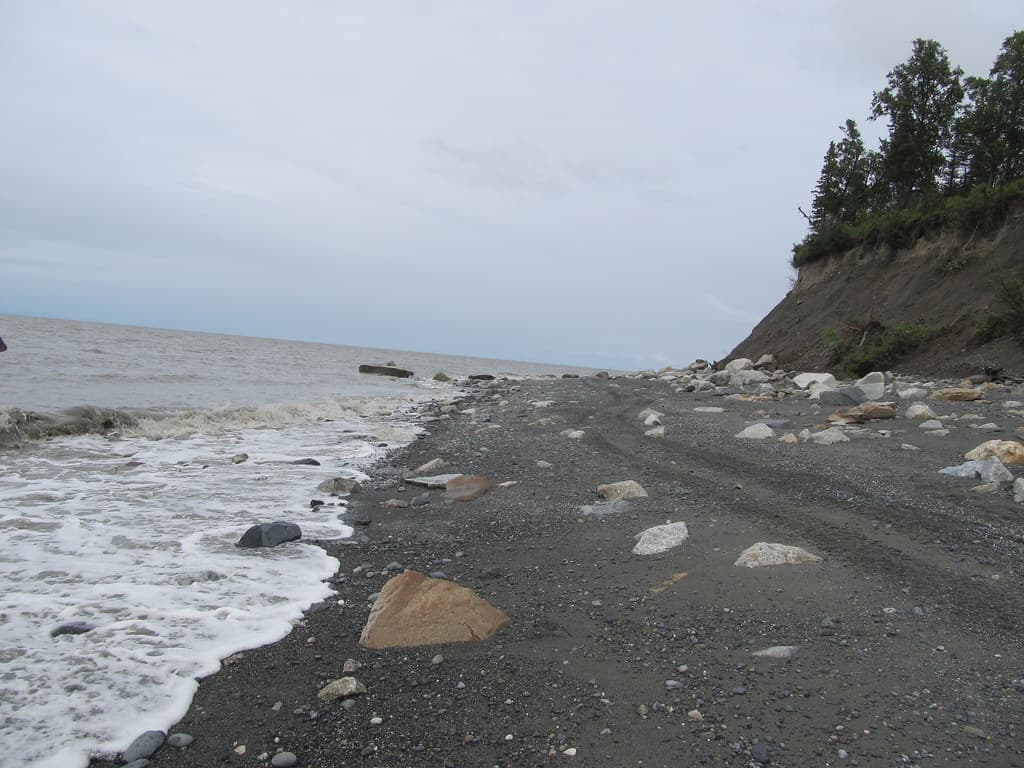
North Kenai Beach stretches along Cook Inlet like a rumpled wool blanket, its dark sand flecked with driftwood bleached bone-white by sun and storm. During low tide, the waterline retreats so far you'll squint to spot it, leaving behind tide pools pocked with hermit crabs and acres of exposed mudflats where locals dig for razor clams with cylindrical tubes and quick hands. The Kenai Mountains rise directly behind you, their glaciated peaks catching alpenglow even on overcast afternoons.
“North Kenai Beach offers Alaska's extreme tidal range in its rawest form, with retreats exposing two miles of clamming grounds beneath active volcanoes.”
 Credit: Flickr
Rockhounding in Alaska: Discovery Beach looking North.
This isn't a beach for lying out or building sandcastles. You'll want boots—the sand packs firm near the waterline but turns to silt farther out—and layers, because the wind off the inlet carries bite even in July. Bald eagles perch in the cottonwoods edging the shore, waiting for salmon carcasses or unwary seabirds. Beachcombers find Japanese glass floats, geoduck shells, and the occasional fossil from ancient seabeds.
The beach runs for miles without development, just a gravel access road and the occasional fisherman casting into the murky water. In winter, you might spot belugas following eulachon runs, their white backs cutting through gray swells. Summer brings dipnetters hauling in salmon, their nets heavy with sockeye. You won't find facilities or lifeguards here—just uninterrupted shoreline and the rhythmic hiss of waves dragging volcanic grit back toward the inlet's mouth.


