

Anton Larsen Bay Beach unfurls along a curve of the Kodiak road system, fifteen miles north of town where pavement gives way to frost heaves and the smell of kelp hangs thick in the air. The beach itself is less sand than a mosaic of water-smoothed cobbles in shades of charcoal and rust, punctuated by bleached driftwood sculptures that have tumbled down from the surrounding mountains. When the tide recedes, tide pools trap tiny rockfish and purple starfish clinging to stones slick with algae.
“One of the few beaches in the Kodiak Archipelago accessible by car, where the ocean meets genuine wilderness without a single paved parking lot.”
 Credit: Pexels
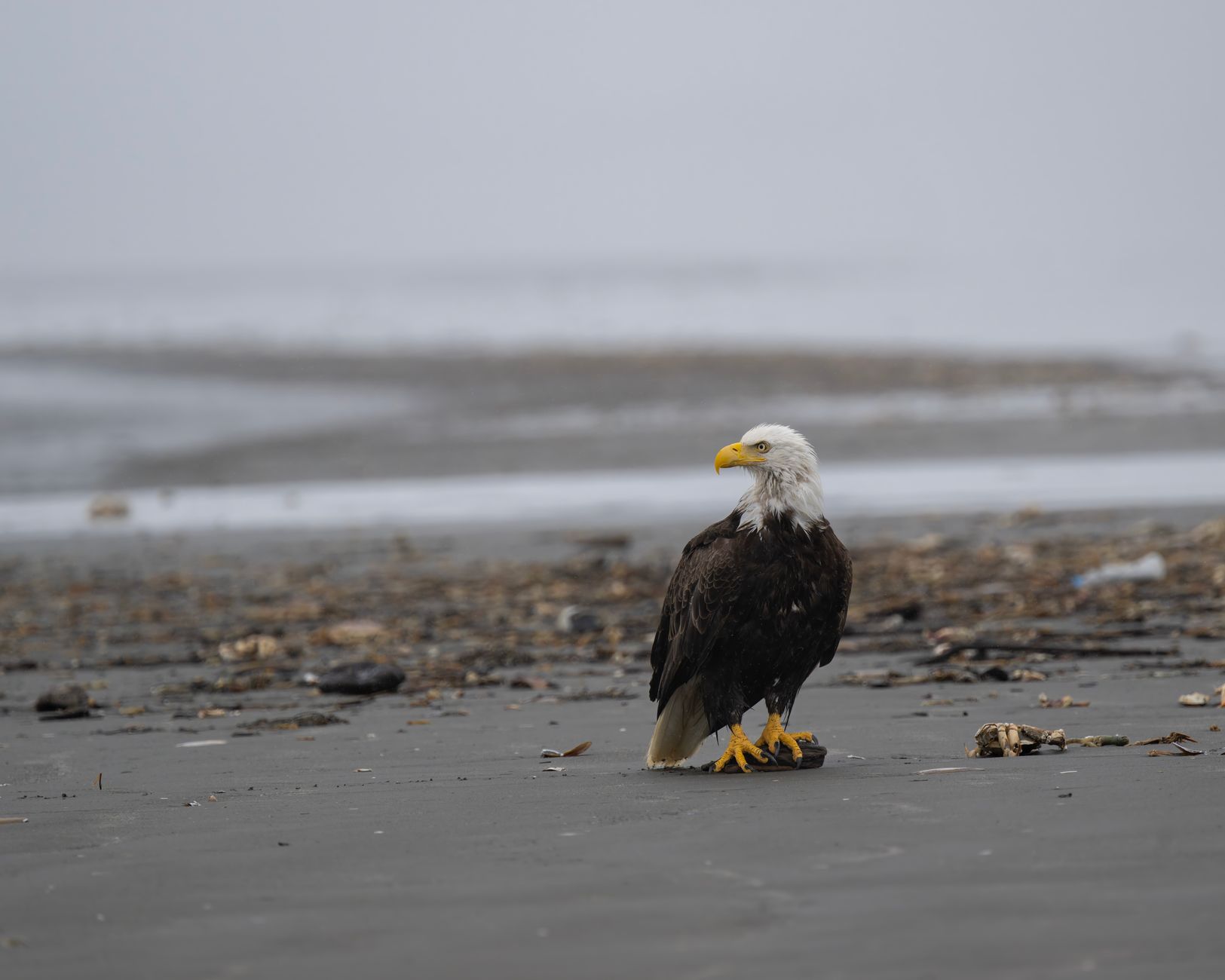
A majestic bald eagle gazing across the shoreline in Ocean City, Washington.
The backdrop is pure Alaskan drama: serrated ridgelines still streaked with snow in July, their flanks dense with Sitka spruce that march down nearly to the high-tide line. On clear mornings, the light turns the bay into hammered silver, and you might spot sea otters rolling in the kelp beds or a humpback whale breaching offshore. The wind carries the briny tang of the North Pacific mixed with the resinous scent of the forest, a reminder that this beach exists at the intersection of two elemental forces.
Visit in winter and you'll have the place nearly to yourself, save for the occasional subsistence fisher checking crab pots. Summer brings wildflowers to the roadside—lupine and fireweed in violent purples and magentas—but even then, the beach remains a place of solitude, too remote and raw for casual tourists who prefer their coastlines warmer and their amenities closer.


