

Counting the waves…
Counting the waves…
A refined fusion of water purity, environmental stability, and communal vibrancy for Newtok Beach.
View MethodologyAnalyzed via live sensors and environmental data.
Wave height, wind, and atmospheric stability.
Live footfall and crowd balance metrics.
Community reviews and curated sentiment.
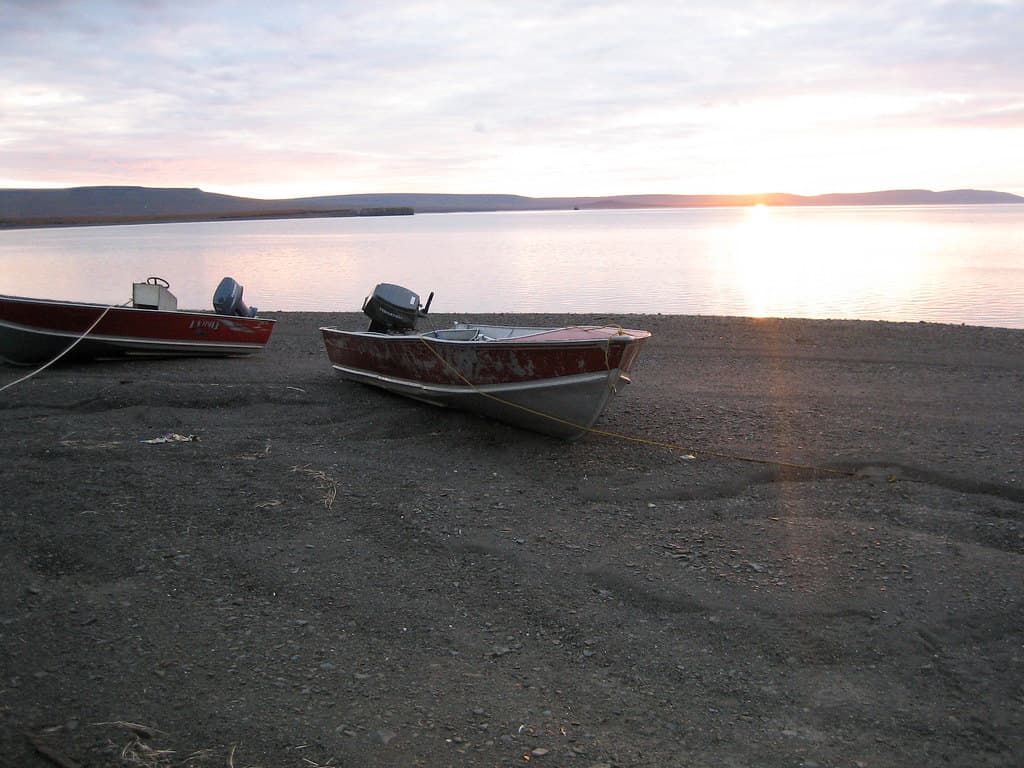
“You'll smell the salt and sediment before you see the water—a vast mud-gray expanse where the Ninglick River spills into the Bering Sea. Driftwood bleached bone-white litters the tidal flats, and the wind carries the…”
Limited recent visitor reports — live OBI telemetry is your best guide for current conditions.
Newtok Beach lies at the westernmost edge of the Yukon-Kuskokwim Delta, where the land dissolves into a labyrinth of braided channels and silt banks. The shoreline here shifts with each tide, carving new gullies through permafrost and redepositing driftwood in sculptural heaps. You'll walk on firm, wet sand during low tide, the kind that squeaks beneath rubber boots, while the horizon stretches unbroken in every direction.
The beach belongs to the rhythms of subsistence—fishermen checking nets for salmon, families gathering gull eggs in early summer, the occasional skiff motoring past toward open water. Winter brings pack ice that grinds ashore in jagged plates, transforming the coastline into a frozen sculpture garden. Spring thaw reveals the bones of the land: exposed peat, ancient grasses, and the persistent encroachment of erosion that defines life here.
Cliff-edge cove with emerald water
Palm trees framing a sunset shore
Permafrost thaw along the shoreline
Walk at low tide only
Navigate braided river mouths carefully
Where it is
Newtok Beach
Newtok, Alaska, USA
60.942100°, -164.641700°
Weather
Loading…
Swell
—
Temp
Warm · Restorative
UV Index
Moderate
Wind
—
Tidal State
Last known
Max Sunlight
—
Ideal Shade
—
May - Sep (Peak)
Jan - Dec (Off-season)
Historical data suggests peak visibility and stable sea temperatures occur during the prime visitation window.
Select a category to load nearby places.
Unlock restaurants, luxury stays and curated maritime experiences within 2km
Swimming at Newtok Beach is not recommended for most visitors. The waters of the Bering Sea are extremely cold year-round, typically ranging from 32-50°F, which poses serious hypothermia risks. Strong currents and unpredictable weather conditions add additional hazards. The beach is better suited for scenic walks, wildlife observation, and photography rather than water activities. If you do wade near the shoreline, wear appropriate cold-weather gear and never venture in alone. Always check local conditions and consult residents about safety before approaching the water.
While technically accessible year-round, summer months (June through August) offer the most favorable conditions for visiting Newtok Beach, with temperatures averaging 45-60°F and extended daylight hours. This period provides the best weather for beach walks and wildlife viewing. Winter brings extreme cold, with temperatures plummeting well below zero and limited daylight. However, spring and fall can offer unique experiences for adventurous travelers interested in observing seasonal wildlife migrations. Be prepared for rapidly changing weather conditions regardless of season, and always pack warm, waterproof clothing.
Reaching Newtok Beach requires significant planning, as Newtok is a remote Yup'ik village accessible only by air or boat—there are no roads connecting it to other communities. Small aircraft from Bethel (approximately 90 miles away) provide the primary access. Once in the village, the beach is within walking distance, as Newtok is very small. Parking is not a consideration since there are virtually no vehicles in the community. Visitors should arrange transportation and accommodations well in advance, and respectfully coordinate visits with the local community.
Newtok is an extremely remote Yup'ik subsistence village with minimal tourist infrastructure. There are no hotels, restaurants, or commercial amenities available to visitors. The community has a small store with limited supplies, but it primarily serves residents. Travelers must arrange homestays or lodging with local families in advance, often through community contacts or tribal offices. Bring all necessary supplies, food, and equipment with you. It's essential to contact the village council before visiting to ensure your trip is welcome and properly coordinated, as tourism infrastructure is nonexistent.
Newtok Beach and the entire village face severe coastal erosion and climate change impacts, making it one of Alaska's most threatened communities. Thawing permafrost, increased storm surges, and riverbank erosion have caused dramatic land loss, with the Ninglick River eroding approximately 70 feet annually in some areas. The community has been actively working on relocating to a new site called Mertarvik, about nine miles away, since the early 2000s. This ongoing situation makes Newtok a poignant example of climate change's immediate impacts on Alaska Native communities and Arctic coastal regions.
Photos