

Shotgun Cove sits at the edge of Passage Canal, accessible only by watercraft from the nearby port of Whittier. The beach itself is a narrow strip of grey cobble hemmed in by temperate rainforest, where Sitka spruce lean toward the Sound and Devil's Club crowds the forest floor. When the tide retreats, you'll walk across barnacle-studded rocks slick with kelp, the air sharp with salt and the green smell of decomposing seaweed.
“One of Prince William Sound's few beaches reachable only by paddle or motor, guaranteeing you'll share the stones with seals before tourists.”
 Credit: Pexels
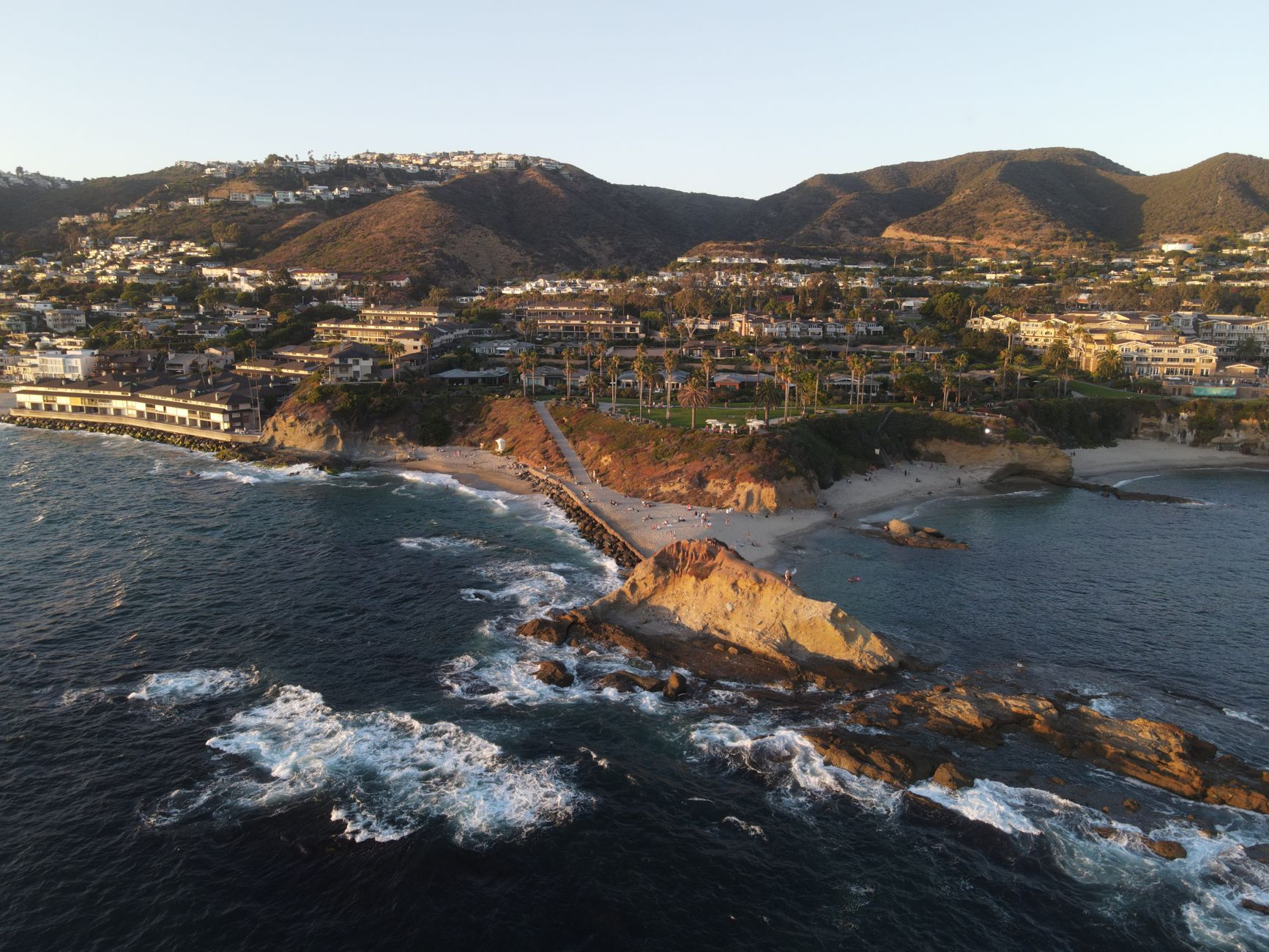
Stunning aerial view of Laguna Beach's coastline with houses, rocky shore, and ocean waves during sunset.
The scenery unfolds in layers: first the cove's protected curve, then the steel-blue expanse of Prince William Sound, and finally the Chugach Mountains rising white and implacable against whatever sky Alaska offers that hour. Harbor seals surface without warning. Bald eagles perch on driftwood logs bleached silver by seasons of weather. On calm days the water mirrors every ridge and cloud; when storms blow through, waves hiss against the stones and wind strips moisture from your face.
This is not a place for swimming or sunbathing. You come to Shotgun Cove to understand what Alaska means when it promises wilderness—to sit on water-smoothed rock with a thermos of coffee, watch weather systems roll across the Sound, and accept that the best beaches ask more of you than comfort. The reward is a coastline still governed by tide charts and animal movement, not human schedules.


