
You descend the wooden staircase at the foot of Ocean Avenue and step onto sand so pale it glows against the slate-blue water. Monterey pines and wind-sculpted cypresses frame the northern edge, their gnarled silhouettes darkening as afternoon light slants low. Dogs—off-leash and ecstatic—charge into the shorebreak while their owners linger near the driftwood scattered like bleached bones across the upper beach.
“One of the few California beaches where dogs roam leash-free on the sand, creating a joyful, communal atmosphere that defines the town's character.”
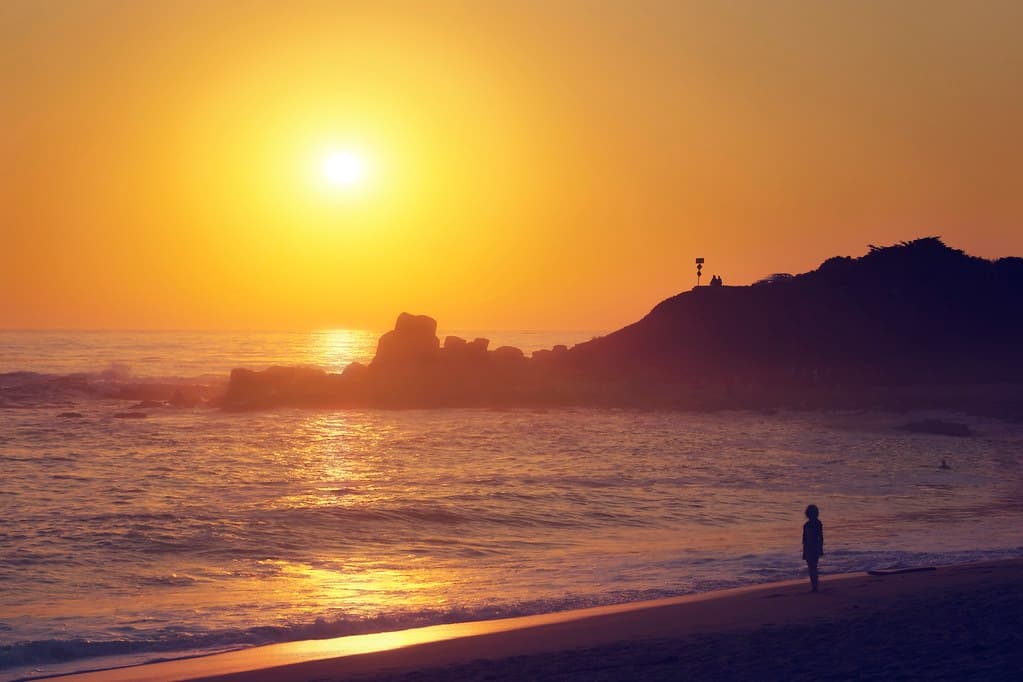 Credit: Flickr
The smell and sound of the sea
The water stays cold year-round, hovering in the mid-fifties, but surfers in thick neoprene wait patiently beyond the break. You'll find tide pools studded with purple urchins and ochre stars at the south end near the rocky headland, where the beach curves toward Carmel Point. Locals arrive with thermoses of coffee, settling onto the sand with sketchbooks or simply watching the horizon.
As the sun drops, the sky ignites—first apricot, then rose, finally a bruised violet that lingers long after the disc has vanished. You'll hear the soft thud of volleyball games winding down, the jingle of dog tags, the rhythmic collapse of waves. No bonfires, no beach bars, no amplified music—just the elemental meeting of sand, water, and sky that has drawn artists and wanderers to this crescent for more than a century.


