

The approach tells you everything: a steep staircase drops through layers of sediment laid down when mastodons still roamed California, delivering you to a beach that feels far removed from the resort towns bookending it. To your north, ochre cliffs rise three hundred feet, their eroded faces catching the afternoon light in a way that makes photographers linger long past golden hour. The sand itself is coarse and tawny, scattered with smooth stones and the occasional piece of driftwood polished to bone-white.
“One of the few SoCal beaches where protected wilderness meets the Pacific, with rare Torrey pine trees framing every view.”
 Credit: Flickr
Over the West Coast
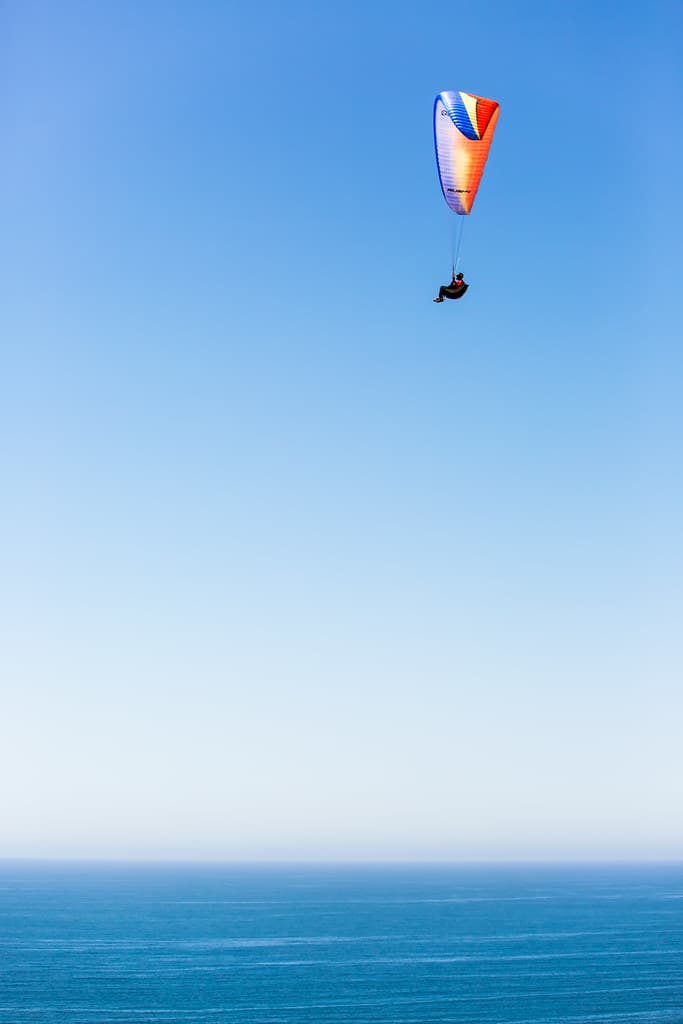
You'll share this mile-and-a-half crescent with trail runners cooling off post-hike, wetsuit-clad locals who know the reef breaks by nickname, and the surprising number of hang gliders who use the thermals rising off the bluffs. The water stays brisk year-round—mid-50s to mid-60s Fahrenheit—but that keeps the crowds thin and the marine life abundant. Harbor seals haul out on the rocks at low tide, utterly unbothered.
What makes Torrey Pines feel secret isn't remoteness—you're twenty minutes from downtown San Diego—but the effort required to reach it. No parking lot opens directly onto sand; every visitor earns their arrival. That single barrier filters out the casual beachgoer, leaving you with serious walkers, dedicated surfers, and those who understand that California's best coastline rarely advertises itself.


