
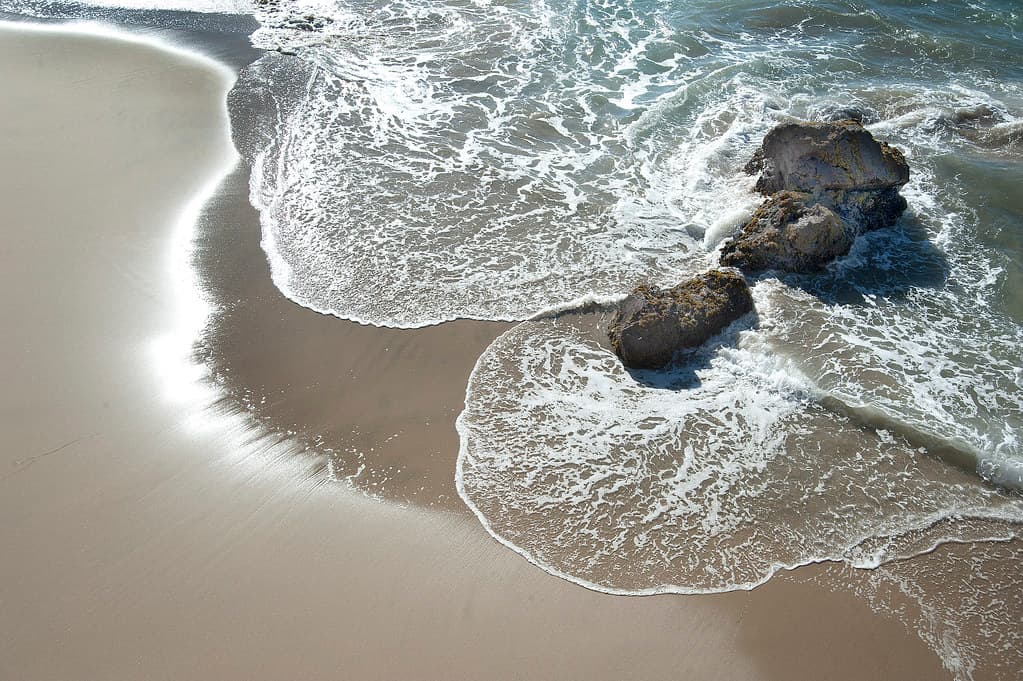
Half Moon Bay State Beach spreads along four miles of California's central coast, a continuous ribbon of sand divided into named segments—Francis, Venice, Dunes, Roosevelt—that blur together at low tide. You'll feel the salt spray before you park; the beach faces west into unobstructed Pacific weather, which means persistent wind, dependable waves, and fog that rolls in by mid-afternoon most summer days. Gulls wheel overhead while harbor seals bob in the kelp beds just past the break.
“Four contiguous beach segments create an uninterrupted walking corridor longer than most coastal state parks, backed by working farmland instead of resorts.”
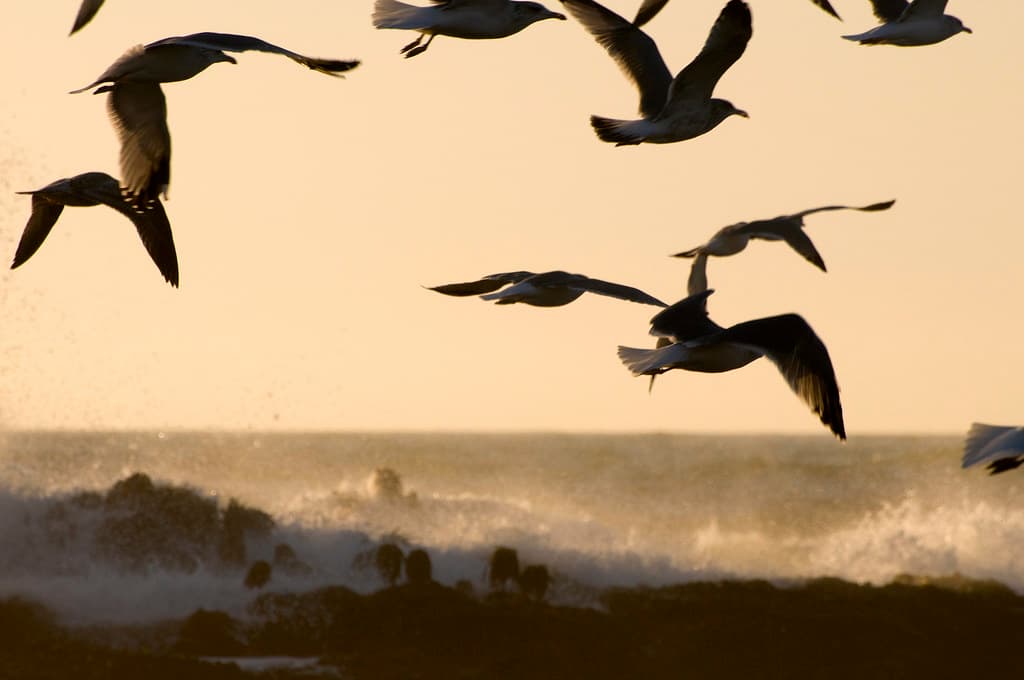 Credit: Flickr
Seagulls and Waves
The sand itself runs cool and compact underfoot, studded with polished stones and fragments of crab shell. Families stake out spots near the parking pullouts with windbreaks and heavy blankets, while surfers in thick wetsuits jog toward the water carrying boards under one arm. The beach never feels crowded—its sheer width absorbs even weekend crowds—and you can walk north or south for twenty minutes without retracing your steps.
Come for sunset when the marine layer holds off, and you'll watch the sun drop into the horizon line with nothing but ocean between you and Japan. The temperature plunges within minutes of dusk; bring layers. Bonfire rings dot the sand, and if you've hauled firewood, you can claim one on a first-come basis and stay until the stars emerge over the dark silhouette of Pillar Point.


