
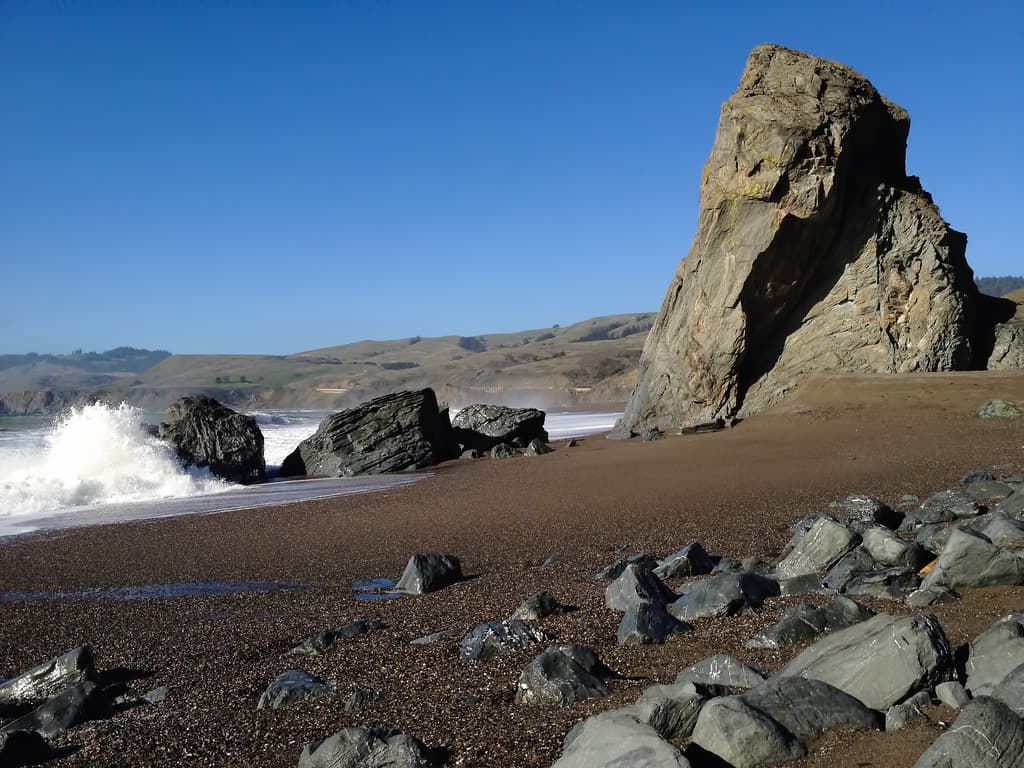
Park in the lot above and follow the path down to a sweep of gray sand where driftwood logs lie scattered like giant matchsticks. The beach stretches north toward cliffs pocked with sea caves, but your eye keeps returning to the namesake rock—a hulking, wave-battered sentinel that shifts color from charcoal to amber as the sun moves west. At the river mouth, the current braids through shallow channels, and you'll often spot harbor seals bobbing in the confluence, their whiskered faces tracking your movements with mild curiosity.
“The Russian River's dramatic Pacific terminus creates a shape-shifting estuary landscape framed by California's most photogenic coastal monolith.”
 Credit: Flickr
Surf and rocks at Goat Rock Beach
This is not a beach for sunbathing or casual swims. Rogue waves and riptides make the surf treacherous, and the water stays cold enough to numb your feet in seconds. Instead, you walk. Miles of firm sand unfold in both directions, littered with bull kelp, sand dollars, and the occasional glass fishing float. Bring layers—the wind funnels through the river canyon without mercy, and fog can roll in mid-afternoon even when Jenner bakes under blue sky.
Stay through the golden hour. The rock becomes a silhouette, backlit by tangerine light that sets the breakers glowing. Pelicans skim the swells in formation. The river mouth catches fire. You'll understand why photographers return here season after season, chasing that particular alchemy of stone, water, and coastal light that exists nowhere else on the North Coast.


