
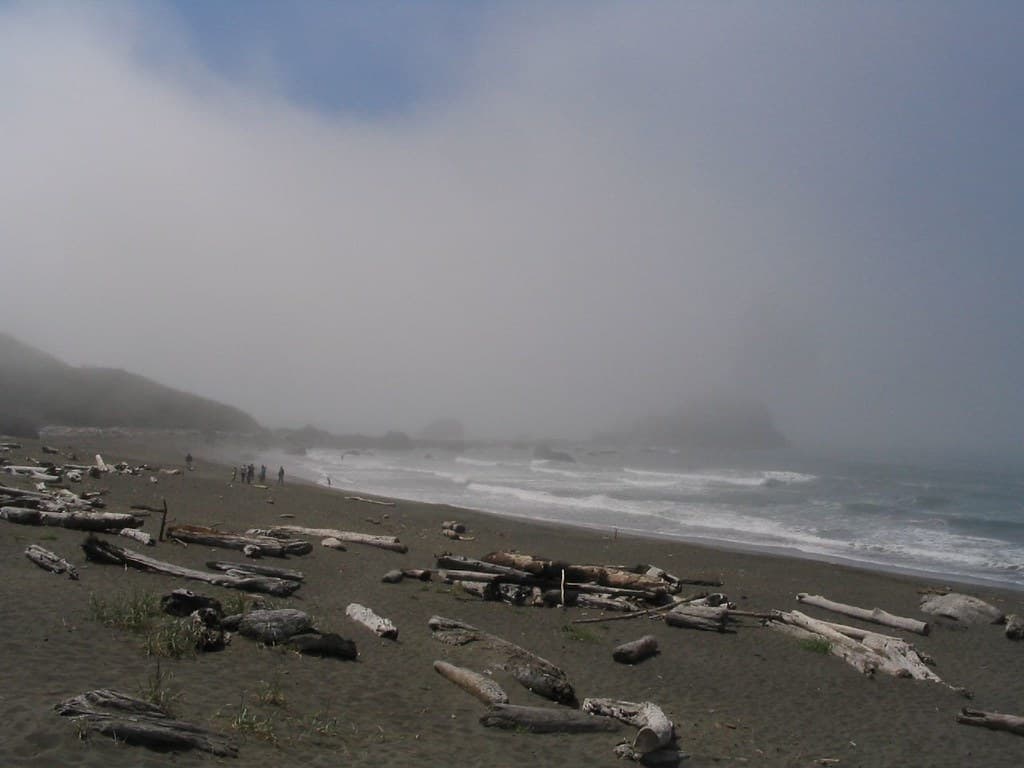
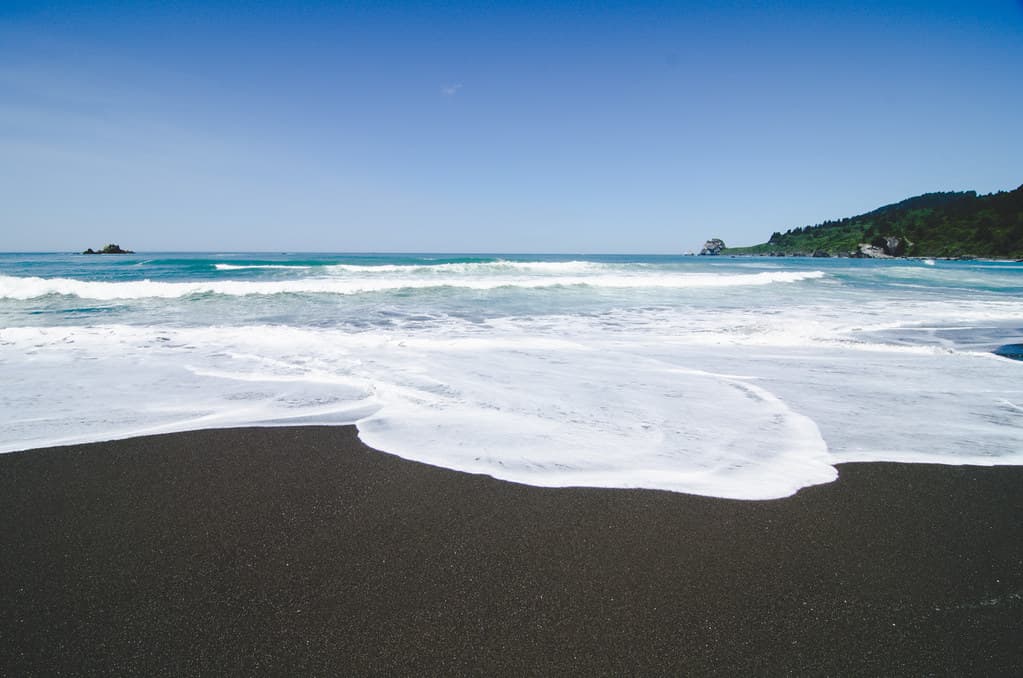
The cove announces itself only to those who know where to look: a break in the coastal scrub north of the Klamath River mouth, where a faint path drops through salal and wild rose toward the rumble of surf. You'll scramble over driftwood the size of freight cars, their roots twisted into abstract sculpture by decades of winter storms. The beach itself is a mix of charcoal sand and smooth stones that clack underfoot, hemmed in by rust-streaked bluffs draped in sword fern.
“One of the North Coast's last unsigned pocket beaches, where tide pools outnumber footprints on most days.”
 Credit: Flickr
Black Sand Beach
Timing your visit to the outgoing tide rewards you with a labyrinth of tidal pools—granite basins alive with purple urchins, striped shore crabs, and the occasional bright flash of a nudibranch. Gulls wheel overhead, and harbor seals often haul out on the offshore rocks, their barks echoing off the cliffs. The water stays frigid year-round, but the solitude is reliable: even on summer weekends, you're more likely to share the sand with a black oystercatcher than another beachgoer.
Bring layers—the marine fog rolls in without warning, erasing the horizon in minutes. A thermos of coffee, a tide chart, and a sense of where you parked are essentials. This is a beach that asks you to slow down, crouch low, and pay attention to the small dramas unfolding in six inches of seawater.


