
Table Rock Beach hides in plain sight along Coast Highway, marked only by a narrow public-access stairway between oceanfront homes. The descent rewards you with a 200-foot stretch of sand pinned between rust-colored bluffs and a rocky shoreline that transforms hourly with the tide. Offshore, the namesake flat-topped rocks rise like ancient altars, their surfaces slick with kelp and barnacles, while shorebirds pick through the shallow pools left behind.
“One of Laguna's few remaining neighborhood beaches where tide pools rival the sand for square footage.”
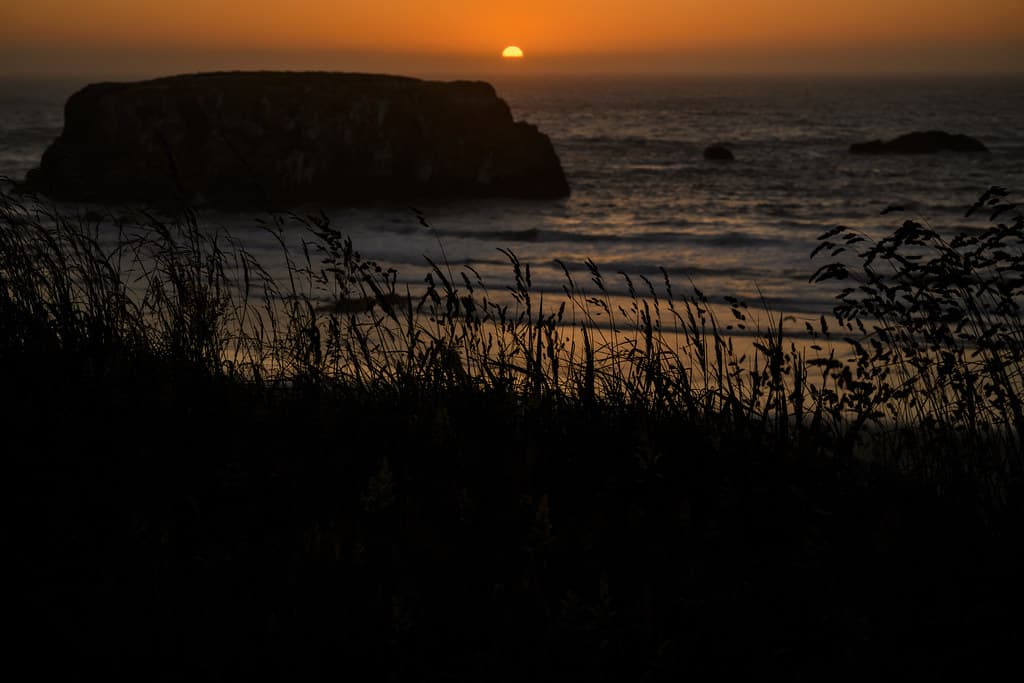 Credit: Flickr
Dune grass in front of Table Rock at sunset, Bandon Beach, Oregon
Morning fog burns off by ten, revealing tidepools studded with purple urchins, hermit crabs, and the occasional ochre sea star clinging to volcanic rock. The narrow beach means you're never more than a few steps from either the cliff face or the water's edge—intimacy enforced by geography. Surfers occasionally paddle out to the reef break, but most visitors come for the tidepools and the relative solitude that comes with limited parking and no facilities.
Bring reef-safe shoes; the rocks are slippery and sharp. The best tidepool exploration happens during negative low tides, when the ocean pulls back to expose a hidden world of anemones and sculpin. Pack out everything you bring—there are no trash cans, no lifeguards, no concessions. Just you, the cliffs, and the rhythmic conversation between wave and stone.


